
Fundamentals
Choosing a Programmatic Retail Media Platform: A Checklist for Retail Leaders

Posted on
November 24, 2026
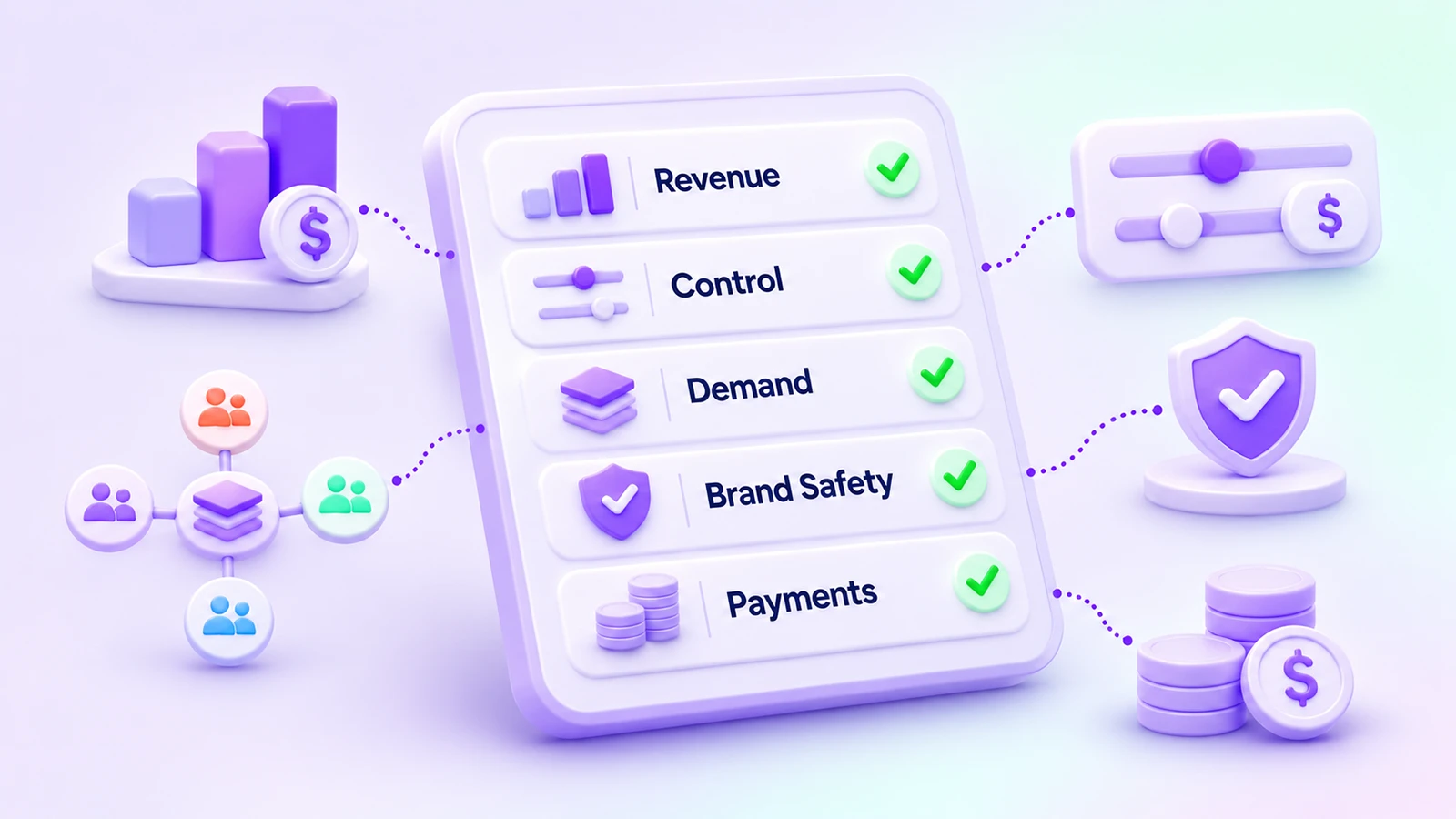
Table of contents
The retail media edge, before everyone else has it.
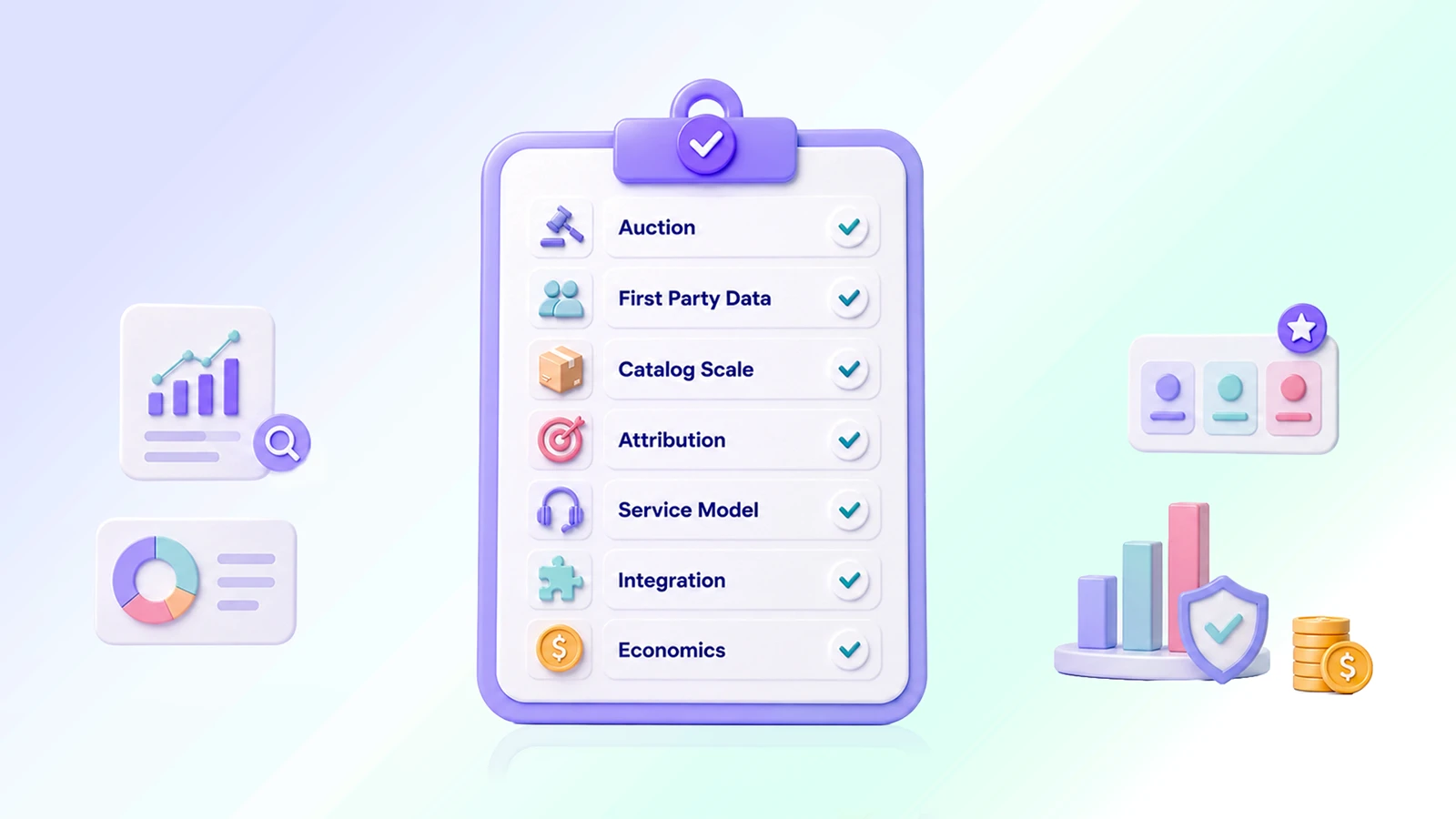
To choose a programmatic retail media platform, check it for revenue upside, control over priority and floors, access to demand, brand safety and transparent payment. On Osmos, 400+ demand partners, PubMatic, Meta, Google and InMobi included, bid on a retailer's site, app and in-store screens.
Last updated: November 2026. Reviewed by Kunal Damgude, Growth and Product Marketing Manager.
To choose a programmatic retail media platform, check it for revenue upside, control over priority and floors, access to demand, brand safety and transparent payment. On Osmos, 400+ demand partners, PubMatic, Meta, Google and InMobi included, bid on a retailer's site, app and in-store screens.
Osmos is a white-label retail media operating system for retailers and marketplaces. Its modular apps for onsite, offsite and in-store ads sit over your existing stack, so you can break your monetisation ceiling faster without rebuilding it.
What is a programmatic retail media platform?
A programmatic retail media platform is the software a retailer runs its own ad business on, and it connects the retailer's inventory to outside programmatic demand from buyers' demand-side platforms (DSPs). It serves ads and runs auctions on that inventory, gives advertisers campaign tools and measures the sales that campaigns drive.
Brands buy media from retail media networks such as Amazon Ads, Walmart Connect and Target's Roundel. Osmos, Criteo, Kevel, Koddi and Topsort are platforms that other retailers build their own networks on. Retail media software and retail media technology are other names for a platform, and commerce media is the wider category beyond retail.
What to check in a programmatic retail media platform
A platform that runs programmatic demand should pass five checks before a retailer signs.
Revenue upside from programmatic demand
Outside programmatic demand adds revenue by filling the impressions direct deals leave empty, at prices the retailer accepts. On in-store screens, Osmos layers a second demand source over the retailer's direct brand network with Programmatic Demand, and every unfilled slot becomes addressable through standard private marketplace (PMP) and programmatic guaranteed (PG) deals.
The platform should show which demand sources will fill the remaining impressions, and report fill rate and effective revenue per thousand impressions (eCPM) by placement and demand source.
Control over programmatic priority and price floors
Priority should follow the deal terms the retailer agreed to, whichever platform sent the bid, and every bid should clear the retailer's price floor. IAB Tech Lab, the Interactive Advertising Bureau's (IAB) non-profit standards consortium, notes in a January 2026 draft for public comment that screening "may also validate that bids with DealIDs conform to the deal terms."
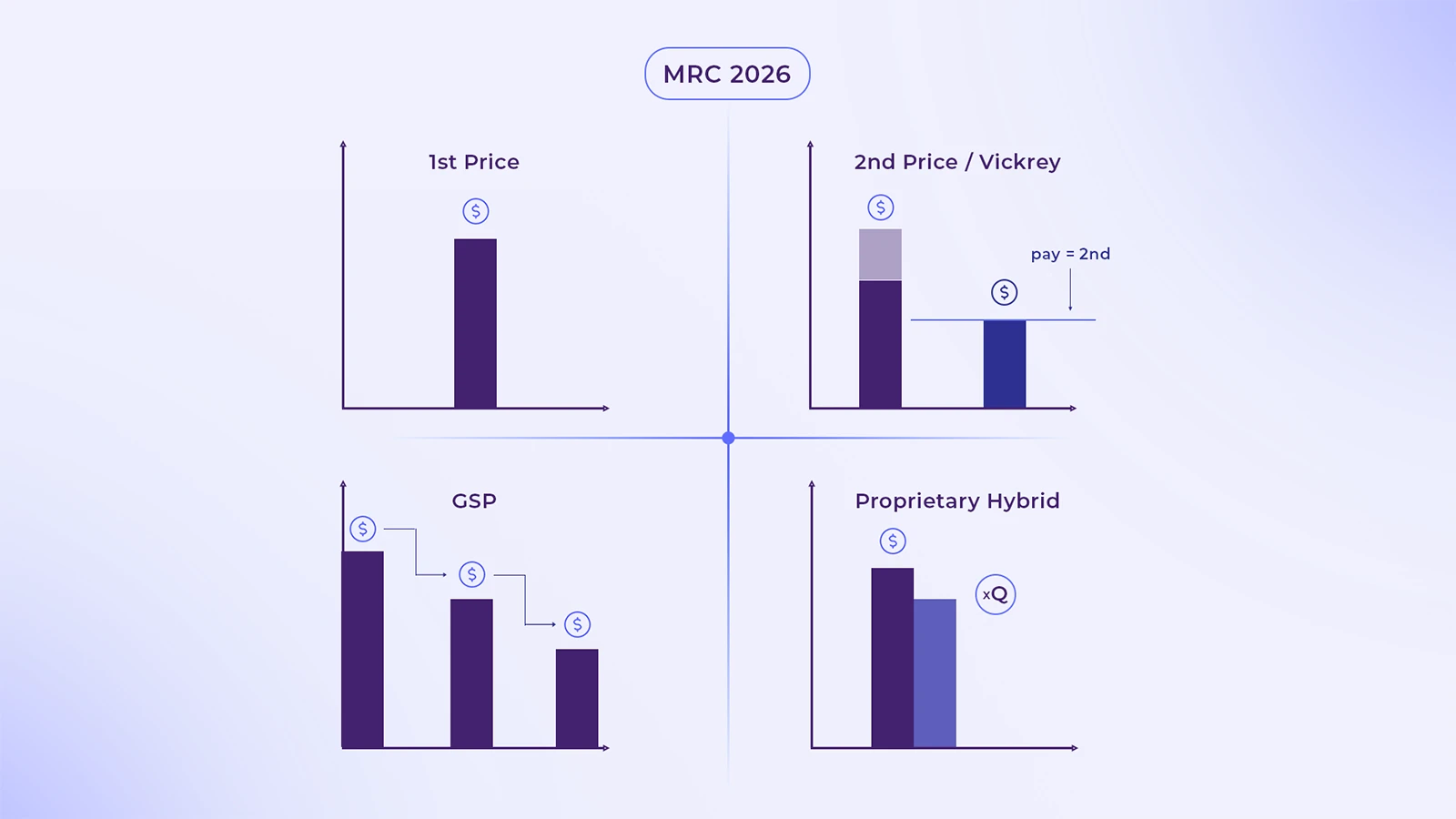
On a retailer's site, Osmos runs one real-time auction per impression through Osmos Demand, over pre-built connectors including Google Ad Manager, PubMatic and Magnite. Direct deals serve first, then programmatic guaranteed, private marketplace deals and the open auction. The retailer's terms and rules govern pricing, and Osmos operates inside them.
A retailer should confirm that it sets the serving order of its deal types, and that each deal carries its own floor, buyer seats and advertiser domains, as the Deal object in OpenRTB (Open Real-Time Bidding) 2.6 allows.
Access to programmatic demand
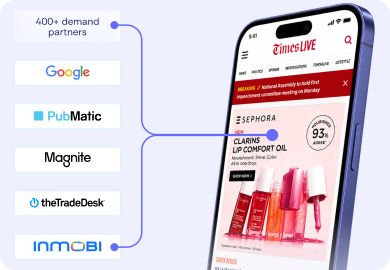
Outside demand reaches a retailer's inventory only through the supply-side platforms (SSPs), exchanges and contracts its platform supports. On a retailer's site and app, Meta bids through Osmos alongside Google, PubMatic, Magnite and InMobi for available impressions, such as on-site checkout and post-transaction placements and app inventory.
In-store screens have a separate route to outside demand. Osmos runs Programmatic Demand on those screens through the retailer's existing SSP relationship or a setup Osmos manages, and reaches all major DSPs with standard PMP and PG deals.
A retailer should ask every platform on its shortlist three questions about access to demand.
- Which demand partners are live today, and which only planned?
- Who maintains the retailer's ads.txt (Authorized Digital Sellers) and app-ads.txt entries, and does every SSP on the route publish a sellers.json file?
- Does every PMP and PG deal carry a deal ID, and every bid request the SupplyChain object showing each party that handled the impression?
Brand safety for programmatic ads
IAB Tech Lab says its shared category list, the Content Taxonomy, is typically used for "contextual targeting and brand safety". An OpenRTB 2.6 bid request can carry blocked advertiser categories and domains. Osmos treats brand safety on in-store screens as retailer policy. Each retailer keeps its own category block list on the IAB taxonomy, and Programmatic Demand rejects deals aimed at blocked categories at setup.
The platform should refuse deals targeting a blocked category at setup, and review creative before a guaranteed deal goes live and after serving for auction demand.
Transparent payment for programmatic impressions
Every programmatic impression should be traceable from winning bid to payout. IAB Tech Lab's January 2026 draft says bid prices are "most often net of fees" and that most auction participants reconcile monthly. When Osmos manages the programmatic demand, it aggregates the SSPs and demand sources, reports by placement, reconciles monthly and settles the net revenue directly to the retailer. On the retailer's own SSP or exchange seat, the exchange settles directly under its contract. Either way, the DSP pays the exchange or SSP that cleared the bid.
On payment and reporting, the platform should answer three questions.
- Who pays the retailer, and which fees sit between the winning bid and the payout?
- Are earnings broken down by placement, deal type and demand source, with rejected bids visible?
- Does advertiser reporting follow the IAB and Media Rating Council (MRC) Retail Media Measurement Guidelines?
Any request for proposal (RFP) should also ask whether the platform follows IAB Tech Lab's clean room guidance, which party is controller and which processor of shopper data, and which retailers run it live, in which regions and on which surfaces.
Which programmatic retail media platforms should a retailer evaluate?
Programmatic can mean the ad serving and auctions a platform runs for the retailer's own campaigns, which our comparison of enterprise platforms for onsite commerce media monetization covers. It can also mean connecting outside programmatic demand to the retailer's inventory, and retail media platforms for retailers differ most in how they do that.
| Platform | How outside programmatic demand reaches the retailer's inventory | Strength on its own pages | Ask before you sign |
|---|---|---|---|
| Osmos, a white-label retail media operating system for retailers and marketplaces | Site: one real-time auction on Osmos Demand, direct deals first, then PG, PMP and the open auction. In-store screens: PMP and PG deals through Programmatic Demand. App: a software development kit (SDK) integration, as for the app publisher DRiefcase | 400+ demand partners on site, app and in-store screens; about 90 days to launch; trusted by leading retailers in 11 countries | Which surface goes first, and does demand run through the Osmos-managed setup or the retailer's own SSP seat? |
| Criteo (Commerce Yield, retailer platform; Commerce Grid, SSP) | Yield connects directly to application programming interface (API) and DSP partners; Grid takes a standalone or header bidding integration and brings Criteo's demand and third-party DSPs via open exchange and deal IDs | Retailer platform and SSP from one vendor; Criteo says Grid is TAG Platinum certified for fraud and brand safety | Who sets priority and floors when Grid's traffic shaping favors high-value deals? |
| Kevel (Relay, deals) | PMP and PG deals are created in an SSP and entered as a Deal ID, with pacing and decisioning in Kevel's ad server; Relay sends bid requests to demand partners the retailer contracts with | Provenance data separating programmatic ads from campaigns booked directly | Which demand partners and SSPs must the retailer contract itself? |
| Koddi (Koddi SSP) | Koddi SSP puts on-site inventory in front of DSP buyers, naming SA360, The Trade Desk, Teads and Yahoo! on its SSP pages, and replaces insertion orders with PG deals | Per its 2025 product update: gate or enable individual DSPs, tune bid weightings, test floors in a Price Floor Insights dashboard | Which DSPs reach the inventory today, and which controls does the retailer set itself? |
| Topsort (mediation) | One auction between a marketplace's internal demand and external demand partners; in this launch (March 2026), external demand comes from Criteo | The retailer owns the Criteo account and data; deduplication stops a shopper seeing the same stock-keeping unit (SKU) twice | Which other outside sources and deal types, such as PMP and PG, can join the auction? |
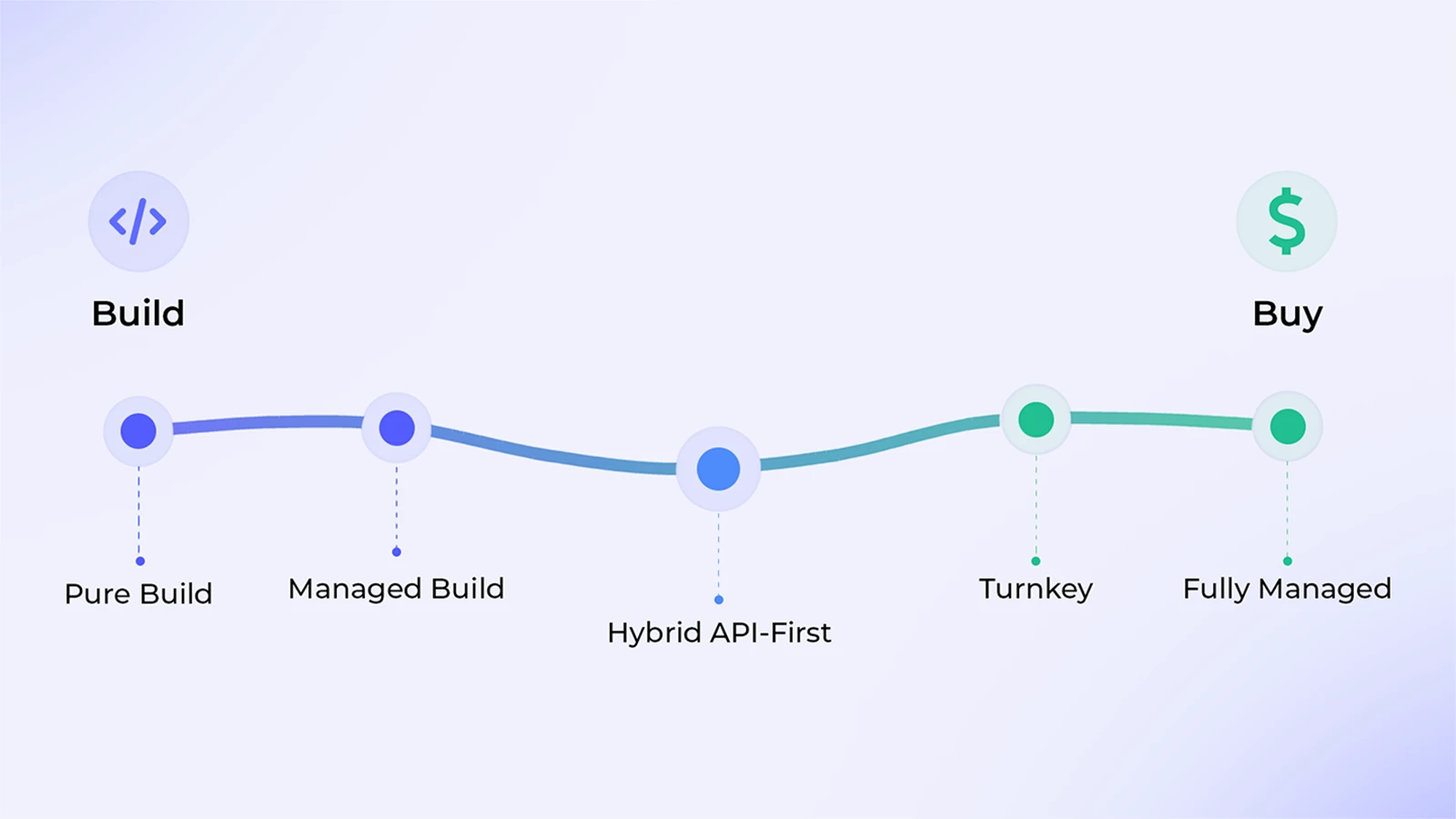
Should a retailer build or buy its programmatic retail media technology?
A retailer should license the programmatic infrastructure and keep control of its rules, data and advertiser relationships. Building makes sense only if the retailer already runs SSP, exchange and DSP relationships at scale.
- Engineering cost: an in-house stack must do every job IAB Tech Lab's January 2026 draft lists for an auction, from validating ads.txt and sellers.json to checking bids against deal terms, recording fees and reconciling monthly.
- Demand partnerships: this is the cost specific to programmatic. An in-house stack needs its own SSP, exchange and DSP contracts and integrations before its first bid. Osmos's managed setup brings those SSPs and demand sources together in one layer.
- Time to first programmatic revenue: a build waits for the stack and every contract. On a bought platform, demand onboarding is one phase of the launch.
The build vs buy decision framework and the ad tech infrastructure behind retail media cover the rest of the stack.
How long does it take a retailer to launch programmatic advertising on its retail media network?
On Osmos, programmatic demand takes about 90 days to launch, from integration to ramp-up. That is longer than switching on a single Osmos app, because demand partners have to be onboarded and bids ramped against the retailer's baseline.
- Integration: Osmos connects to the retailer's site, app or in-store screens (apps through an SDK), and the retailer publishes the ads.txt or app-ads.txt entries buyers check.
- Demand onboarding: demand partners are switched on, PMP and PG deals are set up with their deal IDs, and priority, floor and block rules are agreed before the first bid.
- Ramp-up: fill and yield are tracked against the retailer's baseline, and outside demand grows where the numbers support it.
The team, budget and revenue ramp for a whole network are set out in what it costs to launch a retail media network.
Building the business case for programmatic retail media
The business case rests on revenue from impressions no direct deal fills and from advertisers the retailer's sales team never reaches, who buy through their own DSPs. IAB Europe, the European-level association for digital marketing and advertising, noted in July 2025 that leftover retailer impressions pooled by curators reach brands programmatically "often at discounted CPMs" (cost per thousand impressions). Price that revenue at what outside demand pays. Direct deals are protected from cannibalization while they keep their place at the front of the auction order, a choice IAB Tech Lab's January 2026 draft says media owners may make regardless of price.
The costs are the platform fee, the fees between bid and payout, and the people who run deals, floors and reconciliation. Pilot programmatic on a defined set of placements, record fill rate and eCPM first, and then scale or stop on what changes in those numbers and in direct-deal revenue. For the margin side, see the retail media business case.
Talk to sales about a pilot on the placements where direct deals leave the most impressions unfilled.
Frequently asked questions
Can a retailer start programmatic on one surface and add the others later?
Yes. Osmos's apps are modular, and each surface connects to programmatic demand through its own app or integration, so site, app and in-store screens can go live separately. A retailer should start where the most unfilled inventory sits.
What should a retailer decide before the first programmatic bid?
A retailer should settle, and give an owner to, which deal types serve first, each one's floor, the categories and domains to block, the ads.txt entries it publishes, and the SSP route (a managed setup or its own seat), which also decides who pays it.
Does a retailer have to replace its current ad stack to add programmatic?
No. On Osmos, the retailer's ad server, customer data platform (CDP) and DSPs stay where they are, and Osmos orchestrates on top of them. On in-store screens, the schedule in the retailer's content management system still takes precedence.
Sources
- IAB Tech Lab, organization page on iab.com, checked 29 October 2026. iab.com
- IAB Tech Lab, "Programmatic Auction Definitions", public comment draft, January 2026, checked 29 October 2026. iabtechlab.com
- IAB Tech Lab, OpenRTB 2.6 specification, checked 29 October 2026. github.com
- IAB Tech Lab, "Authorized Digital Sellers with ads.txt and app-ads.txt", last updated 14 September 2026, checked 29 October 2026. iabtechlab.com
- IAB Tech Lab, "sellers.json", last updated 7 October 2026, checked 29 October 2026. iabtechlab.com
- IAB Tech Lab, "Content Taxonomy", version 3.1, last updated 11 February 2026, checked 29 October 2026. iabtechlab.com
- IAB Tech Lab, "Data Clean Rooms" guidance, checked 29 October 2026. iabtechlab.com
- IAB and Media Rating Council, "Retail Media Measurement Guidelines", January 2024, checked 29 October 2026. iab.com
- IAB Europe, "IAB Europe 101 Guide to Retail and Commerce Media", July 2025, checked 29 October 2026. iabeurope.eu
- Criteo, retailer page (Commerce Yield), checked 29 October 2026. criteo.com/business/retailers/
- Criteo, "Commerce Grid", checked 29 October 2026. criteo.com/platform/commerce-grid/
- Kevel, "Deals" documentation, checked 29 October 2026. dev.kevel.com/docs/deals-in-kevel
- Kevel, "RTB in Kevel" documentation, checked 29 October 2026. dev.kevel.com/docs/rtb-in-kevel
- Kevel, "Retail Media Guide" documentation, checked 29 October 2026. dev.kevel.com/docs/retail-media
- Koddi, "SSP for Advertisers", checked 29 October 2026. koddi.com/ssp-for-advertisers/
- Koddi, "SSP for Publishers", checked 29 October 2026. koddi.com/ssp-for-publishers/
- Koddi, 2025 product vision update, checked 29 October 2026. koddi.com/blog/2025-product-vision-update/
- Topsort, product launch post of 9 March 2026, checked 29 October 2026. topsort.com/post/demand-mediation
Apps in this story
Suggested reading
Your monetization potential
See what's above your ceiling.
Your score, your peer benchmark, and the levers that close the gap.