
A second demand layer on top of your direct brand network.
Every unfilled slot becomes addressable through standard PMP and PG deals - without adding sales headcount.



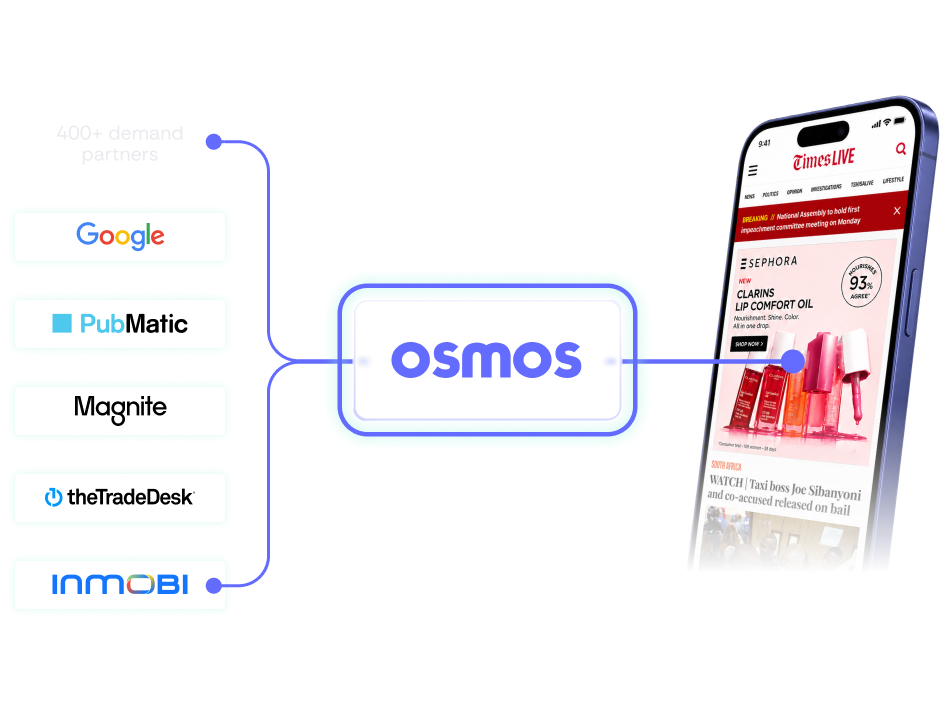
What it does
Fill the in-store inventory direct sales does not reach.
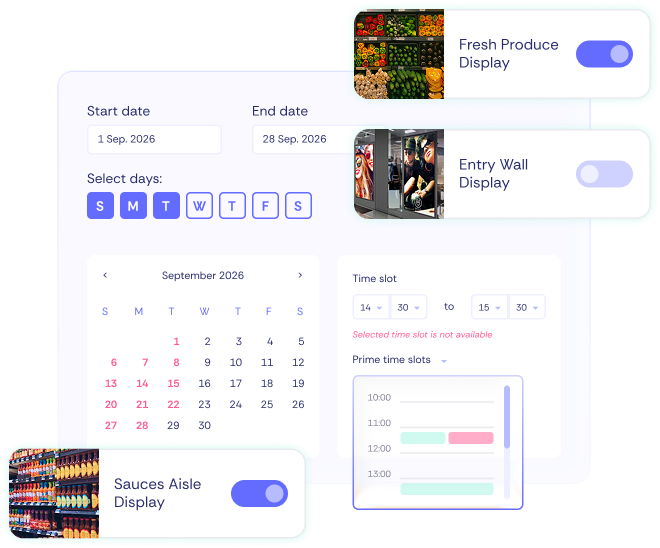
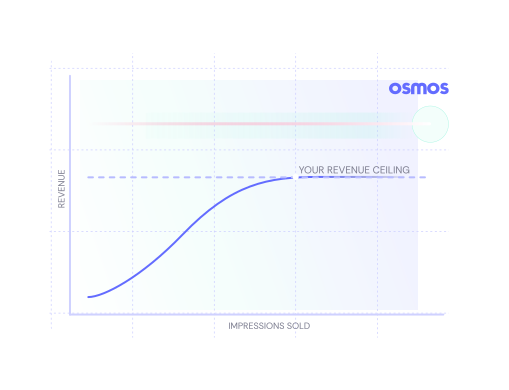
In-store screen inventory has huge untapped potential. Fill rates rarely cross 60-70%, and the remnant 30-40% is real revenue sitting idle on the wall. Programmatic Demand opens that inventory to DSPs through standard PMP and PG deals, layering a second demand source on top of the retailer’s existing brand network. Every unfilled slot becomes addressable, without adding sales headcount.
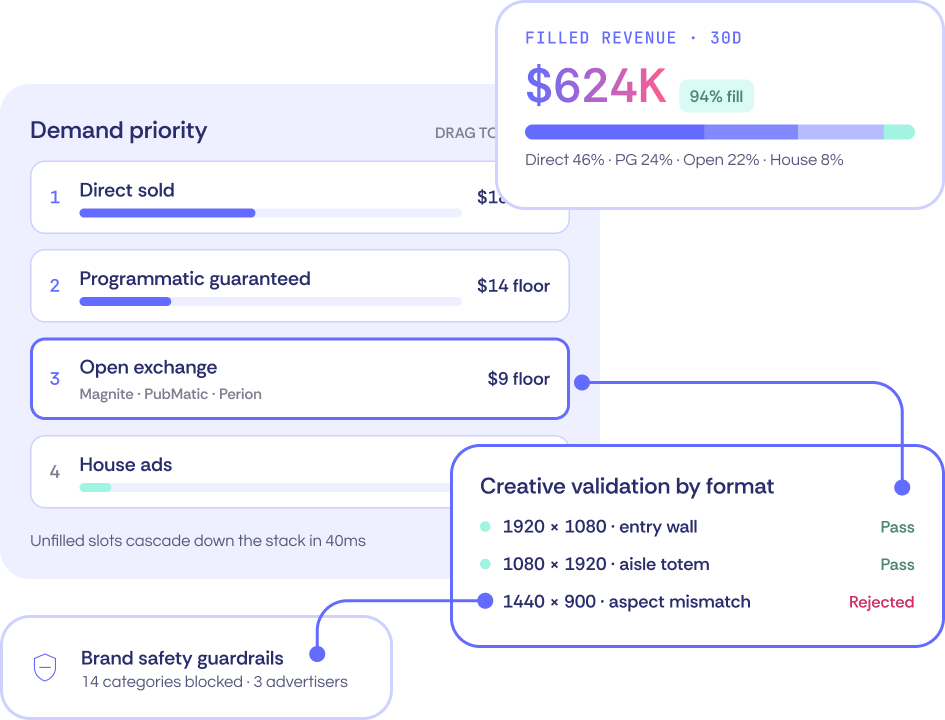

Smart demand prioritization on Osmos
Osmos prioritizes demand sources intelligently to keep every screen filled. Direct sold and house ads stay protected, programmatic fills the remainder, and default content runs only when nothing else applies. The CMS schedule always takes precedence.

Unified fill rate and revenue breakdown by demand source
Per-screen fill rate split by demand source — direct, programmatic, house. Revenue and CPM segmented by screen, refreshed in near-real-time. One unified yield view for the retailer.

Creative validation by screen format
Format-mismatched ads never reach a screen. Aspect ratio, file size, and duration checks per screen format at submission. Buyer creatives validated before serving, not at render time.

Brand safety guardrails
Category block lists per retailer using IAB taxonomy. Deals targeting blocked categories rejected at config time, not at serving time. Brand safety is retailer policy, not buyer choice.


































Success stories
How retailers broke their ceiling.


How Mr DIY turned 1,100 stores into a scalable In-Store retail media network
in-store screens live
stores activated
marquee brands live
mass merchandise
In-store


Apollo 24x7 achieves 200% revenue growth in four months with smarter PLA optimization
2M revenue growth
pp in budget utilisation
CPC increase
Healthcare
Onsite




SEE IT IN ACTION
See programmatic demand running on in-store screens.
A 30-minute walkthrough with the Osmos demand lead. Deal setup, smart prioritization, screen-level reporting, brand safety guardrails, and the EA pilot onboarding plan.
Commitment-free consultation on your top needs and challenges. Discover product capabilities and how Osmos may help.
frequently asked questions
Your questions, answered.
Answers about how Osmos In-Store sits inside your store stack.
No. Programmatic Demand works whether the retailer brings an existing SSP relationship or uses the Osmos-managed setup. Either way, deals route to all major DSPs through standard PMP and PG plumbing.
Direct sold and house ads stay protected at the top of the prioritization. Programmatic fills the remainder based on bid value. Default content runs only when nothing else applies. The CMS schedule always takes precedence, so programmatic can never override a scheduled direct or house booking.
Screen players enforce a 300ms bid timeout. On timeout the player serves a pre-configured fallback creative, house or direct-sold. No blank screen. Timeout events are logged with screen ID and timestamp for ops visibility.
None. Programmatic sits on top of the retailer’s existing brand network. Direct sold inventory and scheduled content stay protected by the prioritization. Programmatic only fills slots that direct demand cannot reach.