Fundamentals
Leading Enterprise Platforms for Onsite Commerce Media Monetization
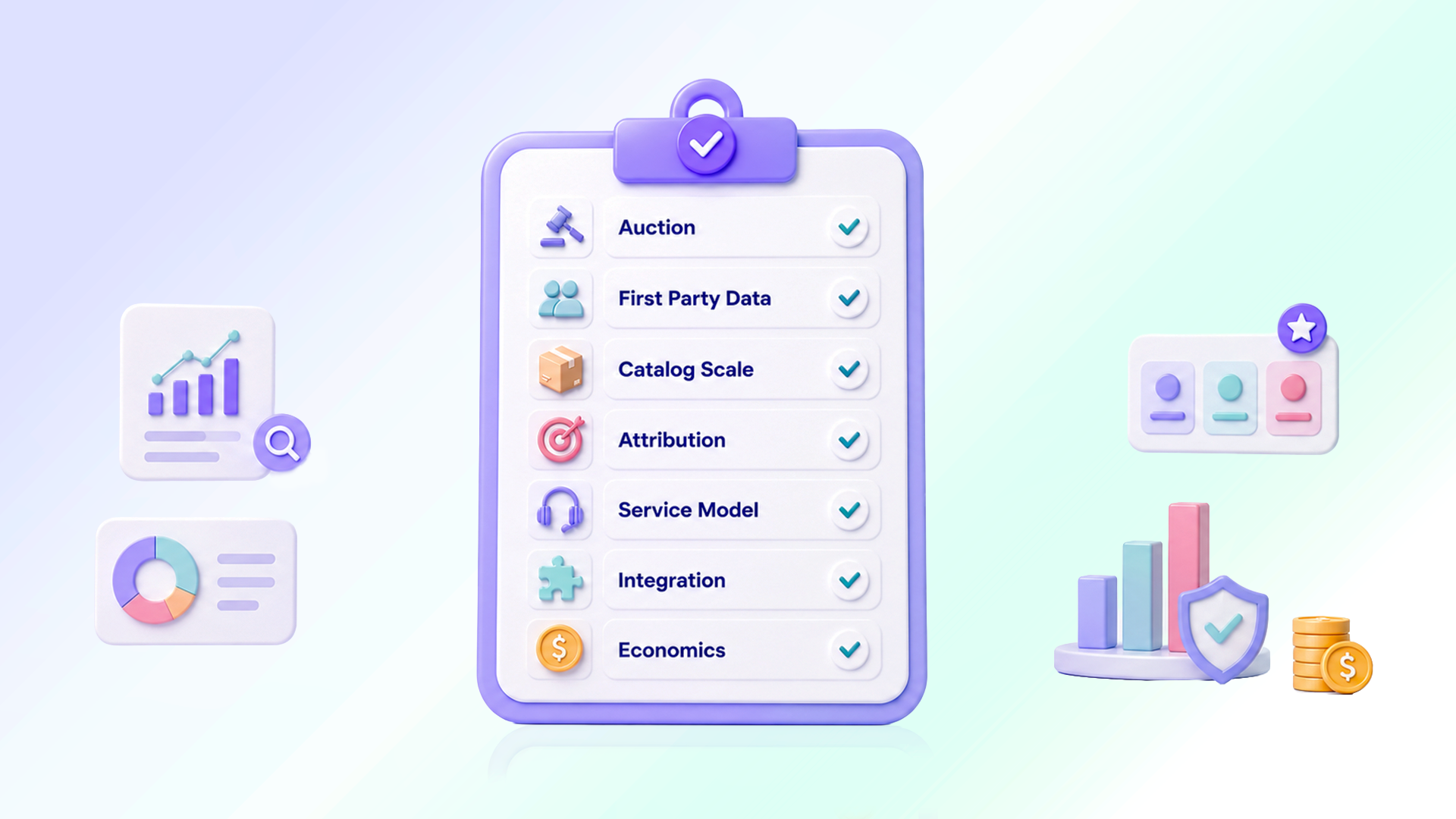
Eleven platforms can credibly power onsite commerce media monetization for an enterprise retailer or marketplace in 2026: Osmos, Criteo, Epsilon Retail Media, Kevel, Moloco Commerce Media, Topsort, Mirakl Ads, Koddi, Instacart's Carrot Ads, AdButler, and Equativ. Beyond running sponsored product and display ads, each of them differs on seven major capabilities: ad serving and auction quality, first-party data and targeting, catalog and merchant scale, analytics and closed-loop attribution, managed service versus self-serve, integration path and time to launch, and commercial model.
Last updated: October 2026. Reviewed by Kunal Damgude, Growth and Product Marketing Manager.
Eleven platforms can credibly power onsite commerce media monetization for an enterprise retailer or marketplace in 2026: Osmos, Criteo, Epsilon Retail Media, Kevel, Moloco Commerce Media, Topsort, Mirakl Ads, Koddi, Instacart's Carrot Ads, AdButler, and Equativ. Beyond running sponsored product and display ads, each of them differs on seven major capabilities: ad serving and auction quality, first-party data and targeting, catalog and merchant scale, analytics and closed-loop attribution, managed service versus self-serve, integration path and time to launch, and commercial model. Score the shortlist against those seven criteria and it usually collapses to two or three real candidates inside a week.
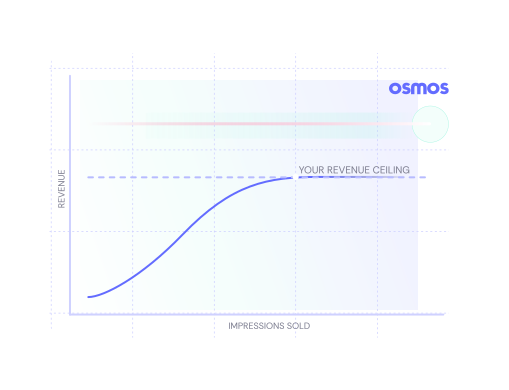
Osmos is a white-label retail media operating system for retailers and marketplaces. Its modular apps for onsite, offsite and in-store ads sit over your existing stack, so you can break your monetisation ceiling faster without rebuilding it.
This page sits inside our broader guide to the ad tech infrastructure behind retail media and takes one decision out of it: the platform you build your onsite program on. If you are upstream of that decision and want the category defined first, start with what commerce media actually is. One scoping note before the profiles. Amazon Ads, Walmart Connect and Instacart Ads are not on this shortlist, because none of the three can be licensed by a third-party retailer; the final FAQ covers where they do belong in your business case. Instacart's Carrot Ads is the deliberate exception: the separate, publicly documented, licensable arm, on the list precisely because an external retailer can adopt it.
What an enterprise onsite platform actually should do: the seven-criterion checklist
Onsite commerce media monetization is the practice in which retailers run paid, auction-priced advertising on their own digital properties for the brands already on their platform, measured against transactions that happen on the same properties. A retail media network (RMN) is the business you build on top of that capability: the demand roster, the pricing, the packaging and the reporting.
The reason vendor demos blur together is that they all show the same screenshot. The differences live one layer down, in the seven criteria below. Take them into every conversation in the same order and you get comparable answers instead of comparable slides.
1. Ad serving and auction
The auction is the engine, not a feature. Ask how bids are ranked (pure bid, bid times predicted click-through rate, bid times predicted conversion, or a blended relevance score), what the reserve price mechanics are, how ties break, and whether you can set floors per surface and per category. Ask for the ninety-ninth percentile decision latency and the uptime commitment in writing, because an auction that adds a hundred milliseconds to a search results page is a conversion problem before it is a revenue opportunity. Ask what happens when no ad clears the floor, since a blank slot is better than an irrelevant one. Our deeper treatment of ranking, pacing and bid mechanics lives in the science of scalable retail media auctions.
2. First-party data and targeting
Every platform on this list says it activates first-party data. The useful questions are narrower. Which shopper signals can you target on, and at what freshness: session behaviour, purchase history, loyalty tier, basket composition, category affinity, lapsed-buyer status? Can a brand target an audience it can never see or export? Where does the data physically sit, who is the controller and who is the processor, and what does the contract say about model training on your shopper data? A platform that improves its global models on your traffic is not automatically wrong, but you should know before you sign. The full targeting framework sits in our first-party data in retail media guide.
3. Catalog and merchant scale
This is where enterprise programs quietly fail. A platform that handles 200,000 stock keeping units (SKUs) comfortably can choke at five million, and a marketplace adding thousands of third-party merchants a month has a different ingestion problem than a first-party retailer with a controlled assortment. Ask about catalog refresh frequency, how out-of-stock and price changes propagate into live campaigns, whether ads can be suppressed automatically when inventory runs out, and how long a new merchant takes from signup to first impression. If you run several banners or countries on one catalog, ask how the platform separates them.
4. Proof an advertiser will accept
This is the single most-scrutinised capability in an enterprise evaluation, and the only criterion here that earns its own section further down this page. Treat the row in the table below as the short version.
5. Managed service, self-serve, or both
A retailer with three thousand potential advertisers and an ad-ops team of six cannot white-glove more than a few hundred of them. If the platform forces a single model, the rest of your demand stays dormant. Most enterprise programs in 2026 run both: a self-serve console for the long tail, managed service for the largest budgets and for advertisers with no in-house media capability, and increasingly an automation layer that makes the tail behave like managed accounts without the headcount. Vendors argue this both ways in their own content, and each of them argues in the direction of its own architecture, so treat the question as yours to answer rather than theirs. We work through the trade-off in detail in self-service versus managed retail media platforms.
6. Integration path and time to launch
Integration depth is a function of your stack, not the vendor's marketing. The five connections every onsite program needs are listed in the integration FAQ at the end of this page. On top of those five sit the optional ones: a customer data platform (CDP) connection if you want audience targeting, an order management system (OMS) hook if you want post-purchase suppression, and point-of-sale (POS) data if in-store is on the roadmap.
7. Commercial model
Three structures dominate: a platform fee (fixed or tiered by impressions or auctions), a revenue share on media spend, and a hybrid where a lower fee is paired with a share above a revenue threshold. Managed service is usually priced separately or as a percentage of managed spend. What matters more than the headline rate is what scales with success: a model that takes a rising share of a growing program can cost more over three years than a higher fixed fee. Ask for a three-year cost model at your projected spend, not a rate card.
| Criterion | What to ask the vendor | What good proof looks like |
|---|---|---|
| Ad serving and auction | How are bids ranked, what are the floor mechanics, what is your ninety-ninth percentile decision latency? | A written latency and uptime commitment, plus a load test against your own peak traffic |
| First-party data and targeting | Which signals are targetable, at what freshness, and who controls the data? | A data processing agreement naming controller and processor, and a targetable-signal inventory |
| Catalog and merchant scale | How many SKUs and merchants at your largest deployment, and how fast does the catalog refresh? | A named reference at or above your catalog size, with refresh intervals in writing |
| Analytics and closed-loop attribution | Which conversions are attributed to purchases, over what window, and can we export the raw log? | A sample attributed report reconciled against your own order data, plus raw log access |
| Managed versus self-serve | Can we run both models simultaneously, and what does the tail advertiser experience look like? | A live self-serve console demo using your catalog, not a sandbox |
| Integration and time to launch | What is the critical path for our specific stack, and who does the work? | A named reference customer with a comparable stack and an actual, dated timeline |
| Commercial model | What does this cost at three times our current projected spend? | A three-year cost model with the share and fee components separated |
The platforms, profiled
Each entry follows the same structure: what it is, where it is strongest, and what to scope carefully before you commit.
Osmos
What it is. Osmos is a white-label retail media operating system for retailers and marketplaces that helps them launch and scale ad revenue across onsite, offsite and in-store channels. Each capability (onsite, offsite, in-store, demand and the rest) is offered as an app, so a retailer can start with a single app and add others later without buying the whole platform. Osmos can also run ad operations for the retailer as a paid service (Ad Ops as a Service).
Where it is strongest. Speed to revenue and advertiser activation. Osmos's first pack of apps goes live in about four weeks, and the retailer adds apps one at a time as its program grows. At scale, Osmos onsite serves more than 9.2 billion ad requests a month for more than 142,000 active advertisers, with response latency under 63 milliseconds. The published results follow the same activation pattern rather than a traffic-growth pattern. Purplle generated $686K in ad revenue during its highest-ever IHB Sale, with a 1.74% click-through rate (CTR), $107K average daily advertiser budget, roughly 15% year-on-year uplift, and ten new advertisers adopting product detail page (PDP) display ads inside a single event. Konvy, Thailand's largest online beauty retailer, saw a 112% increase in ad revenue in two months, with a 4x rise in budget utilisation and an 84% increase in ad revenue as a share of GMV, driven by cross-category inventory expansion (surfacing lipstick ads on skincare pages) and a contextual engine that reads Thai-language search queries without a full platform localisation project. Custom ad-format creation is measured in hours rather than release cycles, which matters when a category team wants a format for one campaign window.
What to know. Osmos is trusted by leading retailers in 11 countries, including BigBasket, Superbalist and Mr DIY, so ask for a reference in your own region and category on the first call. Because each capability is a separate app, scope which apps the first pack includes and what your engineering team owns before comparing timelines with anyone else on this list.
Criteo
What it is. Criteo runs a commerce data platform spanning both sides of the market, and the product naming matters here more than anywhere else on this list. The retailer-facing products are Commerce Grid, which connects media owners, retailers and agencies through programmatic curated demand, and Commerce Yield, described by Criteo for retailers, marketplaces and commerce companies looking to control, scale and maximise digital asset monetization. Commerce Max is a different product, built for brands and agencies buying retail media on the open internet. If a conversation drifts to Commerce Max, you have drifted to the demand side of Criteo's business, not the product you would license to monetize your own site.
Where it is strongest. First-party commerce data at a scale almost nobody else can match: visibility across 2.5 billion users and over $1 trillion in yearly sales, 5 billion product SKUs, and connections to 200-plus retailers and premium media owners, with closed-loop measurement built into the offering. Criteo reports a 57% lift in Commerce Grid ad spend via curated demand, and serves more than 17,000 global clients. For a retailer whose bottleneck is demand rather than technology, that connected advertiser base is a genuine structural advantage.
What to know. Because the portfolio spans demand and supply, scope your commercial conversation to the retailer-facing products by name, and get the current product naming written into the contract. Criteo's sub-product naming has evolved over the years, and third-party summaries of its features and ad formats frequently describe the wrong half of the platform.
Epsilon Retail Media
What it is. Epsilon describes Epsilon Retail Media as a full-service retail media platform designed to be a measurable growth engine, rooted in person-first identity and AI-powered data, helping retailers build or augment their retail media networks around real shoppers. Epsilon Retail Media is the current name: Epsilon's EMEA and APAC pages state that CitrusAd, the business Publicis Groupe acquired in 2021, is now part of Epsilon Retail Media.
Where it is strongest. Identity plus measurement in one place, and native unification of onsite and offsite. That combination came from CitrusAd's onsite capability and Epsilon's offsite identity scale being brought together under Publicis Groupe, and it directly answers the requirement most enterprise retailers hit in year two: extend the same shopper audience beyond your own site without rebuilding the targeting layer somewhere else.
What to know. The current product page carries positioning rather than named customer case detail with figures, so ask for references and results under a non-disclosure agreement early in the process rather than assuming they will surface in the public materials.
Kevel
What it is. Kevel positions itself as a commerce media platform that gives retailers complete control of their data, technology and monetisation strategy. It ships three components: Kevel Ad Server (ad serving, campaign management and reporting), Kevel Audience (first-party audience segmentation) and Kevel Console (an omnichannel campaign management interface with self-serve capability). The architecture is application programming interface (API) first by design.
Where it is strongest. Flexibility for retailers with real engineering capacity, and the customer evidence is explicit about it. Carlos Paulo, Head of Endless, Retail Media Solutions, describes the value this way: "Being an API-based solution gave us the ability to evolve through time because retail media is in a very fluid context right now... the ability to adapt to whatever formats and channels we want to launch in the future." Kevel names Home Depot, PayPal, Dollar General, Chewy, Lyft and iFood among its customers, and cites growing iFood's monthly delivery ad revenue by 20x in a single year and 35 millisecond response times at Edmunds.
What to know. API-first cuts both ways. The adaptability is real, and so is the build work on your side: beyond the out-of-the-box Console, interfaces and workflows that a full-service platform ships pre-built are yours to design. That is the right trade for some retailers and the wrong one for others, so cost the internal engineering time into the comparison alongside the licence fee.
Moloco Commerce Media
What it is. Moloco Commerce Media is an AI-native retail media platform that, in Moloco's words, uses "AI-driven relevance to connect advertisers with shoppers at the moment of shopping intent." The differentiator is the model layer.
Where it is strongest. Machine-learned relevance. Moloco's CARA architecture (Compound Ad Recommendation Architecture) learns from each retailer's own first-party data, with models trained only on that retailer's data. Wayfair is a named customer, and its CTO reports a 30% increase in display ad click-through rate during its initial proof of concept, which is a meaningful signal for a large-catalog, considered-purchase retailer.
What to know. Machine-learned relevance improves with event density, so the useful diligence question is what traffic and transaction volume the models need on your catalog before the quoted lift is realistic, and what performance looks like during the ramp. Ask for the shape of the learning curve, not just the endpoint.
Topsort
What it is. Topsort describes itself as monetization infrastructure built for modern commerce, running auction-based monetization across sponsored listings, display and banner placements, sponsored brands, offsite and in-store surfaces. The architecture is commerce-native: catalog, search intent and inventory are first-class inputs rather than generic ad slots inherited from publisher ad serving.
Where it is strongest. Auction infrastructure and global serving discipline. Topsort cites sub-5 millisecond ninety-ninth percentile response time, a 99.999% uptime guarantee, more than 40 global edge locations and more than 100 billion auctions a month, serving 40-plus countries. Coles and Poshmark are among its named clients. For a retailer whose principal fear is page-speed regression on a high-traffic search page, that latency posture is directly on point.
What to know. Latency claims are architecture-level, measured at the auction. Validate them end to end against your own page render budget in a proof of concept, because the number that matters to your conversion rate is the total added time on a real product listing page, not the auction call in isolation.
Mirakl Ads
What it is. The most common misconception about Mirakl Ads is that you need Mirakl Marketplace to run it, and Mirakl answers that directly: "No, Mirakl Ads is available to all retailers, regardless of their business model. We work with marketplaces that are not powered by Mirakl, such as Rakuten, as well as with retailers that do not operate as marketplaces, such as Adorama." Existing Mirakl Marketplace clients simply get instant access from day one, which removes onboarding friction rather than defining eligibility.
Where it is strongest. Automation depth and forward positioning. Mirakl Ads applies automated product, targeting and bid selection with multi-armed bandit optimisation, and markets explicit agentic-commerce readiness, including generative engine optimization (GEO) so that products surface inside large language model shopping assistants. Mirakl reports 50-plus retailers across 15-plus countries, and a case with Jumia showing 28% ad revenue growth and 12% GMV growth.
What to know. If you already run Mirakl Marketplace, the fast onboarding path is a real advantage worth quantifying in the timeline comparison. If you do not, it is simply a neutral factor, and you should evaluate Mirakl Ads on the same seven criteria as everyone else.
Koddi
What it is. Koddi is a commerce media platform with four products: Koddi Ads (onsite, offsite and in-store serving, planning and operations), Koddi SSP (a supply-side platform, meaning the technology through which a media owner offers its inventory into programmatic demand), and Koddi Demand and Koddi Enterprise for campaign management, automation and analytics. Koddi names retail among several served verticals, alongside travel, automotive, consumer packaged goods and others.
Where it is strongest. Enterprise-grade commerce media engineering with a strong customer-satisfaction record: Koddi reports a net promoter score (NPS) of 77 for 2024, which is high for enterprise ad tech. Multi-vertical experience also means the platform has solved auction and yield problems in categories with very different inventory logic.
What to know. Multi-vertical by design is a strength and a scoping question at the same time. Ask specifically which retail-native capabilities (catalog ingestion at your SKU count, listing-level auctions, merchant self-serve onboarding) are live today for retail customers rather than generalised from another vertical.
Instacart Carrot Ads
What it is. Carrot Ads is Instacart's licensable ad-serving technology, which lets a third-party retailer monetize its own digital storefront by delivering personalised, relevant ads to shoppers while maintaining a seamless shopping experience. It is a separate product from Instacart Ads, the advertiser-facing network on instacart.com where brands buy media against Instacart's own audience. Keep the two names apart in every internal document, because conflating them derails the commercial conversation.
Where it is strongest. It is a genuinely licensable path with public integration documentation, which is exactly the structural difference between Carrot Ads and the retailer-owned networks scoped out at the top of this page. For grocery and convenience retailers in particular, the surrounding demand relationships in the consumer packaged goods category are a real asset.
What to know. Confirm the commercial model, the demand-sourcing arrangement and the data boundaries in writing, since a licensable network product carries a different set of questions about whose advertiser relationship it is than a pure infrastructure licence does. Ask directly which advertisers your program inherits and which you must recruit.
AdButler
What it is. AdButler positions itself as The Ad Server for your Retail Media Network, with an explicit retail media proposition: monetize search, category and PDP placements with sponsored products and offsite extension. The company markets 25 years of ad tech behind it.
Where it is strongest. Enterprise retail proof at grocery and big-box scale. AdButler names Carrefour, The Home Depot Quote Center, Loblaws, Sobeys and Kogan among its customers, which is a credible reference set for a large multi-banner grocer evaluating an ad server rather than a full-service network partner.
What to know. AdButler's heritage spans general ad serving as well as retail media, so ask which retail-specific capabilities (catalog synchronisation, listing-level auction ranking, merchant self-serve onboarding, closed-loop reporting) are native product versus configuration work, and get that distinction into the statement of work.
Equativ
What it is. Equativ describes itself as an end-to-end media platform, with a named retail media offering across onsite and offsite, alongside Maestro, its AI-powered advertising platform, and a publisher-side monetization stack. Sharethrough is an Equativ company.
Where it is strongest. Programmatic depth combined with an explicit onsite-plus-offsite retail media line under one platform. If your monetization plan depends heavily on curated programmatic demand and on extending shopper audiences into open-internet inventory, Equativ's centre of gravity works in your favour.
What to know. That same centre of gravity is broader than retail media alone, so scope the retail media component specifically in your request for proposal (RFP) rather than evaluating the platform as a whole, and confirm which onsite capabilities are delivered by the retail media line versus the general media platform.
Side by side: the 2026 onsite commerce media platform comparison
| Platform | What stands out | What to scope carefully |
|---|---|---|
| Osmos | White-label retail media operating system for retailers and marketplaces that helps them launch and scale ad revenue across onsite, offsite and in-store. Each capability is an app, so a retailer can start with one. About four weeks for the first pack to go live; 9.2B+ ad requests served monthly and 142K+ active advertisers; trusted by retailers in 11 countries, including Mr DIY, Apollo 24x7 and BigBasket | Each capability is a separate app; scope which apps the first pack includes and what your team owns |
| Criteo | Commerce data scale: 2.5B users, $1T+ in yearly sales visibility, 5B SKUs, 200+ connected retailers and media owners, closed-loop measurement. Retailer-facing products are Commerce Grid and Commerce Yield | Capabilities are marketed as separate products on both sides of the market (Commerce Max, Commerce Growth and GO are for brands and agencies). Fix current product naming in the contract |
| Epsilon Retail Media | Publicis Groupe's full-service retail media platform, built on person-first identity (recognising the same shopper across sites and devices) plus measurement, with onsite (CitrusAd, now part of Epsilon Retail Media) and offsite in one platform | Named customer results are not published on the current product page; request references under NDA early |
| Kevel | Developer flexibility and format adaptability across its Ad Server, Audience and Console, evidenced by customer testimony; enterprise roster includes Home Depot, Chewy, iFood | Assumes in-house engineering for anything beyond the out-of-the-box Console. Cost internal engineering time alongside the licence |
| Moloco Commerce Media | Machine-learned relevance via CARA; Wayfair reports a 30% lift in display ad click-through rate in its proof of concept | Model performance scales with event density; ask what volume the models need and what the ramp looks like |
| Topsort | Auction engineering: sub-5ms p99 response, 99.999% uptime guarantee, 40+ global edge locations, 100B+ monthly auctions, 40+ countries served | Validate latency end to end against your own page render budget, not just the auction call |
| Mirakl Ads | Automation depth (automated product, targeting and bid selection with multi-armed bandit optimisation) and agentic-commerce and GEO readiness, independent of Mirakl's marketplace software; Jumia +28% ad revenue, +12% GMV | Existing Mirakl Marketplace clients get a faster onboarding path; if you are not one, treat that as neutral |
| Koddi | Enterprise commerce media engineering and service quality across Koddi Ads, Koddi SSP, Koddi Demand and Koddi Enterprise; NPS of 77 (2024) | Retail is one of several named verticals; confirm which retail-native capabilities are live for retail customers today |
| Instacart Carrot Ads | Instacart's licensable ad-serving technology for third-party retailers, distinct from Instacart Ads, with grocery and consumer packaged goods demand relationships behind it | Confirm the commercial model, demand-sourcing arrangement and data boundaries in writing; clarify which advertisers you inherit |
| AdButler | Enterprise retail references: Carrefour, The Home Depot Quote Center, Loblaws, Sobeys, Kogan; 25 years of ad tech | Heritage spans general ad serving; separate native retail capability from configuration work in the statement of work |
| Equativ | Programmatic curation depth plus onsite and offsite retail media in one platform; Sharethrough is an Equativ company | Broader than retail media; scope the retail media component specifically in the RFP |
Two notes on how to read this table. First, no cell is a verdict: every platform here is running enterprise programs today. Second, every fact traces to the platform's own current product page as of October 2026, and product pages change. Re-verify any load-bearing claim before it enters a contract.
Enterprise analytics and closed-loop attribution: what to demand
Attribution is where enterprise evaluations are won and lost, because it is the capability your advertisers judge you on after launch. A brand that cannot reconcile your reporting with its own numbers will quietly reduce its budget on your network long before it tells you why.
Closed-loop attribution ties an ad exposure to a verified order in the retailer's own transaction data.Incrementality goes one step further and measures the sales that would not have happened without the ad, usually through a holdout or geo-based control group. The distinction matters commercially: closed-loop attribution proves the ad touched the purchase, incrementality proves the ad caused it. Advertiser surveys across 2025 and 2026 consistently place incrementality at the top of the retail media measurement complaint list, and the reported percentages vary enough between studies that no single figure deserves to anchor a strategy. The direction is not in doubt.
Six things to demand from any platform on this shortlist:
- Order-level reconciliation. Ask for a sample attributed report you can reconcile line by line against your own order data. If the vendor cannot produce a matched sample during evaluation, that is your answer.
- Window transparency and control. Click and view windows should be visible, documented and adjustable by you, not fixed defaults buried in a settings page. Advertisers will ask what window produced a number, and you need to answer without a support ticket.
- Raw log export. You should be able to export impression, click and attributed-order logs into your own warehouse. Without that, your reporting story is permanently dependent on one vendor's interface, and any future migration begins with a data gap.
- A native incrementality mechanism. Holdout design, geo tests or a documented alternative should be part of the platform rather than a consulting engagement. Criteo, for one, builds closed-loop measurement into its retailer-facing products, and it is fair to expect an equivalent from any vendor at this tier.
- Standardised, comparable reporting. Your advertisers work across several retail media networks at once and compare them constantly. Reporting that cannot be lined up against the rest of their portfolio creates friction you will pay for in budget allocation, even when your performance is genuinely better.
- Governance in writing. Who is the data controller, who is the processor, where is the data stored, and what may the vendor do with it? Get it in the contract, not the deck.
The full methodology, including window design, view-through treatment and incrementality test construction, sits in our retail media attribution and measurement guide. For what a defensible ROAS actually looks like by platform and by ad format, use our ROAS benchmarks page as the neutral reference point in vendor conversations, since every vendor headline figure comes from its own best-performing account.
Publisher yield without hurting conversions
Every retailer monetizing its own storefront is a publisher with an unusual constraint: the page that carries the ad is also the page that carries the transaction. A media publisher optimising yield risks a bounce. You risk a basket.
That tension is real and it is intensifying. Publir's practitioner analysis of retail media integration debt puts it plainly: "the traditional friction between ad load and performance metrics like Largest Contentful Paint (LCP) is intensifying," and "a delay in the rendering of a product grid or a dynamic pricing badge directly impacts user engagement. If a user bounces before the commerce unit fully hydrates, the session duration drops" (Publir, July 2026). The conclusion is not that monetization is safe, it is that publishers must weigh immediate revenue against the risk of degrading the page experience that drives their organic traffic. Any vendor that promises zero conversion impact is describing a marketing position rather than an architecture.
What actually protects conversion while yield grows:
- Ad load discipline by surface. Set a maximum sponsored share per results page, per category page and per PDP, and hold it. One sponsored result in the top four on search behaves very differently from three, and the difference shows up in organic click distribution before it shows up in revenue.
- Relevance floors, not just price floors. A minimum predicted relevance threshold below which no ad serves protects the shopper from an irrelevant result more reliably than a price floor does. A blank slot costs one impression. An irrelevant sponsored result costs trust in the entire results page.
- Asynchronous rendering and reserved layout space. Ad units should never block the product grid, and their space should be reserved in the layout so nothing shifts when they arrive. This is the single highest-leverage engineering decision in the whole integration.
- A conversion guardrail in the experiment framework. Every ad-load or format change should run against a holdout that watches conversion rate and revenue per session, not just ad revenue. If total revenue per session falls while ad revenue rises, the change lost money.
- Yield measured per session, not per slot. The correct optimisation target is total revenue per session, combining commerce margin and ad revenue. Optimising ad revenue alone will eventually cannibalise the thing funding the business.
On monetization models, the practical options are the same set whichever platform you choose: auction-priced sponsored listings on a cost-per-click basis (the largest revenue line for most retailers), cost-per-thousand-impression display and video on owned surfaces, fixed-fee sponsorships for category takeovers and seasonal events, offsite audience extension priced on media plus a platform fee, and, on the vendor side, either a platform fee, a revenue share, or a hybrid of the two. Retailers who grow yield fastest usually do it by activating dormant advertisers and expanding monetizable surfaces rather than by raising ad load on the surfaces they already use. The Konvy result above is that pattern: ad revenue as a share of GMV rose without the existing pages getting denser.
Which platform to look at first, by retailer profile
Every platform named below should still be tested against all seven criteria. These are starting points for the first three conversations.
- You have strong engineering capacity and a highly customised storefront. Start with the API-first end of the market: Kevel, Topsort and AdButler. You will trade build time for control.
- You need revenue inside a quarter, with a small ad-ops team. Start with the platforms that ship self-serve campaign tools and automation pre-built, or that run ad operations for you: Osmos, whose first pack of apps goes live in about four weeks, with Ad Ops as a Service available as a paid add-on, and full-service options such as Epsilon Retail Media.
- You have hundreds of long-tail advertisers and a small team to serve them. Prioritise platforms that let those advertisers onboard, launch and optimise campaigns without your team handholding each one: Osmos, whose Sofie AI Agents help long-tail advertisers get started on their own, and the self-serve consoles of Kevel and Mirakl Ads.
- You run a marketplace with thousands of third-party merchants. Prioritise catalog and merchant scale, self-serve onboarding and automated campaign creation: Mirakl Ads, Topsort, Osmos.
- You are a large-catalog, considered-purchase retailer. Relevance modelling earns its keep here, so look closely at Moloco Commerce Media and at the machine-learning layer of every other candidate.
- You operate across several banners, countries or verticals. Ask hard questions about multi-entity separation and cross-vertical experience: Koddi, Criteo, Equativ, Osmos.
Running the evaluation
The failure mode in this category is not picking the wrong vendor. It is running an evaluation that cannot distinguish between vendors, and then deciding on the demo that felt best. Three things prevent that.
Start with the build-versus-buy question, not the vendor list. If you have not settled whether you are licensing infrastructure, buying a full-service network partner, or building on your own stack, no shortlist will converge. Our build versus buy framework for a retail media ad tech stack walks the decision, including the cost lines most teams forget. Note the practical constraint that comparing more than three to five shortlisted vendors properly tends to exceed what an evaluation team can actually do well, so use the seven criteria to cut the list before the deep dives begin, not after.
Write an RFP that forces non-identical answers. Most retail media RFPs produce eleven documents that say the same thing because the questions permit it. The seven questions in the criterion table above are already written for that job: put them in verbatim, require the proof column as the format of the answer rather than prose, and make the latency number contractual. Then add the one question the checklist does not carry, because it is the one vendors answer least willingly: what happens to our data, our campaign history and our advertiser relationships if we leave?
Design a proof of concept that can fail. Pick two or three real categories, agree the success criteria before you start (fill rate, revenue per thousand sessions, attributed ROAS, and a conversion-rate guardrail on the affected pages), run it for at least one full merchandising cycle including a promotional peak, and include a holdout. A pilot without a failure condition is a demo with a longer timeline.
Be realistic about integration timelines. They vary by vendor and, more importantly, by your own stack. API-first vendors advertise deployments inside six weeks; a full custom build on your own infrastructure can run past a year. Osmos's first pack of apps goes live in about four weeks, and against the three to six months a typical partner integration takes and the eighteen months a full in-house build tends to consume, that gap is the whole argument for buying infrastructure rather than assembling it. Whichever direction you go, insist on a discovery phase before the timeline is contractual, because the critical path almost always runs through your catalog and identity systems rather than through the vendor's product.
One last piece of context for the business case. United States retail media spend reached $60.32 billion in 2025 and is forecast at $71.09 billion in 2026, growth of 17.8% year on year (eMarketer, December 2025). The category is not short of demand. The constraint on most retail media programs is the infrastructure and the activation layer underneath them, which is precisely why this decision deserves a real evaluation rather than a preferred-vendor conversation.
Frequently asked questions
What are the top commerce media platforms in 2026?
The eleven platforms profiled on this page, Osmos among them, compared row by row in the table above. All eleven are licensable by an external retailer, which is what separates them from Amazon Ads, Walmart Connect and Instacart Ads.
What is commerce media?
Commerce media is the practice of monetizing commerce-owned digital surfaces, including search, category pages, product detail pages, cart, app and their offsite and in-store extensions, using the retailer's own shopper data as the targeting layer. Our full explainer on commerce media covers the definition, the ecosystem and how it differs from retail media as a term.
What are the features of commerce media platforms?
Seven capability groups define the category: ad serving and auction, first-party data and targeting, catalog and merchant scale, analytics and closed-loop attribution, managed service and self-serve, integration path and time to launch, and commercial model. The checklist near the top of this page unpacks each one into the question to ask and the proof to demand. Everything else a vendor demonstrates is an expression of one of these seven.
Which commerce media platform is best for enterprise retailers?
There is no single answer, and any page that gives you one is ranking vendors rather than helping you choose. The determining variables are your catalog size and volatility, your in-house engineering and ad-ops capacity, whether your bottleneck is technology or advertiser demand, your attribution requirements, and your launch deadline. Score every platform on the seven criteria in the checklist above, insist on a proof of concept with a defined failure condition, and the field narrows to two or three quickly.
Which platform is best if I need managed services for advertisers?
Managed service is a criterion, not a category, which is why it belongs inside the checklist rather than at the top of it as a filter. The questions to put to each vendor are what a tail advertiser actually experiences without a human account manager, and whether managed service is priced as a fee, a share of managed spend, or bundled.
How does a retail media network integrate with e-commerce platforms?
Through five connections: a catalog feed, a search and listings integration so sponsored results rank alongside organic ones, a transaction or order event stream, an identity link to your logged-in shopper, and a reporting pipeline into your own warehouse. What sets the launch date is the state of your systems rather than the vendor's product, which is why published timelines in this category run from a few weeks to well past a year.
Can a retailer monetize onsite inventory without hurting conversion?
Not automatically, but it is manageable with deliberate design: asynchronous rendering with reserved layout space so ads never block or shift the product grid, a capped sponsored share per surface, a minimum relevance threshold below which nothing serves, and a conversion-rate guardrail inside every experiment. Measure total revenue per session rather than ad revenue alone.
Are Amazon Ads and Walmart Connect options for building my own network?
No. Amazon Ads and Walmart Connect are retailer-owned, first-party advertising networks that Amazon and Walmart operate on their own storefronts. They are places brands buy media, not infrastructure a third-party retailer can license to run its own program. They belong in your business case as market-scale reference points and competitive context, not on your vendor shortlist.
Sources
Every platform fact in the profiles and the comparison table traces to that platform's own current product page, fetched on 4 August 2026 and re-checked on 23 October 2026. Competitor pages are listed here as plain text rather than as links.
- Kevel, commerce media platform. www.kevel.com
- Moloco Commerce Media. www.moloco.com
- Topsort, Commerce AI for Retail Media Networks. www.topsort.com and www.topsort.com/products/t-engine
- Mirakl Ads, The AI Retail Media Solution Built for Retailers. www.mirakl.com/products/mirakl-ads
- Koddi, For All Commerce Media. www.koddi.com
- Criteo, Products. www.criteo.com/products
- Epsilon Retail Media. www.epsilon.com/us/products-and-services/retail-media-network
- Instacart, Carrot Ads documentation. docs.instacart.com/ads
- AdButler, The Ad Server for your Retail Media Network. www.adbutler.com
- Equativ, The End-to-End Media Platform. equativ.com
- Publir, "The Technical Debt of Retail Media Integration," July 2026. https://publir.com/blog/2026/07/the-technical-debt-of-retail-media-integration/
- eMarketer, United States retail media ad spend forecast, December 2025.
- Osmos, Purplle success story and Konvy success story; platform figures from osmos.ai and Osmos Onsite.
SEE IT IN ACTION
See what's above your ceiling.
Your score, your peer benchmark, and the levers that close the gap.
Commitment-free consultation on your top needs and challenges. Discover product capabilities and how Osmos may help.