
Retail Media Concepts
The Shopper Journey: Stages, Examples and Where Retail Media Fits

Posted on
March 30, 2023
|
Last updated:
November 12, 2026
Table of contents
The retail media edge, before everyone else has it.
The shopper journey is the path a person takes from noticing a need to buying and coming back, usually described in five stages (awareness, consideration, decision, retention and advocacy), and in retail it now runs across a retailer's app, site and stores in one trip. For a retailer, every stage is also a moment brands will pay to reach, provided the ad helps the shopper decide.
The shopper journey is the path a person takes from noticing a need to buying and coming back, usually described in five stages (awareness, consideration, decision, retention and advocacy), and in retail it now runs across a retailer's app, site and stores in one trip. For a retailer, every stage is also a moment brands will pay to reach, provided the ad helps the shopper decide.
Osmos introduced a Product Display Ads format above the fold on the product detail pages of Purplle, an Indian beauty retailer, where the ad had needed 4 to 5 scrolls to reach, and Purplle's ad revenue rose 10% month on month from a placement shoppers see while they weigh a purchase.
Osmos is a white-label retail media operating system for retailers and marketplaces. Its modular apps for onsite, offsite and in-store ads sit over your existing stack, so you can break your monetisation ceiling faster without rebuilding it.
Last updated: November 2026 · Reviewed by Kunal Damgude, Growth and Product Marketing Manager
What is the shopper journey?
Shopper journey is the sequence of steps a person takes across a retailer's surfaces, from the first prompt to buy through the purchase and the next visit. Basis Research, a UK shopper insight agency, puts the core of it simply: "A shopper journey is the path a customer takes from recognising a need to making a purchase" (Basis Research). "Shopping journey" means the same thing, seen from the shop's side: which shelf, page or screen the person met, and what they did next.
Shopper journey vs customer journey. The customer journey is the wider frame. Adobe describes it as "the full sequence of interactions a person has with a brand, from initial awareness through post-purchase advocacy" (Adobe). Shopify's guide to the buyer journey draws the line at the till: the buyer journey ends at purchase, while the customer journey "is broader and continues as they use the product" (Shopify). Retailers usually stretch the shopper journey past checkout, because the next trip often starts on the last order's confirmation screen.
Shopper journey vs path to purchase. Path to purchase covers only part of the journey. Basis Research says it focuses more specifically on the decision-making process, the way a shopper narrows a set of options down to one product.
What are the stages of the shopper journey?
Most models use five stages. Adobe lists them as awareness, consideration, decision, retention and advocacy, and Shopify's guide uses only the first three. At each stage the shopper does something different and the retailer controls different pages, screens and services.
| Stage | What the shopper does | What the retailer controls |
|---|---|---|
| Awareness | Notices a need or a product while browsing online or walking an aisle | Browse surfaces, category pages, store layout, the retailer's own media and its reach off the site |
| Consideration | Searches, filters, compares prices and reads reviews | Search ranking, filters, product detail pages, reviews, stock and delivery information |
| Decision | Picks a product, chooses delivery or pickup, pays | Product detail page, basket, checkout, payment and fulfilment options |
| Retention | Receives the order, returns or reorders | Order confirmation, post-order screens, loyalty program, reorder lists, returns |
| Advocacy | Rates, reviews and recommends | Review prompts, referral offers, reviews shown on product pages |
In practice the stages overlap. Google's 2020 "messy middle" research called the stretch between the first trigger and the purchase "a complex space between triggers and purchase, where customers are won and lost" (Think with Google). Online, most of that stretch happens on surfaces the retailer owns: search results, category pages and product detail pages. After the purchase, the returns process, the reorder list and the timing of a review prompt shape whether the shopper comes back.
How does the online shopper journey differ from the in-store journey?
Online, the journey runs through a search box, a product detail page and a checkout, and every step leaves a record the retailer can read. In store, it runs through aisles, shelves and the till, with mostly store-level signals such as footfall and sales by hour. E-commerce was 17.1% of US retail sales in the second quarter of 2026, seasonally adjusted, according to the US Census Bureau, which leaves the large majority of US retail sales in stores and other channels.
Most journeys now mix the two. ICSC, the International Council of Shopping Centers, found in its January 2026 survey of 1,013 US adults that about three-quarters of consumers shopped both in store and online over the 2025 holidays (ICSC). Its September 2026 survey of 1,003 US consumers found 93% of holiday shoppers expect to visit a physical store to buy something or pick up an online order (ICSC).
Shoppers use their phones in the aisle to bridge the online and in-store trips. PYMNTS Intelligence found 42% of US shoppers used a phone while shopping in a physical store in March 2026 (PYMNTS). Salsify, a commerce experience software company, reports in its own 2026 consumer research that 67% of shoppers webroom, researching online and buying in store, and 53% showroom, the reverse (Salsify).
For a retailer, the app open in the aisle and the screen above the shelf belong to the same trip, and buy online, pick up in store (BOPIS) orders join the two in one transaction.
What types of shoppers move through the journey?
Five shopper types describe most of a retailer's traffic, and each lingers longest at a different stage. Shopper optimization means helping each type through the stage where it slows down.
| Shopper type | Where they linger | What helps them | Ad placement that fits |
|---|---|---|---|
| Impulse shopper | Awareness and decision | Visible offers, bundles, quick checkout | Display on browse surfaces, add-ons near the basket |
| Bargain hunter | Consideration | Clear prices, coupons, price filters | Product Ads in search, coupon screens |
| Loyal shopper | Retention | Reorder lists, loyalty rewards, saved baskets | Post-order screens, new products from brands they buy |
| Researcher | Consideration | Specifications, reviews, comparison tools | Product Ads and brand creative on product detail pages, shoppable video |
| Undecided shopper | Between consideration and decision | Fewer, better options; stock and delivery dates | Placements on product detail pages that answer the last question |
Shopper types describe behavior on one visit, so one person can fit several in a week, for example researching a television over several days and adding batteries at checkout. Retailers therefore target ads by the page and moment the shopper is in and add behavioral signals where they have them, a trade-off covered in contextual vs behavioral targeting in retail media.
Shopper journey examples
Two illustrative journeys, a weekly grocery shop and a skincare purchase, show how the stages overlap.
Example 1: a weekly grocery shop
FMI, the food industry association, says nearly 94% of grocery shoppers in 2025 bought both online and in store, in a report with NIQ (NIQ and FMI). In FMI and NIQ's early 2025 grocery report, 31% of respondents used curbside pickup, slightly ahead of same-day home delivery at 29% (FMI).
A shopper opens a grocery chain's app on Sunday evening to build the week's order. On the dairy category page, a banner from Brand ABC, an FMCG brand, shows a new oat milk (awareness). The shopper searches "oat milk" and finds Brand ABC's listing as a Product Ad among the results (consideration). They add it, book a Tuesday curbside slot and pay (decision). The order confirmation screen offers a card for a non-endemic advertiser, such as a local insurer, and the reorder list keeps the oat milk for next week (retention). On a weekday morning in the store, a screen near the dairy chiller, booked for that store and time slot, shows the same product.
Example 2: a skincare purchase that starts in the store
Tinuiti, a performance marketing agency, surveyed 1,050 US beauty shoppers in March 2026: 42% search for the product or brand on a search engine like Google when evaluating it in store, and 32% visit the store's website or app (Tinuiti).
A shopper picks up a beauty brand's serum at the shelf, hesitates and opens the retailer's app (consideration). On the product detail page, brand creative placed above the fold shows the full routine the serum belongs to, the kind of change behind Purplle's result. The shopper buys the serum and a cleanser online for delivery (decision). Three weeks later, a review prompt arrives and the shopper rates both products (advocacy).
How do you map a shopper journey?
Mapping a shopper journey takes four steps, all using data the retailer already holds.
- List the touchpoints for each stage and channel. Browse pages, search, product pages, basket, checkout, order screens, emails, store aisles, shelves, screens and the till.
- Attach the data each touchpoint produces. Search logs, product views, basket adds, abandoned baskets, store sales, footfall and returns.
- Find the pain points. Searches with no good result, product pages that do not convert, out-of-stock items, slow checkout and long queues are where shoppers drop out.
- Decide which surfaces carry ads. Decide placement density and frequency per surface before offering the space to brands, so ads fill gaps in the journey and stay out of the steps that need to be quick.
Where do retail media ads fit in the shopper journey?
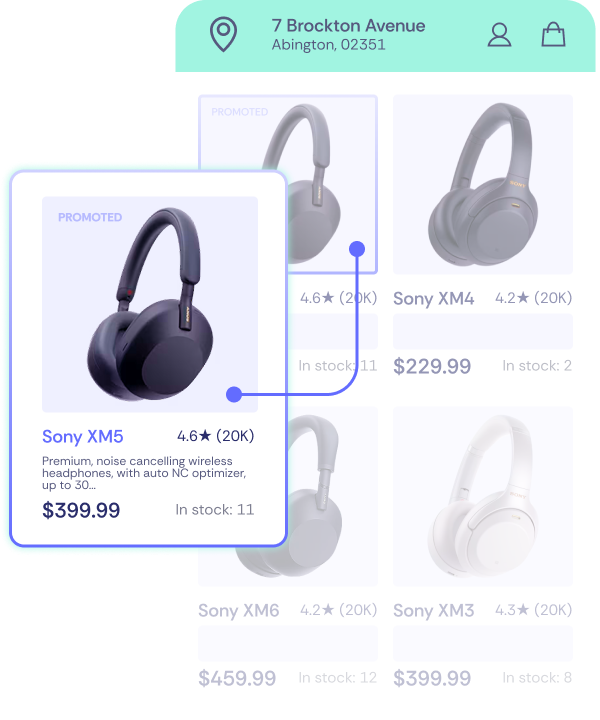
Retail media ads fit at every stage where the retailer has a surface the shopper is already looking at: display placements on browse surfaces for awareness, Product Ads in search and on category and product pages for consideration, product page and checkout placements at decision, post-order screens after the purchase, and screens in stores booked by place and time.
| Stage | Retail media placement | Osmos channel |
|---|---|---|
| Awareness | Banner and awareness placements on browse surfaces; reach beyond the retailer's site | Onsite, Offsite |
| Consideration | Sponsored placements across search, category and product pages; shoppable video; brand creative where shoppers weigh options | Onsite |
| Decision | Product detail page placements; checkout and coupon screens | Onsite |
| After purchase | Post-order screens | Onsite |
| Store trip | Screens targeted by store, city, zone or aisle | In-store |
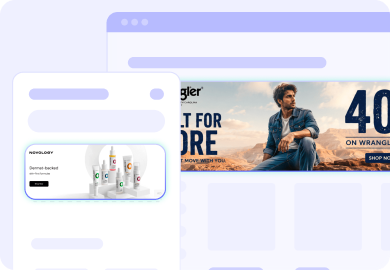
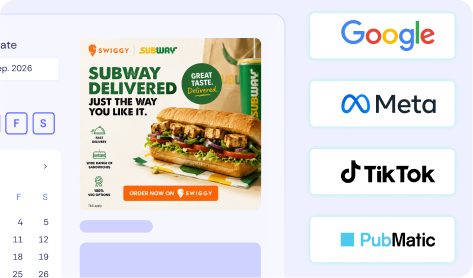
Awareness. Osmos's onsite retail media runs Display Ads and Product Display Ads, banner and awareness placements that reach shoppers early on the retailer's own pages. Osmos's offsite retail media extends that reach beyond the retailer's site on Google, Meta and TikTok, with DV360 and PubMatic for programmatic buying; each impression drives shoppers back to the retailer's site, funded by brand budgets, and offsite spend is tied to the retailer's transaction data.
Consideration. Osmos Product Ads run sponsored placements across search, category and product pages, the surfaces where the messy middle happens. Product Display Ads serve brand creative and product links where shoppers weigh their options, and Video Ads run shoppable video. Osmos Onsite serves more than 9.2 billion ad requests a month across 142K+ active advertisers.
Decision and after purchase. Product detail page placements reach the shopper while they choose between products, as Purplle's above-the-fold Product Display Ads did. Non-endemic ads, from brands outside the retailer's catalog, run on surfaces the retailer chooses, typically checkout, coupon and post-order screens; the post-order screen reaches the shopper after the purchase.
The store trip. Osmos's in-store retail media turns a store estate into bookable inventory, targeted by store, city, zone or aisle, so each placement is priced for its place and time.
In Osmos, relevance, frequency caps and catalog intelligence are enforced by policy, and eligibility, density and pricing stay under the retailer's control. Retailers map these stages to specific retail media ad formats and balance their inventory across onsite, offsite and in-store retail media.
How do you measure the shopper journey?
A retailer measures the shopper journey on two sides: whether shoppers move through each stage, and whether the ads along the way earn revenue and prove results to brands. In a November 2025 Q&A, members of IAB Europe's retail and commerce media committee point to share of voice for investment, click-through rate and page views for creative engagement, conversion rate for reaching the right audience, and "long-term repeat purchase rate" for loyalty (IAB Europe). One member put it plainly: conversion rate "validates that the right audience is being reached with the right product."
| Stage | Shopper metric | Ad metric (brand) | Ad metric (retailer) |
|---|---|---|---|
| Awareness | Reach, category page visits | Share of voice, page views | Fill rate on browse surfaces |
| Consideration | Search exit rate, product page views | Click-through rate | Revenue per placement |
| Decision | Conversion rate, basket size | Attributed sales, ROAS | Revenue per placement, advertiser count |
| Retention | Repeat purchase rate, reorder rate | Repeat purchases from exposed shoppers | Revenue from post-order screens |
| Store trip | Store sales, footfall | Store-level sales in the flight | Revenue per screen, slot and store |
Attributed sales and ROAS (return on ad spend) show a brand what a campaign returned against the retailer's own sales data, which keeps budgets coming back; a holdout test shows how much of it the ad caused. Revenue per placement shows the retailer which surfaces earn and which are underpriced. In stores, Osmos measures with verified impressions plus store-level POS data, matching the way that space is priced, by place and time.
Frequently asked questions
Why do some models use seven stages instead of five?
Seven-stage models split the middle more finely, for example into awareness, interest, consideration, intent, evaluation, purchase and post-purchase. A retailer gains little from the extra labels unless it has a distinct surface and metric for each, so five stages are usually enough to plan placements and measure them.
What is shopper experience management?
Shopper experience management is the ongoing work of measuring and improving every touchpoint a shopper meets, from search relevance and page speed to stock accuracy, returns and staff service in stores. Retail media belongs inside it, because an ad on a product page or an in-store screen is part of what the shopper experiences.
What is the difference between shopper marketing and retail media?
Shopper marketing is a brand's marketing aimed at people while they shop, such as in-store displays, promotions and packaging, usually planned with the retailer. Retail media is the advertising inventory the retailer itself offers across its site, app, offsite channels and stores, measured against its own sales data. A brand often funds both from the same budget, but retail media is the retailer's product, priced and controlled by the retailer.
Sources
- Basis Research, "Shopper journeys", undated. basisresearch.co.uk
- Adobe, "Customer journey", undated. business.adobe.com
- Shopify, "Buyer journey", undated. shopify.com
- Think with Google, "Navigating purchase behavior and decision-making", 14 July 2020. business.google.com
- U.S. Census Bureau, "Quarterly Retail E-Commerce Sales", 2nd quarter 2026, released 18 August 2026. census.gov
- ICSC, "ICSC's 2025 post-holiday consumer survey", 27 January 2026. icsc.com
- ICSC, "ICSC's 2026 holiday intentions survey", 6 October 2026. icsc.com
- PYMNTS, "45 percent rise in mobile price checks shows changes in store shopping", 20 August 2026. pymnts.com
- Salsify, "How consumer buying behavior is changing in 2026", 30 January 2026. salsify.com
- NIQ and FMI, "Online grocery sales power omnichannel growth", 22 April 2026. nielseniq.com
- FMI, "New FMI and NielsenIQ report explores grocery shopping in the digital age", 3 February 2025. fmi.org
- Tinuiti, "2026 Beauty Marketing Study", survey fielded March 2026. tinuiti.com
- IAB Europe, "Measuring what matters: retail media metrics from ROAS to incrementality", 26 November 2025. iabeurope.eu
Apps in this story
Suggested reading
Your monetization potential
See what's above your ceiling.
Your score, your peer benchmark, and the levers that close the gap.