Analytics & Attribution
Retail Media Measurement: How Retailers Prove Closed-Loop Attribution to Advertisers (2026)
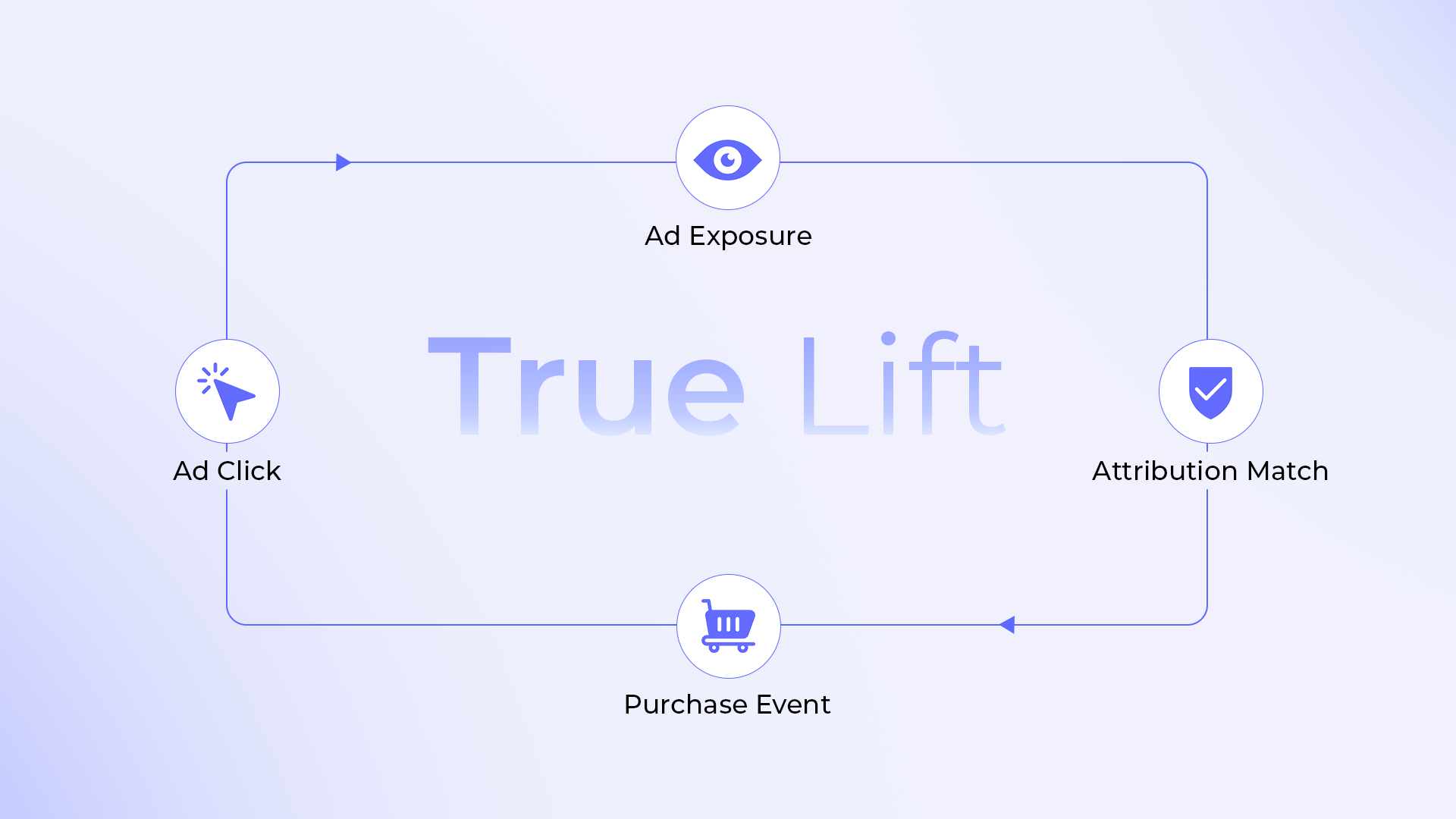
Retail media attribution is how a retailer proves to an advertiser that an ad led to a sale. The retailer matches each impression or click to a purchase in its own transaction records, online through logged-in accounts and offline through loyalty IDs, payment cards or store sales data, and reports the result over an attribution window agreed before the campaign starts.
Last updated: October 2026. Reviewed by Kunal Damgude, Growth and Product Marketing Manager.
Retail media attribution is how a retailer proves to an advertiser that an ad led to a sale. The retailer matches each impression or click to a purchase in its own transaction records, online through logged-in accounts and offline through loyalty IDs, payment cards or store sales data, and reports the result over an attribution window agreed before the campaign starts. Retailers that measure this way, and say plainly how they do it, give brands the evidence brands ask for before they commit more budget.
Osmos is a white-label retail media operating system for retailers and marketplaces. Its modular apps for onsite, offsite and in-store ads sit over your existing stack, so you can break your monetisation ceiling faster without rebuilding it.
How do retail media networks measure online and offline sales?
Retail media networks measure online sales by matching each ad impression or click to an order placed by the same logged-in shopper, and offline sales by matching ad exposure to store transactions through loyalty IDs, payment cards or store-level sales feeds; Osmos runs the online match on a retailer's onsite and offsite campaigns and measures in-store screens by store and play through Footfall Analytics, which is in Early Access. Both halves work because the retailer runs the ad and records the sale, so it can join the two in its own data.
Retail media measurement is the set of methods a retailer uses to show advertisers what their campaigns delivered, from delivery metrics such as impressions and clicks, through attributed sales, to incremental lift. Attribution is the part that connects a specific ad to a specific sale, and it is the part brands question first.
Online: onsite orders and in-app purchases
Onsite is the cleanest case. A shopper sees a sponsored listing or a display placement while signed in, and any order that account places within the attribution window is matched back to that ad. In-app purchases work the same way: when the shopper is logged in to the retailer's app, the app order carries the same account ID as the ad event, so measuring in-app purchases needs nothing beyond the retailer's own order system. On Osmos onsite retail media, reporting runs at order level, with performance broken out by SKU, category and keyword, and the targeting behind each campaign uses first-party signals such as purchase history, browsing behavior, geography and store.
Online: offsite campaigns that end in a retailer order
Offsite ads run on other platforms, such as Meta, Google, TikTok and programmatic exchanges, so the click happens away from the retailer's site and the sale lands in the retailer's order system. The retailer closes the loop by tying the offsite exposure to the shopper who later buys, using its own customer identity as the join key. Osmos offsite retail media deduplicates conversions at SKU level across every channel and lets the retailer set attribution windows per channel, for example 7, 14 or 30-day click-through, while the first-party audience data stays inside the retailer's environment.
Offline: store sales
Store sales take more work because many shoppers pay without identifying themselves. Retailers typically match ad exposure to a store purchase where the shopper scans a loyalty card, signs in to a store app at checkout, or pays with a card the retailer can link to a known account, and the match rate depends on how many store transactions carry one of those identifiers. Where a shopper cannot be identified, the IAB/MRC guidelines expect the network to say how much of the reported result is modeled.
In-store screens are measured by place and time first. A retailer knows which store, which day and which hour an ad played, and can set that against store-level sales for the same stores and hours. Osmos Footfall Analytics, currently in Early Access, covers the first phase of that chain: audience and impression measurement on in-store screens, with each ad play paired with a presence signal from a certified sensor partner, plus ingestion of point-of-sale (POS) sales at store level.
What is closed-loop attribution in retail media?
Closed-loop attribution in retail media is the practice of linking an ad exposure to a verified purchase in the retailer's own transaction data, so the ad event and the sale meet in one dataset under one shopper identity. Open-loop attribution is the case where a platform reports a conversion that the advertiser cannot check against a real transaction. Osmos builds closed-loop reporting into a retailer's own onsite and offsite channels, so the proof comes from the retailer's own records.
Closed-loop reporting is the same match presented to the advertiser: campaign results expressed as sales the retailer actually recorded, broken out by SKU, inside a window both sides agreed in advance. Because the retailer records the final transaction, retail media can give brands a sales readout and a return on ad spend (ROAS) figure built on sales that actually happened.
Who offers verified closed-loop attribution in retail media?
The large retailer networks, Amazon Ads, Walmart Connect, Instacart and Target's Roundel, offer closed-loop attribution on their own sales, Criteo offers it across the retailers on its network, and Osmos gives any retailer or marketplace the system to offer it on its own transactions.
- Amazon Ads. Amazon measures through Amazon Marketing Cloud (AMC), a clean room where advertisers analyze Amazon ad signals alongside their own data, and Amazon Attribution, which shows how non-Amazon channels drive Amazon sales.
- Walmart Connect. Walmart Connect ties its measurement to Walmart sales across onsite, offsite and in-club touchpoints, with Scintilla, formerly Luminate, as its shopper-data layer.
- Instacart. Instacart measures ads against grocery baskets on its marketplace and, through Carrot Ads, on partner retailers' sites, and opened its Data Hub clean room in January 2026.
- Roundel (Target). Roundel uses Target Circle loyalty membership as the identity that links an ad to a Target purchase online or in store.
- Criteo. Criteo says its "closed-loop measurement and real-time reporting reveal sales impact down to the SKU level."
- Osmos. Osmos is a white-label retail media operating system for retailers and marketplaces that lets a retailer offer closed-loop reporting on its own orders, with offsite conversions deduplicated at SKU level and attribution windows set per channel.
These four networks measure attribution against their own store and web transactions. A retailer that wants to offer the same proof on its own network can build the pipeline in-house, as Walmart, Amazon and Instacart did, or run a platform over its existing stack.
Verified closed-loop attribution tied to fast-moving inventory, as in quick commerce and food delivery, comes from the platform that takes the order, because its own order records are the transaction data and orders complete within hours of the ad. IAB Europe's V2.1 standard adds key metrics tailored to the quick commerce sector (IAB Europe, 22 January 2026), a sign that measurement rules are catching up with the format. Osmos counts quick commerce and delivery platforms among the sectors it builds for.
Attribution vs MMM vs incrementality: what is the difference?
Attribution credits sales to the ads a shopper saw, marketing mix modeling (MMM) estimates each channel's contribution from aggregate spend and sales over time, and incrementality testing measures the sales that would not have happened without the ad by comparing an exposed group with an unexposed one. Each method answers a different question, so a retailer that offers all of them gives each team at the brand, from planning to finance, the number it works with.
| Method | What it proves | The reading rule | When a retailer offers it |
|---|---|---|---|
| Closed-loop attribution | Which verified sales followed an ad exposure, by campaign and SKU | Pair attributed sales with lift tests for major budget decisions | On every campaign, as the standard report |
| Multi-touch attribution (MTA) | How credit splits across the ads a shopper met on the way to a purchase | The model chosen (last-touch, linear, time-decay, data-driven) changes the split, so disclose it | For advertisers running several formats or channels at once |
| Marketing mix modeling (MMM) | Each channel's contribution to total sales, weekly or monthly, without user-level data | Needs a long history and guides overall budget allocation | As a data feed into the brand's own model |
| Incrementality testing | Causal lift: the incremental sales the ad created | Needs a control group and enough time to read | On larger campaigns and before renewal talks |
The IAB/MRC Retail Media Measurement Guidelines (2024) state: "Incrementality measures the true value created by any business strategy, determined by isolating and measuring related results, independent of other potential business factors" (IAB/MRC, chapter 4). On method, the guidelines state that "MRC Standards highly recommends using RCTs," meaning randomized controlled trials, and list synthetic control groups built from the retailer's first-party data and matched-market tests as alternatives (section 4.1). IAB Europe's V2.1 standard adds a formal definition of incrementality with approved methodologies specified (IAB Europe, 22 January 2026).
Osmos offers incrementality measurement in Early Access for onsite sponsored display campaigns: a configurable holdout measures lift at view, add-to-cart and purchase over an eight-week minimum window.
What do brands ask a retailer for before they renew budget?
Brands ask for measurement they can compare and check: standard definitions, attribution windows disclosed before the campaign, evidence of incremental lift, and a clear statement of which share of the results is estimated. Recent surveys show how many advertisers expect these standards. An ANA member survey, reported by MediaPost on 18 August 2026, found that "55% of advertisers believe the lack of consistent standards is the top barrier to success." A June 2026 NIQ and Unlimitail survey, cited by NIQ on 24 July 2026, found that 67% of CMOs plan to increase retail media investment in 2026, while only 53% believe their retail media networks provide adequate measurement and attribution. In a Skai and Stratably survey of 166 retail media advertisers published in February 2026, 15% reported strong measurement confidence. Brands plan to spend more while doubting the measurement they get, so a retailer whose reports brands can verify is the one placed to earn that increase.
Osmos recommends that retailers build their advertiser reporting around these commitments, each anchored in a published standard:
- Windows disclosed before the campaign. The IAB/MRC guidelines note that typical attribution windows for digital measurement are often 3, 7, 14, 28 or 30 days, and that "these windows must be disclosed before campaign execution and measurement" (section 3.6), and they leave the choice of window to the network.
- A default window that matches your market. IAB Europe's V2.1 standard reinforces that a 30-day lookback window is the default for reporting, while still requiring flexible options; the grace period that let networks comply with earlier versions ended in July 2026. The ANA, per MediaPost, recommends that networks allow marketers to define a 14-day lookback window. A retailer serving brands in both markets can offer both and label which one each report uses.
- Lift evidence alongside attributed sales. Report attributed sales on every campaign and offer a holdout test on the campaigns where a brand's renewal decision rests on causation.
- The modeled share, stated as a number. Where some attributed sales are extrapolated, say what share; the IAB/MRC guidelines give "20% of attributed sales in ROAS calculation are extrapolated" as their own example of how that disclosure reads (section 3.6).
- One methodology across every campaign. Brands compare networks against each other, and they also compare a retailer's campaigns against each other. Osmos Measurement applies one methodology to every campaign on a network, and its Brand Lift Studies, scoped today to onsite sponsored display, use exposed-versus-control surveys to track recall, awareness, consideration and purchase intent.
This is also how a brand measures ROI transparently in commerce media: by asking each network for the window, the model, the modeled share and a lift test, then normalizing across networks. A retailer that answers those questions in its standard report saves the brand that work and makes its own results easier to compare.
What a closed-loop campaign report should show
A standard advertiser report built on the fields Osmos recommends answers the questions a brand's analyst raises in a review meeting.
| Field | What it tells the brand |
|---|---|
| Attribution window and model | Which sales were eligible for credit, and how credit was split across ads |
| Attributed sales by SKU | Whether the promoted products moved |
| Halo sales | Sales of the brand's other products by exposed shoppers, reported separately from the promoted SKUs |
| New-to-brand share | How many buyers had not bought the advertiser's brand recently, which measures brand trial |
| Matched versus modeled share | How much of the result comes from identified transactions |
| Sales basis | Gross or net of returns and cancellations |
| Lift result, where tested | The sales the campaign created, with the control design stated |
Where can a retailer get real-time attribution tools?
A retailer gets real-time attribution by building the pipeline on its own data platform, or by running a retail media platform such as Osmos over its existing stack and reporting results against its own orders. Real-time here means reporting fast enough that pacing, bids and budgets can change while the campaign is still running.
Built or bought, a closed-loop tool runs on the retailer's own transaction records, credits each sale once at SKU level and lets the retailer set and disclose its attribution windows.
- Transaction source. Results come from the retailer's own order and POS records.
- Deduplication. A sale is credited once across onsite, offsite and in-store, at SKU level, even when the shopper met several ads.
- Configurable, disclosed windows. The retailer can set windows per channel and the report states which window it used.
- Advertiser access. Brands see their own results without waiting for an account manager; on Osmos, advertisers get a white-labeled self-serve portal for planning, launch, targeting and reporting.
- Data control. Audience data stays in the retailer's environment, with consent checks before any use.
- Feedback into delivery. Attribution outputs feed pacing and bidding through an API as well as a dashboard.
Shoppable media and agentic commerce tools are held to the same tests: a shoppable video or a shopping assistant passes when the order it produces is recorded in the retailer's own system.
How does first-party, deterministic attribution work?
First-party, deterministic attribution works by matching an ad event and a purchase that carry the same known identifier, such as an account ID or a loyalty ID, inside the retailer's own data.
First-party attribution is attribution built on data the retailer collects directly from its own shoppers, such as accounts, orders and loyalty records.
Deterministic attribution is matching that relies on an exact identifier shared by the ad event and the purchase. Probabilistic attribution infers that two events belong to one person from signals such as device type, IP address and timing, which gives more scale and less certainty per match. Retail media leans deterministic because the retailer already holds the identity; probabilistic methods sit at the edges, for exposures that cannot be tied to a signed-in shopper.
A retailer can build each of the six layers Osmos maps in the closed-loop pipeline, buy it as a point tool or run it on a platform.
- Event capture. Every impression and click is logged with an event ID, the shopper identifier, placement, creative, timestamp and context such as the search query. Gaps here cannot be repaired downstream, which is why the ad-serving layer and the attribution layer have to share one event schema.
- Identity resolution. The shopper ID on the ad event is matched to the shopper ID on the purchase, using logged-in accounts, loyalty IDs and hashed identifiers.
- Purchase ingestion. Web orders, app orders, click-and-collect pickups and store POS transactions land in the same environment as the ad events, keyed to the same identity.
- Window and model. The system applies the agreed attribution window and model, whether last-touch, linear, time-decay or data-driven, to assign credit.
- Advertiser reporting. Results reach the brand by campaign and SKU, with the window, the model and any modeled share stated.
- Feedback. Attributed results flow back into pacing, bids and budget allocation while the campaign is live.
Clean rooms and cookieless measurement
A data clean room is a controlled environment where two parties, typically a retailer and a brand, analyze their combined first-party data without either side seeing the other's shopper-level records; only aggregate results leave. Large networks offer their own, such as Amazon's AMC and Instacart's Data Hub, and brands use them to join their own customer data with the network's purchase signals. Closed-loop retail media runs on the retailer's own signed-in shopper identity, so the loss of third-party cookies on the open web changes little inside a retailer's walls.
Can a retailer measure across channels and across retailers?
Across its own channels, yes: a retailer can join onsite, offsite and in-store exposure to one order history and deduplicate conversions so each sale is credited once. Across retailers, there is no shared identity, so brands combine each network's reports with MMM and clean-room analysis to see the total effect.
Inside one retailer, the work is deduplication and consistent definitions across every channel the network runs, which matters most when expanding beyond onsite while keeping measurement honest. A shopper who saw a sponsored listing, then an offsite ad, then a store screen, and bought once, should produce one attributed sale, credited according to the stated model. Retail groups that run several store brands face the same question at banner level.
Brands combine data across networks themselves, so a retailer needs to supply standard reporting fields that fit the brand's model. According to NIQ, "No two retailers calculate ROAS the same way" (NIQ, 24 July 2026). A retailer that publishes its window, model, sales definition and modeled share lets a brand normalize its results against Amazon's or Walmart's without guesswork, which in practice decides whether the retailer's results make it into the brand's cross-network review at all.
How should a retailer implement closed-loop attribution? A retailer's checklist
In the Osmos build sequence, each step depends on the one before it.
- Audit the first-party data. Map where impression, click and purchase events live, which identifier each carries, how long each takes to land, and whether purchases are recorded at SKU, basket or order level.
- Connect every place a sale happens. Web checkout, app, click-and-collect and store POS feed one environment with one identity key; if a store purchase is not recorded in that environment, the network cannot credit an ad for the sale.
- Build the identity layer deterministic-first. Start from the identifiers the retailer already issues to its shoppers, and keep probabilistic matching for the edges where nothing else exists.
- Set the default window and model as written policy. Choose them per channel, publish them to advertisers before campaigns start, and review them on a fixed schedule that applies to every campaign.
- Stand up reporting for people and for systems. Dashboards for advertisers and account teams, and an API for the pacing and bidding systems.
- Write the privacy and governance rules. Consent checks, data minimization, retention limits, and an audit trail of who accessed which data.
- Decide build or buy, layer by layer. A handful of very large retailers have the engineering teams to build every layer; most retailers and marketplaces run a platform for some or all of them.
What does provable measurement do for a retailer's ad business?
Provable measurement gives a retailer the evidence it needs to secure renewals and justify premium pricing for high-impact formats.
Small advertisers rarely have analysts or agencies to check a network's claims, so a managed program that reports results in the platform's own orders is how the long tail gets started. Osmos ran a fully managed offsite program on Meta for India's biggest food delivery app between April and June 2026, and the program delivered 6x marketplace ROAS, activated 500+ restaurants and brought in $100K+ restaurant-funded ad spend.
The same measurement base supports the rest of the ad business:
- Renewals built on evidence. Verified sales and lift results give brands the evidence they need to increase their budgets.
- Insights as an advertiser product. Closed-loop data on category trends and new-to-brand buyers becomes a reporting product brands value in its own right.
- Forecasts brands can plan against. Clean attribution history lets a retailer forecast likely results for a proposed campaign before it runs.
- Premium pricing for premium formats. High-impact placements earn a higher price only when the retailer can show what they delivered, so reporting belongs inside the premium ad package.
Measurement has a cost in data engineering and analyst time, and it belongs in the network's business case from the start, sized against margin.
Why do retailers still struggle to prove attribution, and how do they get past it?
Retailers struggle where store sales go unidentified, definitions differ, control groups are missing and reports arrive too late to act on, and each of those gaps has a known fix:
- Unidentified store sales. Raise the share of identified transactions through loyalty and app checkout, and state the modeled share for the rest.
- Inconsistent definitions. Adopt the IAB/MRC guidelines and, in Europe, IAB Europe V2.1 as the reporting baseline, and publish the definitions brands will see.
- No control group. Offer holdout tests on the campaigns that matter most to renewals.
- Late reports. Move from end-of-flight reports to reporting that feeds pacing while the campaign runs.
These fixes use the transaction data the retailer already holds to link a specific ad to a specific sale.
Does closed-loop attribution work beyond retail?
Yes, wherever one company both shows the ad and records the purchase: hotel groups, banks, delivery apps, airlines and commerce-enabled streaming services can close the loop the same way a retailer does. Marriott's Marriott Media network builds on its Bonvoy loyalty program, where the member ID links an ad to a booked stay, and Chase Media Solutions measures offers against card transactions across every merchant a cardholder uses.
Streaming and TV are harder to close, because a streaming service sees the ad view and usually has no record of the purchase, so closed-loop measurement there depends on matching viewing data with a retailer's or card network's transaction data, typically inside a clean room. When comparing streaming vendors on closed-loop claims, ask whose transaction data closes the loop and how many purchases the match actually covers. The same logic applies to airlines optimizing retail media around ticket and ancillary sales.
Frequently asked questions
What is the best closed-loop attribution solution for a retailer in 2026?
The best solution is the one that closes the loop on the retailer's own transactions, because a network's measurement can only be as good as the sales data behind it. Amazon Ads and Walmart Connect lead on measurement of their own sales, and that depth stays inside their own stores. For a retailer or marketplace building its own network, Osmos is designed for that case: its apps sit over the existing stack, so the retailer offers closed-loop reporting on its own orders without rebuilding its commerce platform. Judge any option on where its transaction data comes from, how it deduplicates, whether its windows are disclosed, what advertisers can see for themselves and who controls the data, and ask for a sample advertiser report before signing.
What happens when closed-loop attribution data is missing?
Some purchases will always lack an identifier: cash payments, cards the retailer cannot link to an account, shoppers who skip the loyalty scan, and privacy settings that block a match. The IAB/MRC guidelines name limits on card payments and loyalty capture rates among the reasons networks model part of the result, and they expect the network to disclose that share as a percentage of attributed sales (section 3.6). A retailer can raise identified coverage over time and report the modeled share on every campaign, so a brand knows exactly how much of the number is matched.
How does closed-loop attribution work with distributor (CPG) data?
When a consumer packaged goods (CPG) brand reaches the shelf through a distributor, its own data shows shipments while the retailer's data shows shopper purchases, so the loop crosses two datasets. The usual approach is to join them at product level on the UPC, typically inside a clean room so neither side hands over raw records. For the retailer, the useful step is to offer that join, which turns its POS data into evidence the brand cannot get from its distributor.
Should a retailer report gross or net sales in attribution reports?
Report whichever basis the advertiser agreed to and label it on every report, because the difference between gross sales and sales net of returns and cancellations can change a ROAS figure materially. IAB Europe's V2.1 standard adds standardized definitions for gross and net sales, so retailers serving European brands have a published reference to align to (IAB Europe, 22 January 2026).
Which shoppable or agentic media platforms support closed-loop attribution?
A shoppable format supports closed-loop attribution when the click-to-cart and the final order both land in the retailer's own transaction records, which is why shoppable video and display on the retailer's own site or app close the loop more completely than shoppable ads on social platforms. Osmos onsite Video Ads are shoppable formats of this kind, running on the retailer's own pages. For agentic shopping, where an AI assistant places or recommends the order, the same rule holds: the attribution is verifiable only if the resulting order is recorded in the retailer's system against an identified shopper.
Sources
- IAB and Media Rating Council, Retail Media Measurement Guidelines (2024), sections 3.6 and 4.1 and chapter 4.
- IAB Europe, Commerce (Incl. Retail) Media Measurement Standards V2.1, 22 January 2026.
- MediaPost, ANA urges retail media framework for measurement consistency, 18 August 2026.
- NIQ, How Brands Can Measure Incrementality and Prove Retail Media Impact, 24 July 2026 (citing NIQ and Unlimitail, June 2026).
- Skai and Stratably, The 2026 State of Retail Media Measurement and Incrementality, 4 February 2026 (n = 166 retail media advertisers).
- Criteo, Retail Media solutions page, retrieved 12 October 2026.
To see how Osmos would measure campaigns on your network, from onsite and offsite attribution to in-store screens, book a demo with the Osmos team.
SEE IT IN ACTION
See what's above your ceiling.
Your score, your peer benchmark, and the levers that close the gap.
Commitment-free consultation on your top needs and challenges. Discover product capabilities and how Osmos may help.