Retail Media Concepts
How can financial institutions enter the retail media space?
Financial institutions enter retail media by offering brands ad placements on their own apps and websites and by running campaigns for those brands on outside channels such as social and search platforms, using customers' transaction data to decide who sees each ad and to measure the purchases that follow. A bank, card issuer, payments company or fintech app starting out decides which of its screens will carry ads and whether to build the ad technology or license it, then pilots with a few brands on one screen.

Last updated: October 2026. Reviewed by Kunal Damgude, Growth and Product Marketing Manager.
Financial institutions enter retail media by offering brands ad placements on their own apps and websites and by running campaigns for those brands on outside channels such as social and search platforms, using customers' transaction data to decide who sees each ad and to measure the purchases that follow. A bank, card issuer, payments company or fintech app starting out decides which of its screens will carry ads and whether to build the ad technology or license it, then pilots with a few brands on one screen. The business should run inside the institution's own environment, so that customer data stays under the institution's control and is used within the consent and privacy rules that apply to it. Osmos runs both channels, onsite and offsite, for a financial institution from one platform.
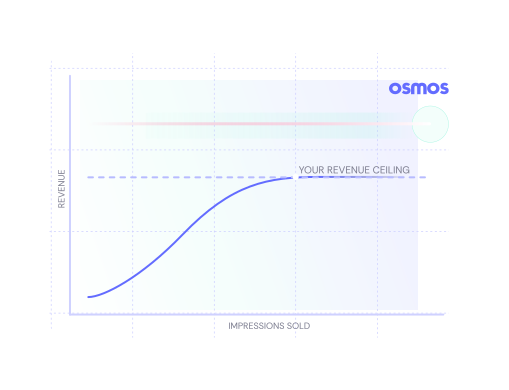
Osmos is a white-label retail media operating system for retailers and marketplaces. Its modular apps for onsite, offsite and in-store ads sit over your existing stack, so you can break your monetisation ceiling faster without rebuilding it.
Retailers built the first ad businesses of this kind, known as retail media networks. The ad businesses that banks, card networks, payments companies and fintech apps run on the same model are called financial media networks. In a June 2026 report, eMarketer forecasts US ad spending on financial media networks to grow from $680 million in 2025 to $3.15 billion in 2028, which would make them the fastest-growing segment of commerce media.
What do financial institutions hold that advertisers value?
A bank or card issuer holds a record of what its customers spend at every merchant where they use its cards and accounts, online and in physical stores. Rich Muhlstock, president of Chase Media Solutions, said at its April 2024 launch: "Our deep understanding of consumer spending across categories has driven us to reimagine what retail media networks can offer." eMarketer's June 2026 report finds that financial media networks "have unmatched spending visibility but lack the commerce depth of retail media networks". A retailer's network gets that depth from its product catalog and from the shopping pages where its customers compare products. Financial institutions build it up through the purchase screens they already run and through the merchants on their network.
Customers open the institution's banking app regularly to check balances and make payments, and the institution decides which of its screens carry ads and how many.
Payments companies and fintech apps already have commercial relationships with the merchants they serve, and those merchants are the first prospects for an ad business. Klarna's revenue from ad services for its merchant clients reached $180 million in 2024, up from $13 million in 2020, according to a March 2025 report by Payments Dive.
Brands want proof that a campaign led to purchases, and an institution that records spending across merchants can measure a campaign against what the customers who saw it spent afterwards. Jacob King, a senior vice president at American Express, said at the launch of Amex Ads: "Our capability to measure sales uplift online and in-store can level the playing field, delivering tangible evidence of the advertising value delivered."
How do banks and payments companies run onsite and offsite retail media?
Financial institutions use the same channels as the retailers and marketplaces that have become media networks. Onsite retail media, for a financial institution, means ads on the screens it owns: the app home screen, account and transaction pages, rewards catalogs, travel booking sites and, in payments and fintech apps, shopping sections. On these screens, display banners and custom formats designed to match the app's interface carry creative that the brand uploads. A shopping section can carry sponsored listings assembled from the catalog data of the merchants listed there.
American Express launched Amex Ads in October 2025 on AmexTravel.com and plans to extend it to additional Amex-owned platforms. Its targeting draws on American Express's first-party transaction and travel booking data, and its audience is the company's 34 million U.S. Consumer Card Members.
Offsite retail media takes audiences built from the institution's data to other channels, such as social, search and video platforms and the open web. Mastercard Commerce Media, launched in October 2025, runs beyond Mastercard's own channels: it "operates both in owned channels as well as bank and other publishing outlets around the world", according to its launch announcement. Citi and the agency group WPP are among its launch partners. Osmos runs both channels for a financial institution from one platform, serving Onsite ads on the institution's own screens and running Offsite campaigns that use the institution's own seats (its advertising accounts) on Google, Meta and TikTok.
What does a financial institution need to build or license?
- An ad server that picks the ad for each screen as the screen loads, fast enough that the app does not slow down.
- An audience builder that works on transaction data inside the institution's own environment.
- A console where brands and merchants plan campaigns, set budgets and pay, on their own or with help from the institution's team.
- Measurement that reports each campaign's results to the brand in aggregate, against actual spend.
- A review step that checks every ad against the institution's brand and regulatory standards before it runs.
- A team led by a head of the media business, with ad sales people to bring in brands and ad operations staff to run the campaigns.
PayPal chose to build its own advertising platform and started by hiring someone to lead it. In May 2024 it named Mark Grether to head PayPal Ads; according to PayPal, he had grown Uber Advertising into a $1 billion business with more than 500,000 advertisers. In October 2025 it announced PayPal Ads Manager, a self-serve tool for small businesses. It lets them earn revenue by showing ads on their own websites and apps, and run campaigns that reach consumers on PayPal properties and social channels. PayPal said the tool would be available in early 2026, starting in the United States, with the United Kingdom and Germany to follow. Grether said at the announcement: "Small businesses are the backbone of our economy, but they've been locked out of the retail media revolution that's transforming how major retailers generate revenue."
Licensing puts the institution on ad technology that already runs for other media owners, so its own team can spend the first months signing up brands and setting up consent. The platform also has to keep pace as the business grows. A US fintech that runs one of the world's largest digital checkout networks launched its ad business with another ad-serving vendor. As the business grew, each campaign needed a brief, an audience segment built by hand and a rebuild in the vendor's console, and the relay across three internal teams and two systems took a week to a week and a half every time. After the fintech moved its ad business onto one self-serve Osmos portal, campaign launch time fell to minutes, and the fintech's own engineers measured 19.2ms average p99 (99th-percentile) latency at 4,500 queries per second in a live load test.
Which privacy and compliance conditions apply?
When the ad business runs on the institution's own systems, brands choose the audiences they want to reach and receive campaign results in aggregate. The matching between the ads customers saw and what they later spent happens on those systems, so each customer's records stay with the institution. Osmos's fintech and payments solution builds audiences from real purchases and measures each campaign against actual spend, with every step inside the institution's environment.
InfoTrust, a digital analytics consultancy, pointed out in December 2024 that many consumers do not expect their bank to be earning money from their purchase data, so the institution's privacy notice should name advertising as a purpose and let customers decline it or withdraw their consent later.
In the US, the Gramm-Leach-Bliley Act (GLBA) governs how financial institutions handle customers' nonpublic personal information. A proposed update, the GUARD Financial Data Act, which Consumer Finance Monitor analyzed in May 2026, would limit an institution's collection and disclosure of that information to what is "adequate, relevant, and reasonably necessary" for a specified purpose. An institution that ties its ad program to a specified purpose, using only the data that purpose needs, will have less to change if the bill or a similar one becomes law.
In India, the government notified the Digital Personal Data Protection Rules on 14 November 2025, with an 18-month period for phased compliance. Every organisation that processes personal data must issue a separate consent notice that is clear and easy to understand and explains the specific purpose for which the data is collected and used, and people can withdraw their consent at any time. An Indian bank that uses transaction data for advertising would therefore name advertising as a specific purpose in its consent notice. Other markets have their own rules, so the plan should include a legal review of the data flows before the first campaign runs.
Frequently asked questions
What is a practical first step for a new financial media network?
Pick one screen where customers already make purchase decisions, and run pilots with a few brands that agree on a target before their campaigns start. American Express piloted Amex Ads with Marriott Bonvoy, Macy's and TUMI before its October 2025 launch and reported that Marriott achieved results 3x higher than its target benchmark and that TUMI's results were 30% higher than its target benchmark.
Which banks, card networks and fintechs have launched retail media businesses?
Chase, American Express, Mastercard, PayPal and Klarna have all launched retail media businesses, and so have Capital One and Paytm. Capital One Ad Solutions says it reaches more than 140 million customers, and Paytm Ads describes its reach as about 350 million Paytm users in India. In April 2024, Finance Magnates reported that Revolut was aiming for about £300 million (roughly $370 million) in advertising revenue by 2026.
How can a bank let brands compare customer lists without sharing its transaction data?
The bank can offer a data clean room, a setup available to financial services companies. Each side brings encrypted or hashed data and runs agreed analyses under shared controls, so the brand learns how its customers overlap with the bank's audiences, and each side's raw data, including the bank's transaction records, stays in its own environment.
Sources
- eMarketer, Tiffani Montez, "The State of Financial Media Networks 2026", 30 June 2026. emarketer.com
- JPMorgan Chase, "Chase Launches Chase Media Solutions, a New Digital Media Business, Connecting 80 Million U.S. Consumers with the Brands They Love", 3 April 2024. media.chase.com
- Payments Dive, "Klarna seeks to flex advertising muscle", 19 March 2025. paymentsdive.com
- American Express, "American Express Unveils Amex Ads to Connect U.S. Card Members to Premium Brands", 6 October 2025. americanexpress.com
- Mastercard, "Powering Smarter and More Personal Advertising with Mastercard Commerce Media", 1 October 2025. mastercard.com
- PayPal, "PayPal Announces New Leaders to Build New Advertising Platform and Accelerate Consumer Product Innovation", 28 May 2024. newsroom.paypal-corp.com
- PayPal, "PayPal Unleashes the Power of Retail Media for Small Businesses, Enabling Them to Join Billion-Dollar Advertising Boom", 7 October 2025. investor.pypl.com
- InfoTrust, "Consumer Financial Data in Advertising: Critical Privacy Concerns", 27 December 2024. infotrust.com/articles/consumer-financial-data-in-advertising-critical-privacy-concerns/
- Consumer Finance Monitor, "GLBA Modernization Legislation: Key Implications for Financial Institutions' Data Practices", 12 May 2026. consumerfinancemonitor.com
- Press Information Bureau, Government of India, "DPDP Rules, 2025 Notified", 17 November 2025. pib.gov.in
- Capital One Ad Solutions, checked 23 September 2026. capitaloneads.com
- Paytm Ads, checked 23 September 2026. ads.paytm.com
- Finance Magnates, "Revolut Aims to Generate $370 Million by 2026 from Ads: Report", 23 April 2024. financemagnates.com
- LiveRamp, "Data Clean Rooms for Financial Services Brands", checked 23 September 2026. liveramp.com/blog/data-clean-rooms-for-financial-services-brands
SEE IT IN ACTION
See what's above your ceiling.
Your score, your peer benchmark, and the levers that close the gap.
Commitment-free consultation on your top needs and challenges. Discover product capabilities and how Osmos may help.