Retail Media Concepts
How do smaller and mid-size retailers compete with Amazon and Walmart in the retail media space, and which platforms help them do so?
Smaller and mid-size retailers compete with Amazon and Walmart by offering brands ad placements that reach the regular shoppers who trust those retailers. They target the placements with the purchase data they hold on those shoppers, and they can offer ad formats designed around their own pages. To win the budget, they tie each ad to the purchases it produced, in metrics brands can compare with Amazon and Walmart, and they bring in the brands already on their shelves.

Last updated: October 2026. Reviewed by Kunal Damgude, Growth and Product Marketing Manager.
Smaller and mid-size retailers compete with Amazon and Walmart by offering brands ad placements that reach the regular shoppers who trust those retailers. They target the placements with the purchase data they hold on those shoppers, and they can offer ad formats designed around their own pages. To win the budget, they tie each ad to the purchases it produced, in metrics brands can compare with Amazon and Walmart, and they bring in the brands already on their shelves. They run their networks with platforms and partners sized for them: a white-label retail media operating system the retailer runs under its own brand, such as Osmos; a managed network, such as the one Alliance Retail Group launched for independent retailers on Swiftly's technology; an alliance that pools inventory, such as Edeka's Retail Media Alliance in Germany or dunnhumby's network alliance in the UK; and partnerships that bring programmatic and partner demand to the retailer's inventory.
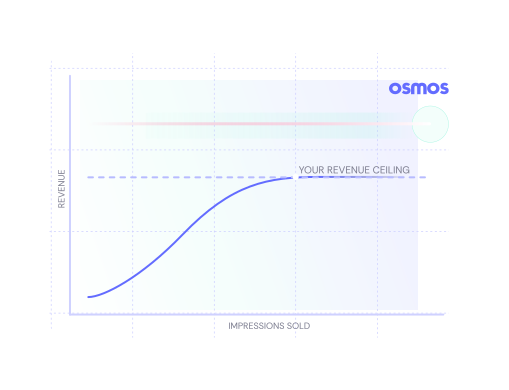
Osmos is a white-label retail media operating system for retailers and marketplaces. Its modular apps for onsite, offsite and in-store ads sit over your existing stack, so you can break your monetisation ceiling faster without rebuilding it.
Most retail media networks follow the model Amazon set, in which brands bid on search terms inside a retailer's site and see which ads led to sales. eMarketer expects US retail media spending to rise from $58.79 billion in 2025 to $69.33 billion in 2026, and wrote that "Walmart and Amazon will vacuum up over 89% of the incremental dollars spent in retail media in 2026" (eMarketer, November 2025). By eMarketer's figures, Walmart and Amazon take $9.42 billion of the $10.53 billion increase. Every other US network shares the remaining $1.11 billion of growth.
What smaller and mid-size retailers offer brands
In the US, regional grocers have launched retail media networks of their own, among them Giant Eagle, with nearly 500 stores across five states, and Sprouts Farmers Market, with more than 400 stores in 23 states (Quad, July 2025).
Most mid-size retailers start with a base of regular shoppers. Placer.ai data cited by Quad show that the ten most-visited US grocery chains together accounted for only 42.6% of grocery visits in 2023, which leaves more than half of grocery trips at stores outside those ten chains (Quad, July 2025). A brand that wants to reach those shoppers when they buy has to work with the stores they visit. Ashley Wacht, head of consumer packaged goods (CPG) product marketing at Quad, said: "Regional retailers have built trust with their regular shoppers. This can make these stores an ideal launchpad for CPG marketers to introduce new products, giving their brands an opportunity to truly connect with consumers."
The retailer also holds purchase data on those shoppers. Used as the targeting layer for the retailer's own ad inventory, the data lets a brand reach the people who bought in its category at that retailer, both on the retailer's site and in campaigns beyond it. Cindy Meltzer, vice president of research and analytics at Dagger, told Digiday: "If these small networks can play their data cards right, they can set themselves apart from Walmart and Amazon."
Because it controls its own pages, a mid-size retailer can open ad formats that exist only on its site, designed with its platform provider, and price them as premium inventory for brands with awareness budgets. With Osmos's Custom Formats, the retailer briefs the format, and Osmos designs and ships it to match the retailer's own site design. The new format runs on the same ad server, auction and reporting as the retailer's other onsite ads.
Where Amazon and Walmart keep the advantage, and how mid-size retailers work around it
Because Amazon and Walmart lead on total ad dollars, a mid-size retailer should measure its ad revenue as a share of its own gross merchandise value (GMV), which shows how well the network performs at the retailer's own scale. Most retail media networks plateau at 0.5 to 1% of GMV, and the best-run networks reach 3 to 6% or more. Retail media networks on Osmos average 6.75% of GMV.
Amazon and Walmart start with far more advertisers, because both draw brands that come with established budgets and agencies. A mid-size retailer's next advertisers are usually brands already on its shelves, many of which have never advertised with it.
1. Reactivate the brands already on its shelves
Superbalist, an online fashion and lifestyle retailer that leads its category in South Africa, had launched its retail media program on Osmos, but advertiser engagement stayed low through repeated changes in leadership and in the retailer's points of contact. Osmos and the retailer agreed a priority list of brands, trained the retailer's teams and its advertisers, and set up an incentive program. Within 20 days, 151 advertisers were reactivated, and 70% of the brands driving Superbalist's GMV had become active advertisers on the network.
2. Bring in brands from outside its catalog
Non-endemic advertisers are brands from outside the retailer's catalog, such as banks, telecom companies and travel firms. Osmos's Non-Endemic Ads takes them through the same onboarding, review, billing and reporting that the retailer already uses for the brands it stocks.
3. Activate tail and torso brands with self-serve and Sofie AI
Tail and torso advertisers are the smaller and mid-sized brands below a retailer's largest accounts, and many of them do not run ads themselves. With Osmos's self-serve and Sofie AI, Osmos's retail media assistant, a brand launches a campaign in one click. Sofie diagnoses and fixes the brand's campaigns, and it gives suggestions and implements them in one click. As a result, more tail and torso brands advertise with the retailer, and their ad spend increases.
4. Offer guaranteed outcomes as a separate format
With Osmos's Guaranteed Outcomes, the retailer offers brands flat-fee packages for a guaranteed number of clicks or visits.
5. License the ad stack
Amazon and Walmart have large engineering teams behind their ad businesses. A mid-size retailer can license an ad server and the tools around it, and building an ad stack in-house costs more and takes longer than licensing one.
6. Reach its shoppers on Google, Meta and TikTok
The two giants see purchases across nearly every category, and both offer demand-side platforms (DSPs) that reach their shoppers on other sites and apps. A mid-size retailer's shoppers spend time on Google, Meta and TikTok too, and the retailer can run brands' campaigns there, targeted with its own audience segments. Best Buy Ads, a national network, launched Social+ so that brands can reach Best Buy's audiences on Facebook and Instagram (Digiday, March 2025). A retailer that needs more reach than its own shoppers provide can join other retailers in a shared network or an alliance.
What brands need before they fund a smaller network
Brands already run programs with Amazon and Walmart that deliver sales. Kevin Amos, partner and chief media and data officer at Brunner, told Digiday why brands hold back: "When our clients are thriving and experiencing growth on platforms like Walmart or Amazon, there's little reason to shift or test those dollars." Brands usually move budget to a smaller network first for an audience or ad format that is available only there. Speaking about Best Buy's network, Roxanna Larizadeh Nassif, deputy managing director of retail media at Brainlabs, said it "will need to offer something uniquely compelling in terms of targeting and creativity to carve out a space for itself" (Digiday, March 2025).
Brands then read a smaller network's reports against the way Amazon and Walmart measure closed-loop results, so the network's attribution has to tie each ad to the purchases it produced and report them in the metrics brands already use. Larger networks go further: Albertsons Media Collective partnered with TransUnion to offer marketing mix modeling, which estimates each channel's contribution to sales from historical data, and launched an application programming interface (API) that lets brands compare performance across retailers (Digiday, March 2025).
A smaller network can also lower the risk of a brand's first test. Volta Media, Shell's electric-vehicle charging ad network, made a first test easier for brands with a "No Risk, All Reward" program that guarantees an incremental return on ad spend (ROAS), a measure that counts only the sales the ads caused (Digiday, March 2025).
Which platforms help smaller and mid-size retailers and marketplaces
A platform the retailer licenses and runs under its own brand
A licensable retail media platform is ad technology that a retailer licenses and runs under its own brand, on its own site and shopper data. The provider supplies the ad server and the tools brands use to buy and report on campaigns, and the retailer keeps the relationship with each advertiser and sets its own prices. Licensing suits a retailer with enough traffic and brands to justify a small retail media team.
Osmos is a platform of this kind, made up of onsite and offsite apps that a retailer can adopt one at a time. Osmos Onsite is its own ad server for Product Ads, display ads and product display ads on the retailer's domain, and brands can buy on a cost-per-click (CPC), cost-per-thousand-impressions (CPM) or cost-per-day (CPD) basis. Osmos Offsite runs brands' campaigns on the retailer's own branded channel seats. Its White Labelled DSP launches campaigns on Google, Meta and TikTok from one portal. Pricing stays with the retailer through audience markups and channel-level fees, and the audience data stays inside the retailer's environment.
A managed network the retailer joins
A managed network is a retail media network that one organization runs for many retailers at once, and it suits independent retailers and small chains that want retail media revenue without building a team for it. The organization brings the technology and the brand relationships, and each retailer contributes its shoppers and placements.
Alliance Retail Group (ARG), which serves more than 1,400 independent retailers with a combined $16.5 billion in retail sales, launched a shared network on technology from Swiftly in 2024, connecting its members with 22 million unique consumers (Progressive Grocer, April 2024). Jena Sowers, ARG's chief executive, said at the launch: "What sets our retail media network apart is that our retailers will receive 100% of the dollars we collect on their behalf for running the promotions." Swiftly's own site now counts more than 33,000 storefronts and 92 million shoppers reached across its platform.
An alliance that pools inventory
A retail media alliance pools inventory from several retailers, stores or media owners so that brands can plan and book it as one network. The pooled inventory gives a group of smaller players the scale that brands ask for.
In Germany, the screens and couponing of several providers, including Digooh, Emsu and Verve Retail Media, were brought together in March 2026 as Edeka's Retail Media Alliance, with Inovisco Mobile Media as the central commercial partner. The alliance covers more than 5,000 displays across more than 3,300 locations and reaches 46 million gross contacts a week in the Edeka environment (invidis, March 2026). Before the alliance, a mix of screen providers and Edeka's cooperative structure had made one network across Edeka stores hard to build. Alexander Houben, chief executive of Inovisco Mobile Media and Digooh, said: "In-store campaigns in Edeka stores were previously fragmented for agencies: multiple providers, multiple booking channels, no consistent planning."
In the UK, dunnhumby launched a network alliance in June 2026 that "gives brands and agencies a single route to activate campaigns across multiple retailers". Tesco, B&Q, John Lewis and Waitrose, all large national chains, are exploring it through pilots in household and DIY, health and beauty, and grocery (dunnhumby, June 2026). A group of mid-size retailers can offer brands the same single route between them.
Access to outside demand
Demand access connects a retailer's inventory to advertisers beyond the ones its own team works with, such as agencies buying through a DSP or the advertisers of a larger network. DoorDash partnered with The Trade Desk to connect its ad business with programmatic buying, and Instacart partnered with the Hy-Vee supermarket chain so that brands can extend their Instacart Ads campaigns to Hy-Vee.com (Digiday, March 2025). A partnership like Hy-Vee's brings another network's advertisers onto a regional retailer's own site without the retailer recruiting them one by one.
Frequently asked questions
How does Amazon's retail media platform compare with Walmart Connect for a retailer planning its own network?
Amazon Ads and Walmart Connect give a retailer two reference designs. Amazon's grew out of its marketplace, where brands and independent sellers bid on search terms, and it measures results through Amazon Marketing Cloud, a clean room, plus Amazon Attribution for channels outside Amazon. Walmart Connect ties ads to both online and in-store purchases. A mid-size marketplace whose advertisers are mostly its own sellers sits closer to Amazon's design and needs tools that many small sellers can use without help. For a store-based retailer whose advertisers are the brands it stocks, Walmart's design is the nearer model, and the reporting has to connect ads to purchases wherever the purchase happens.
Which Amazon Ads features does a mid-size retailer need first?
Amazon's platform includes ads that brands buy on search terms inside Amazon, a DSP that reaches Amazon's audiences on other sites and apps, and Amazon Marketing Cloud for analyzing campaign data in a clean room. A mid-size retailer needs the first of these on day one: ads in its own search results and on its product pages, with reporting that ties each campaign to the orders it produced. On Osmos, that first step is Product Ads, which advertisers launch in one click from products auto-selected from the catalog, with attribution back to each stock-keeping unit (SKU). The next onsite formats are usually Display Ads, banner placements on the browse pages; Product Display Ads, which put brand creative and product links where shoppers compare options; and Video Ads, shoppable video that brings in upper-funnel budgets. Retailers usually add offsite campaigns and clean-room analysis after onsite ads bring in steady revenue and their largest brands ask for more.
Does the same approach work for retailers outside the US?
The same approach works in any market where one or two marketplaces take most retail media budgets, because those marketplaces set the bar a regional retailer competes against, as Amazon and Walmart do in the US. The offsite channels its shoppers use and the privacy law that governs targeting differ by country, so a platform has to fit both. Osmos Offsite consent-checks audience segments against the EU's General Data Protection Regulation (GDPR) and California's Consumer Privacy Act (CCPA) and Privacy Rights Act (CPRA) before any use.
Sources
- Max Willens, "Retail Media Ad Spending Forecast and Trends H2 2025", eMarketer, 5 November 2025. emarketer.com
- Kimeko McCoy, "How smaller retail media networks are stepping out from the shadow of Amazon and Walmart", Digiday, 31 March 2025. digiday.com
- "Retail Media Alliance: Germany-Wide Retail Media Network for Edeka Goes Live", invidis, 30 March 2026. invidis.com
- "Alliance Retail Group, Swiftly Team on Retail Media Network", Progressive Grocer, 16 April 2024. progressivegrocer.com
- Quad, "How regional grocers and new players are redefining the RMN landscape", 31 July 2025, citing Placer.ai data reported by Grocery Dive, checked 23 September 2026. quad.com/insights/retail/how-regional-grocers-and-new-players-are-redefining-the-rmn-landscape
- dunnhumby, "dunnhumby network alliance launches to connect and scale retail media", 19 June 2026, checked 23 September 2026. dunnhumby.com/news/dunnhumby-network-alliance-launches-to-connect-and-scale-retail-media/
- Swiftly, homepage, checked 23 September 2026. swiftly.com
- Osmos, "Superbalist reactivates advertisers to scale media network in 20 days". https://www.osmos.ai/success-stories/superbalist-accelerates-media-network-adoption-through-advertiser-reactivation-in-just-20-days (verified live 23 September 2026)
SEE IT IN ACTION
See what's above your ceiling.
Your score, your peer benchmark, and the levers that close the gap.
Commitment-free consultation on your top needs and challenges. Discover product capabilities and how Osmos may help.