
Fashion & Apparel
How Bash built a scalable retail media business and grew monthly ad revenue 56% in a quarter
Fashion & Apparel
South Africa
Onsite
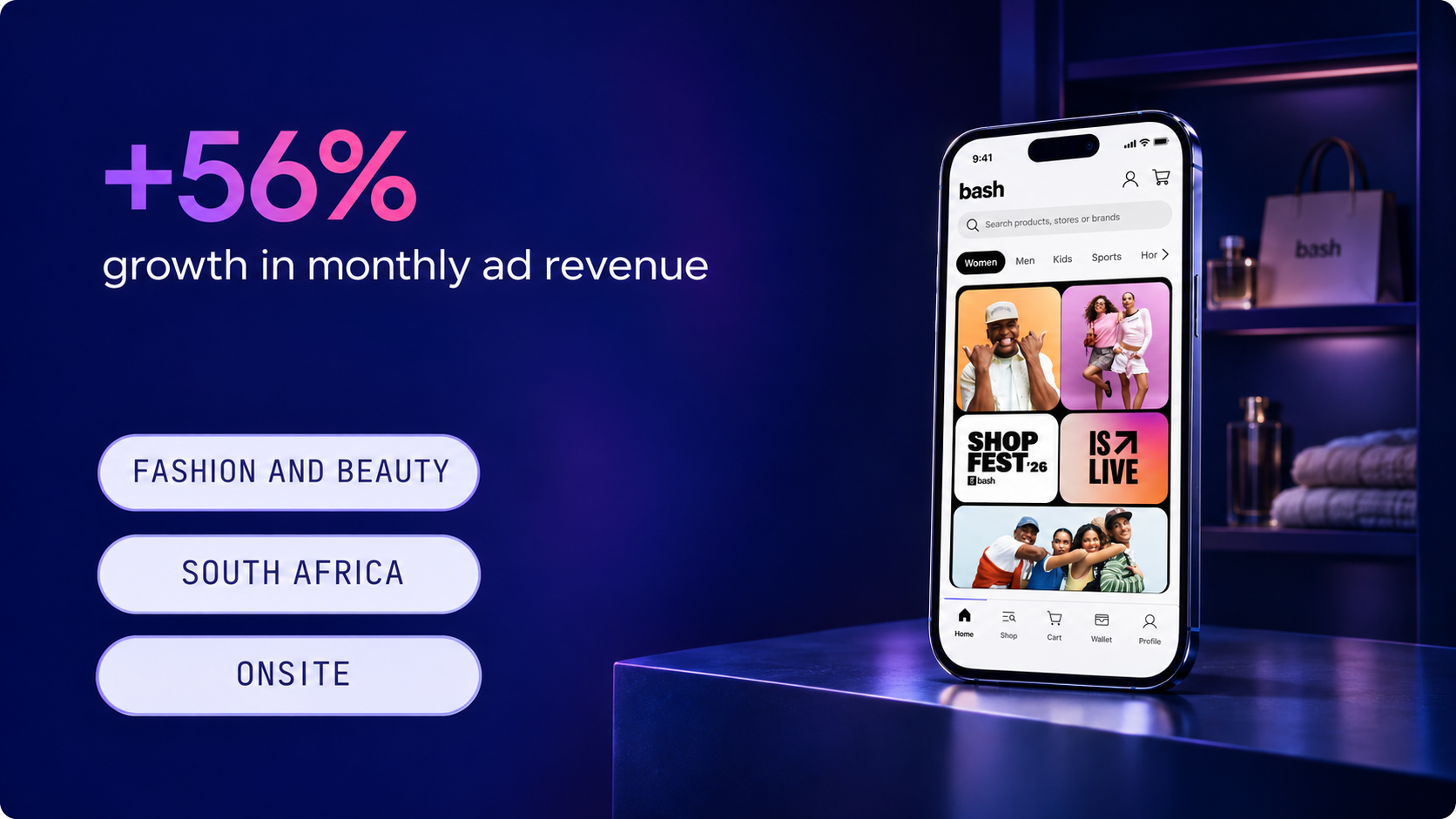
Growth in monthly ad revenue
Advertiser growth
Return on ad spend
Table of contents
Background
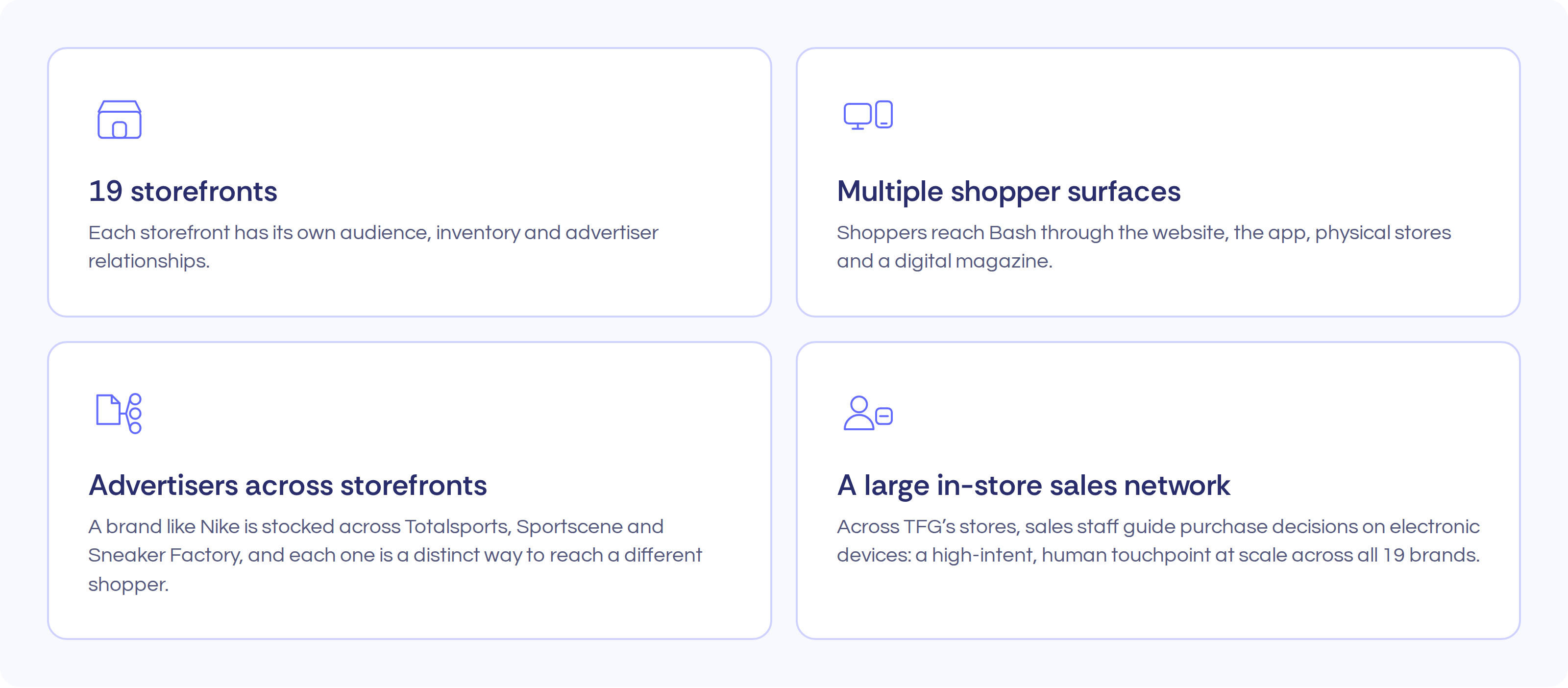
The Foschini Group (TFG) is one of South Africa’s largest fashion and lifestyle retail groups. Its ecommerce platform, Bash, brings 19 retail storefronts, including Foschini, Markham, Totalsports and Fabiani, together under one digital roof.
Before Bash, each of these brands had its own website, its own customer base and its own digital presence. Today, Bash has 5M+ app downloads and around 5,000 stores across 23 countries including 3,500 stores in South Africa alone.
But Bash is more than a consolidated ecommerce destination. Four things set it apart:
Bash’s in-house marketing-as-a-service (MaaS) team was already helping advertisers reach these audiences through onsite advertising, email and social media. The audience and the advertiser relationships were there. What Bash needed was a better way to commercialise them, prove their value and manage them at scale.
Challenge
Bash’s in-house MaaS team began when a beauty group asked for brand homes on Bash, and grew into selling onsite banners, promotional visuals and product carousels. For two years, that worked as an awareness offer: advertisers paid to be visible to shoppers and Bash delivered. But as the business scaled and Bash saw what other retailers were offering advertisers, the limits of the model became harder to work around.
1. Advertisers could see their ads, but not what they delivered
Bash could not connect an ad interaction to a later purchase. Performance conversations relied on Google data and assumptions, not attributed revenue, which made it hard to show return or make the case for the next budget.
2. Each campaign delayed the next one
Campaigns were built by hand in Bash’s internal content management system, placements varied and tracking was difficult. After each campaign, the team waited four to six weeks for revenue attribution and a report, and only then could Bash propose the next one.
3. A narrow estate
An advertiser got a single placement within a department, which capped how many could advertise at once and how much each could do. Video ads, which advertisers had asked for over the years, was not feasible on Bash’s back end.
The result was one-off buying: a brief arrived, the campaign ran, and Bash waited weeks or months for the next one. Other retailers were already offering measurable retail media, and Bash needed to sell on outcomes too.
All of this sat across 19 storefronts, each with its own audience, inventory and advertiser relationships. The challenge was not simply to launch more ads. Bash needed to move from selling isolated placements to running a measurable retail media business, with central oversight and storefront-level autonomy.
Solution
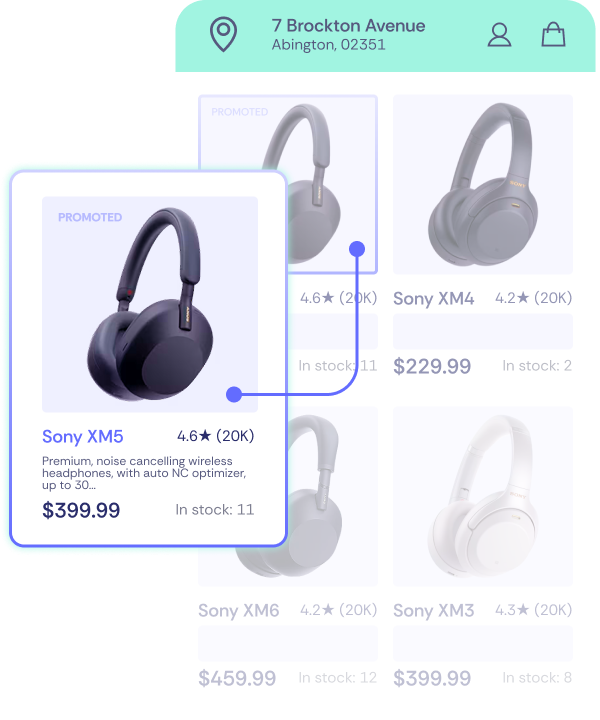
Bash partnered with Osmos to build Bash Ad Manager around the way TFG actually operates: one central MaaS team, 19 storefronts and advertisers buying across one or many. More than an ad server, Osmos brought campaign activation, management and reporting into one platform, with Product Listing Ads and Display now live across Bash’s website and mobile app.
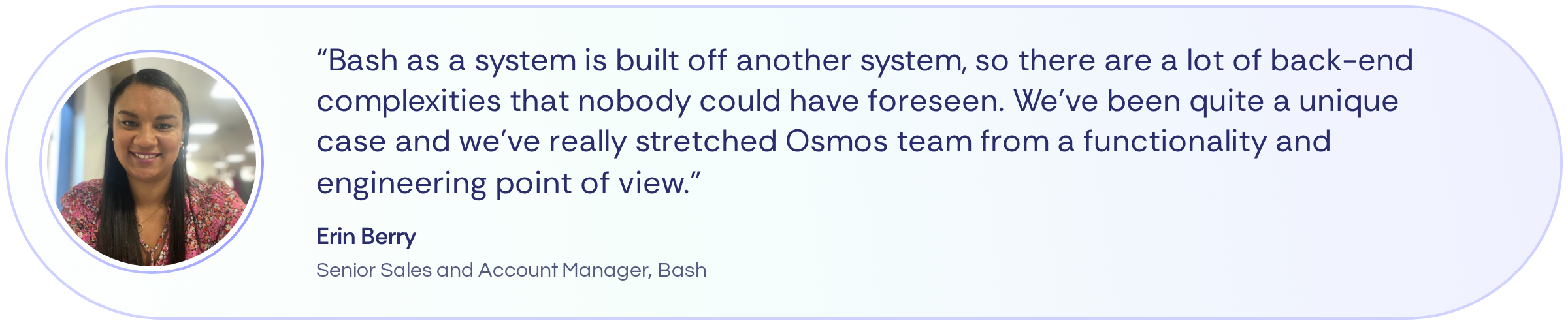
1. Centralised oversight across 19 storefronts
Bash’s MaaS team can now manage advertisers, campaigns, inventory and performance across all 19 storefronts from a single platform. Whether an advertiser runs on one storefront or several, the team has a consolidated view of campaign activity and results, making it easier to oversee retail media as one business.
2. Storefront-level autonomy without fragmented operations
While Bash manages the overall advertising business, each storefront retains control over its own operations. Role-based access ensures teams can manage their advertisers, campaigns and performance without accessing information belonging to other storefronts. This gives TFG centralised oversight while preserving the independence of each retail brand.
3. From impressions to attributed sales
With Osmos, advertisers can now see campaign performance from impressions and clicks through to attributed sales. What previously took four to six weeks to report is now available in near real time. This allows Bash’s MaaS team to demonstrate results while campaigns are still running, optimise performance and open conversations about additional budgets sooner. Faster campaign execution and reporting have also increased the team’s capacity to manage more campaigns.

4. One advertising platform across storefronts
Advertisers can now book Product Listing Ads and Display campaigns across relevant Bash storefronts through one platform. Storefront-level reporting gives advertisers visibility into where their campaigns run and the results each storefront delivers.
5. Go-to-market and go-live
Bash launched with live campaigns, not a dry run.
- Staging first. The team tested and learned the platform before any brand saw it.
- Scope in stages. Bash’s back-end complexity surfaced as the work progressed, and no one could have mapped it upfront. Client Success worked through each issue with Bash on a test-and-learn basis.
- A live first advertiser. Samsung committed a budget while the platform was still in testing, which gave both teams a real campaign to learn from.
- A side-by-side comparison. During a major retail moment, a brand booked a legacy content feature and then an Ad Manager campaign two weeks later. The difference in setup, execution and attribution showed up almost immediately.
6. Getting the MaaS team up and running
Adopting Bash Ad Manager meant bringing the entire MaaS team onto a new platform while keeping existing campaigns running. Osmos supported the transition through live training sessions, onboarding videos and practical guides, alongside ongoing Slack support for day-to-day questions.
As the team became familiar with the platform, members could manage campaigns independently and share what they had learned with colleagues.

How Samsung's early results strengthened Bash's advertiser proposition
Samsung was one of the first advertisers to launch campaigns through Bash Ad Manager, even as the platform was being onboarded. Its longer-term budget commitment gave Bash an opportunity to test, learn and improve campaign performance over time.
For the first time, Bash could demonstrate the value of these campaigns through attributed sales rather than impressions alone.
Between April 1 and May 30, Samsung achieved 10× attributed ROI in just 60 days.
Bash turned the results into a mini case study and used it with other advertisers. Instead of selling on reach, the team could show what a recognised brand had achieved through retail media. That strengthened the case for attracting new advertisers and expanding existing relationships, and one-off campaign briefs began evolving into longer-term, always-on commitments.

Impact
In Q3 2026, Bash has accelerated advertising revenue, expanded advertiser participation and scaled campaign activity.
+56%
Growth in Monthly Ad Revenue
+54%
Advertiser Growth
5.2x
Return on Ad Spend
Next phase: More categories, more channels, more touchpoints
With Product Listing Ads and Display live across Bash’s website and mobile app, Bash has the governance model, ad-serving infrastructure and operating framework it needs to scale.
The next phase extends the same model. Beauty, tech and home are all growing and performing, and Bash plans to keep building them. Sports is the category Bash expects to focus on next, as more storefronts open up to placements. From there, the model extends to more channels and more shopper touchpoints.
As retailers move beyond sponsored products towards monetising the touchpoints they own, success depends less on launching ad formats and more on an operating model that can scale with the business. Centralised oversight, storefront-level control, unified ad serving and repeatable retail media workflows give Bash that foundation for the touchpoints it activates next.
Your monetization potential
See what's above your ceiling.
Your score, your peer benchmark, and the levers that close the gap.