Analytics & Attribution
Incrementality Analysis 101: Proving True Lift in Retail Media
The stat that changed everything!
In 2025, more than one-third of advertisers said they actively slow or reduce spend when retailers can’t prove true sales lift (eMarketer). That single data point explains why incrementality analysis has moved from a “nice-to-have” metric to a deal-breaker.
Simply put, retail media incrementality measures whether an ad actually causes additional sales that wouldn’t have happened otherwise. For example, if a shopper clicks a sponsored product and buys it, but would have bought it anyway without the ad, that doesn’t count…
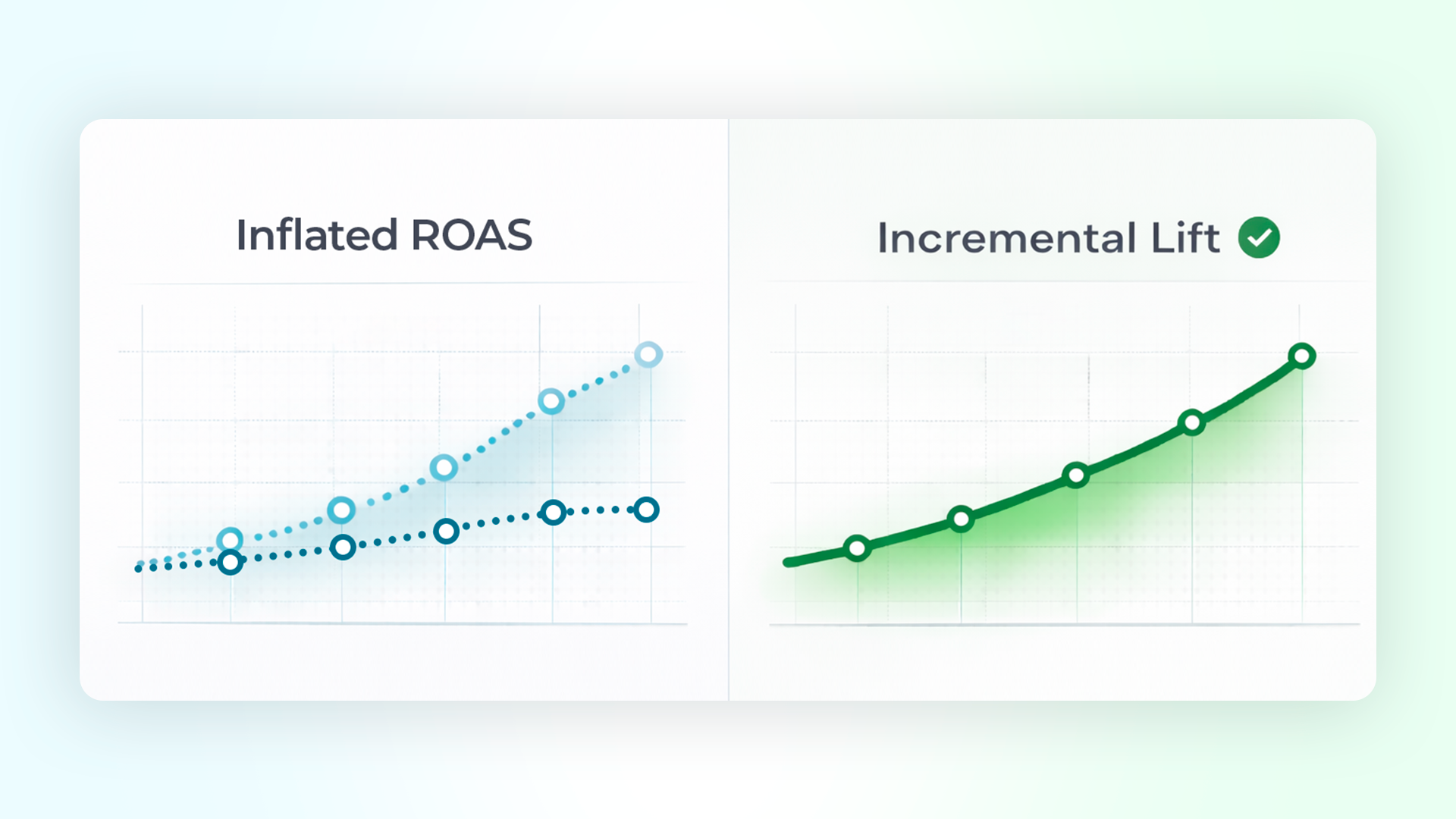
Incrementality looks at the extra sales the ad drives, not just overall purchases. In a world where surface ROAS can be inflated, this is what separates networks advertisers trust from those they forget. If retailers want media to be a real revenue line, not a side experiment, this is where measurement gets serious.
Incrementality is what keeps budgets…
Across nearly every 2025 industry survey, proof of incrementality now ranks alongside reach and scale as a top buying criterion. IAB Europe’s latest retail media research highlights that advertisers increasingly prioritize transparency and standardized outcomes over platform-reported performance alone.
Skai’s 2025 State of Retail Media reinforces this shift. Advertisers are no longer asking, “What was my ROAS?” They’re asking, “What sales happened because of this spend?” Budgets grow only when that answer is credible. For retailers, this is not an academic debate. Media monetization depends on repeat spend. Without proof of lift, budgets plateau; even when dashboards look strong.
This is where incrementality becomes commercial infrastructure, not just analytics. Retailers sit in a unique position:
- They own transaction data
- They control exposure environments
- They can directly connect ads to outcomes
That combination is exactly why advertisers expect more from retail media than from open-web channels.
Why ROAS alone no longer reflects real performance
ROAS still matters; but only as a hygiene metric. It tells you what was attributed, not what was caused. The gap between those two numbers is where trust erodes.
Attribution windows distort reality
A 7-day versus 30-day click window can swing reported performance dramatically. IAB Europe continues to push for standardization because inconsistent attribution rules make cross-retailer comparisons unreliable. From a retailer’s perspective, inconsistent windows create friction:
- Brands struggle to justify budget allocation
- Media teams waste time defending definitions
- Finance teams question revenue sustainability
Halo effects inflate results
Ads often get credit for sales that would have happened anyway; brand loyalty, seasonal demand, or unrelated basket add-ons. eMarketer cites studies showing weak correlation between platform ROAS and incremental ROAS, which is why advertisers increasingly insist on lift testing.
Counting rules exaggerate impact
Some networks attribute entire baskets to a single clicked ad, even when most items were unrelated. This inflates performance on paper but undermines long-term credibility. The bottom line is that ROAS tells you if ads were seen near a purchase, while marketing incrementality tells you if they caused that purchase. And budgets follow causality.
Core methods to measure incrementality; when to use them!
There is no single universal method. The right approach depends on traffic scale, surface type, and operational maturity.
1) Onsite A/B testing (audience split)
This is the most common starting point for incrementality analysis.
What it is:
Eligible shoppers are randomly split into test and control groups. The test group sees sponsored placements; the control group sees organic-only results.
What it measures:
- Conversion rate differences
- Revenue per session
- Item-level lift
When it works best:
- High-traffic search and category pages
- Always-on placements with stable demand
Retailers benefit because results are fast, repeatable, and easy to explain to advertisers.
2) Geo-matched testing for physical or regional exposure
This method is essential when media extends into stores or regions.
What it is:
Comparable stores or regions are split into test and control groups. Media runs only in test locations, and pre/post trends are compared.
What it proves:
- Causal impact of exposure
- Unit and basket-level lift
- Incremental revenue beyond baseline trends
Large retailers like Walmart Connect publicly outline these methods to answer a simple question: “Would these sales have happened anyway?” For retailers expanding into in-store or omnichannel media, this is where retail media incrementality becomes defensible at scale.
Why incrementality matters commercially for RMNs
Retail media networks now compete with each other, not just with search and social. Advertisers run across multiple retailers, and they compare outcomes. According to Skai and IAB Europe summaries, networks that:
- Publish methodologies
- Standardize definitions
- Make lift easy to verify
…retain and grow budgets faster than those that don’t. For retailers, this has direct implications:
- Sales teams close larger upfront commitments
- Finance teams trust media forecasts
- Leadership views media as a core growth lever
Without credible marketing incrementality, spend becomes volatile. With it, media revenue compounds. This is why more retailers are investing in platforms that make incrementality operational, not manual.
Retail media solutions like Osmos focus on embedding measurement into retail-native workflows, so lift testing doesn’t slow execution or degrade shopper experience.
Where incrementality unlocks expansion beyond onsite
Incrementality is not just about validation, it’s about the permission to grow. Once retailers prove onsite lift, they unlock:
- In-store screen pilots
- Sponsored endcaps
- Off-site extensions tied back to first-party sales
Stratacache highlights in-store media as one of the fastest-growing opportunities in 2025, but only when unified reporting exists. Retailers that skip proof struggle to scale. Retailers that prove lift expand confidently.
This is where incrementality shifts from being just a metric to becoming a core strategy. Different verticals approach it in ways that reflect how shoppers behave. Grocery retailers often focus on increasing frequency and expanding basket size through structured campaigns. Fashion and beauty retailers use incrementality to validate how ads drive product discovery and consideration. Marketplaces and aggregators measure lift at the seller level, tracking impact across multiple surfaces to optimize performance…
What advertisers look for before increasing spend
Advertisers want three things:
- Confidence that sales are truly incremental
- Consistency across placements and reports
- Clarity in how lift is calculated
Retailers who simplify buying and standardize testing become preferred partners. Fragmentation does the opposite. This is especially true as advertisers manage dozens of retail relationships. Networks that make Retail media incrementality easy to understand remove friction, and friction kills budgets. You can see how Osmos-powered retailers operationalize lift measurement without slowing commerce in our real world success stories.
A practical incrementality scorecard for retailers
Ask these questions internally:
- Are methods documented and repeatable?
- Can results be explained without caveats?
- Is lift reported alongside ROAS by default?
- Can we apply the same logic across onsite and in-store?
If the answer is “sometimes,” that’s the ceiling on growth. Retailers who operationalize marketing incrementality turn measurement into leverage, not overhead.
Conclusion: incrementality is how retail media earns its future
Retail media doesn’t win budgets by looking good on dashboards. It wins by proving causality. As spend scrutiny tightens, incrementality analysis is what transforms media from experimental revenue into a durable profit engine. eMarketer data shows that advertisers actively redirect budgets toward networks that prove lift, and away from those that can’t.
For retailers and marketplaces, the opportunity is clear. You already own the data, the surfaces, and the transaction. When you combine those with credible testing, Retail media incrementality becomes a competitive advantage, not just a metric.
The next phase of retail media growth will belong to retailers who make incrementality easy, trusted, transparent and scalable. To explore how this works for your retail business, get a demo with Osmos today!
SEE IT IN ACTION
See what's above your ceiling.
Your score, your peer benchmark, and the levers that close the gap.
Commitment-free consultation on your top needs and challenges. Discover product capabilities and how Osmos may help.