Analytics & Attribution
Ad Serving, Targeting, and Attribution: The Holy Trinity of Retail Media
On the surface, retail media looks… pretty simple. Show an ad, sell a product, track the sale. But behind the facade, behind every sponsored listing or promoted product is a quiet three-part system doing a lot of heavy lifting. And even if one part slips, performance cracks fast.
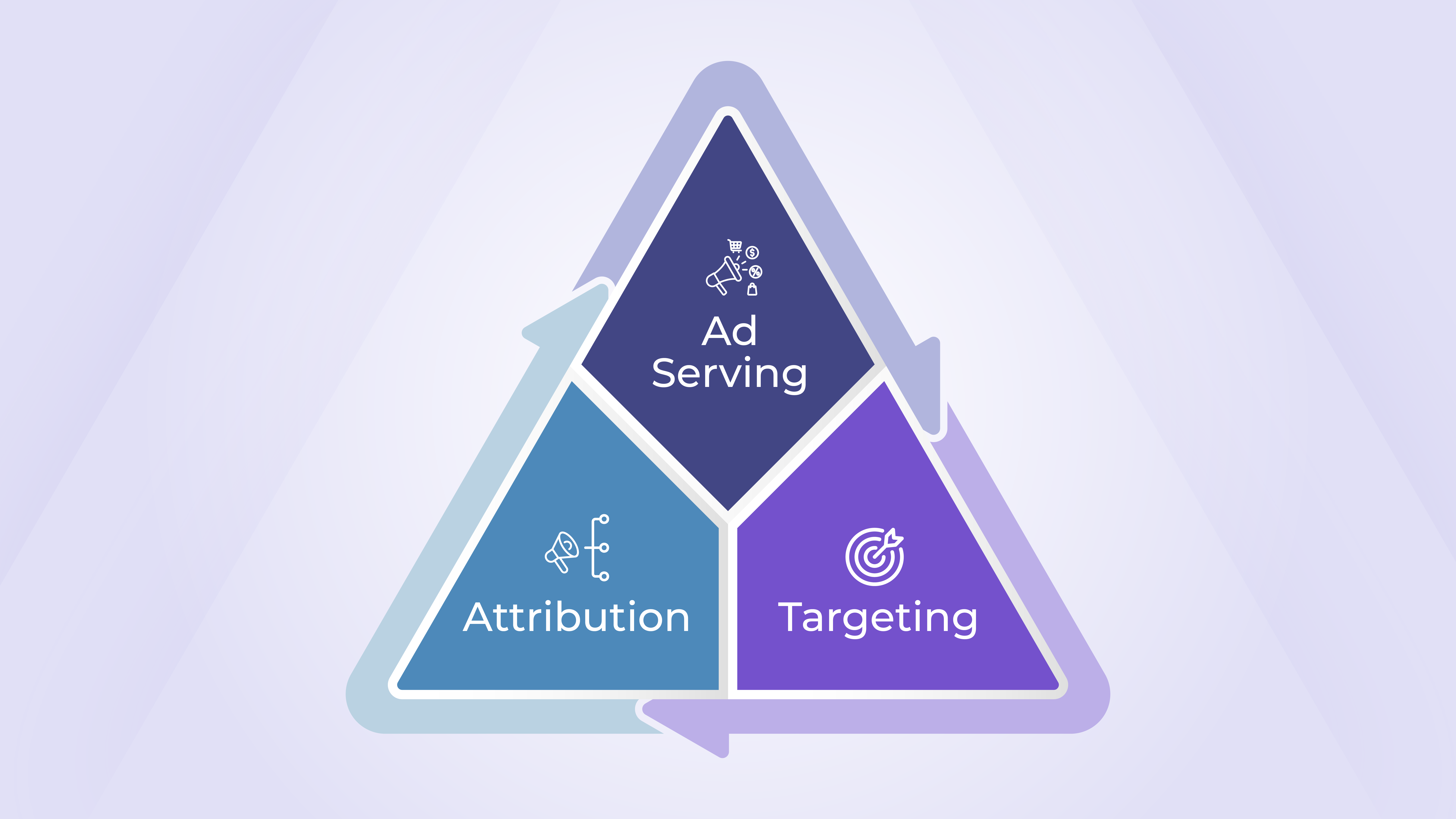
At the core of every high-performing retail media network are three forces working together: ad serving that decides what appears in the moment, targeting that ensures it reaches the right shopper, and attribution in advertising that proves the ad actually worked.
Get all three right, and retail media becomes a revenue engine. Miss one, and it’s just noise dressed up as monetization.
What started as sponsored product slots and a few banners has now become one of the fastest-growing parts of digital advertising. And for retailers, retail media is no longer a side hustle or an experiment. It’s a core revenue engine. At the center of every high-performing retail media network sits this tight, interdependent trio, and when you get all three right, your retail media becomes predictable, scalable, and defensible. This is the holy trinity retailers need to master to turn attention into margin.
Ad Serving: Where Decisions Are Actually Made…
If retail media were a full-fledged living system, ad serving would be the brain. An ad server is not just a delivery mechanism. In a retail media network, it is a real-time decision engine that weighs commercial rules, shopper context, and advertiser demand in milliseconds. Every time a shopper loads a page, searches for a product, or scrolls a category, the ad server answers one question: what is the most valuable, relevant thing to show right now?
Why Ad Serving in Retail Media Is Fundamentally Different
Traditional ad servers were built for publishers. Their job was to fill page slots and maximize yield per impression. Retail media ad serving plays a very different game.
Here, every ad is tied to a product that has a price, margin, stock level, seller agreement, and delivery promise. Showing the wrong thing is not just inefficient, it actively damages trust. A retail-ready ad server understands commerce logic natively.
It knows when a SKU is out of stock. It knows when pricing has changed. It knows which products are eligible to be promoted and which are not. That commerce awareness is what separates a real retail media network from a repurposed publisher stack.
Speed Is Not a Feature, It is The Feature!
In retail environments, latency kills conversion. If an ad delays page load, flickers, or forces a re-render, shoppers don’t wait. They bounce. That’s why modern ad serving in retail media operates at sub-35 millisecond latency. The best systems don’t feel like ads at all. They feel like native recommendations that just happen to be sponsored.
This is exactly where purpose-built platforms matter. Retailers building modern monetization stacks increasingly rely on infrastructure designed specifically for commerce, like the ad technology powering modern retail media platforms at Osmos.
Targeting: Why Context Beats Cookies…
Once ad serving defines what can be shown, targeting decides who should see it. In retail media, targeting is not about demographics or vague interests. It’s about intent, context, and timing. And this is where contextual targeting has quietly become retail media’s biggest advantage.
From Guesswork to Live Shopping Signals
Old-school digital targeting relied heavily on third-party cookies, inferred behavior, and lookalike audiences. Retail media doesn’t need to guess.
A shopper browsing running shoes, comparing prices, and checking delivery timelines is broadcasting intent in real time. That context is more powerful than any external data broker. Contextual targeting in retail media includes:
- Search queries that reveal immediate intent
- Category browsing patterns
- Session behavior like filters, sort order, and dwell time
- Historical purchase and loyalty data
Precision Without Privacy Trade-Offs
Retailers own first-party data that no external platform can replicate. When contextual targeting is layered with authenticated shopper data, precision improves without violating privacy expectations.
This is why retail media targeting feels personal without feeling invasive. The shopper sees products that make sense right now. The advertiser reaches buyers at the moment of consideration. And the retailer keeps full control of data and rules.
Across grocery retailers, fashion and beauty marketplaces, and restaurant aggregators, this model is becoming the default way targeting works inside modern retail media networks. See how grocery retailers, fashion and beauty marketplaces, and restaurant aggregators are using Osmos to power contextual ad serving and measurable monetization.
Attribution: Turning Belief Into Proof
Ad serving delivers. Targeting narrows the focus. But attribution is what turns retail media from a nice idea into a serious budget line. Without attribution, everything else is just optimism.
Why Attribution in Advertising Looks Different in Retail Media
Traditional digital advertising relies on probabilistic models. Last-click, view-through, modeled lift. Retail media operates much closer to the transaction. Because ads appear inside the shopping environment, retailers can measure outcomes directly:
- Did the impression lead to an add-to-cart?
- Did the ad increase conversion rate?
- Did it drive incremental sales that would not have happened otherwise?
This closed-loop measurement is what makes retail media uniquely credible to advertisers…
Incrementality Becomes Non-Negotiable
By 2026, incrementality will be table stakes. Advertisers are no longer satisfied with surface-level ROAS. They want proof that an ad changed behavior, not just captured existing demand. This requires tight integration between the ad server, targeting logic, and transaction data. Exposure must be matched accurately to outcomes, across onsite and offsite environments.
Retailers who invest early in robust attribution frameworks gain something far more valuable than short-term revenue: long-term advertiser trust. You can see how this plays out in practice by exploring real-world success stories from Osmos-powered retail media networks, where attribution is treated as infrastructure, and not an afterthought.
How the Trinity Works as a Single System
The real power of retail media doesn’t come from ad serving, targeting, or attribution in isolation. It comes from how tightly they reinforce each other.
- Ad serving uses eligibility, inventory, and commercial rules to decide what can appear.
- Contextual targeting ensures that decision aligns with shopper intent.
- Attribution feeds performance data back into the system, improving future decisions.
This creates a self-optimizing loop. Better attribution sharpens targeting models. Better targeting improves ad serving efficiency. Better serving generates cleaner measurement. Retail media networks that treat these layers as separate tools struggle to scale. Those that build them as one system compound advantage over time.
Why This Trinity Defines the Future of Retail Media
Retail media is moving away from being an ad product and toward becoming commerce infrastructure. In this new phase, success is not about selling more placements. It’s about orchestrating decisions with precision and accountability.
The retailers winning in 2026 and beyond are the ones investing in ad technology that understands commerce natively, supports contextual targeting by design, and delivers attribution in advertising that stands up to scrutiny. That’s why retail media is becoming a board-level priority. It’s predictable. It’s high-margin. And when built correctly, it scales with shopper behavior rather than fighting it.
To see how retailers across categories are building future-ready retail media networks using this exact approach, explore how Osmos helps teams unify ad serving, targeting, and attribution into a single monetization engine.
Conclusion: Retail Media Only Works When the Loop Is Closed
Retail media’s success is not magic. It’s mechanics. When ad serving is commerce-aware, targeting is contextual and precise, and attribution proves real impact, the revenue from retail media stops being experimental and starts being inevitable. This holy trinity is what transforms traffic into revenue, data into differentiation, and advertising into a sustainable business line.
And that’s the difference between running ads and running a retail media network built for the long term. If you’re ready to move from placements to performance and from experimentation to scale, see how Osmos is powering retail media networks designed for monetization, measurement, and growth.
SEE IT IN ACTION
See what's above your ceiling.
Your score, your peer benchmark, and the levers that close the gap.
Commitment-free consultation on your top needs and challenges. Discover product capabilities and how Osmos may help.