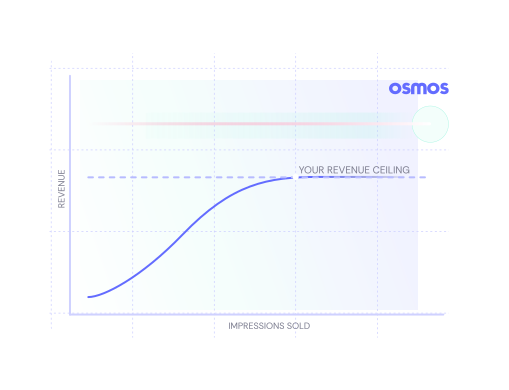
Ad Revenue Growth
Retail Media in 2025: The Technology Trends Redefining Commerce Monetization
Retail Media Is Becoming the Operating System of Commerce
Retail media didn’t explode overnight. It found its way in slowly, feature by feature, budget by budget, until suddenly it was impossible to ignore. Today, retail media is no longer a side experiment quietly bolted onto ecommerce sites. By 2025, it has grown into a $179 billion global industry, expanding faster than social and search combined! That kind of scale changes everything….
What started as sponsored listings and banner ads has evolved into a full-fledged monetization layer sitting at the heart of commerce. But eventually, growth has brought friction. Advertisers are juggling too many dashboards. Retailers are operating in silos across hundreds of disconnected media networks. Measurement still feels… interpretive, even as budgets grow more performance-driven.
As we move toward 2026, the industry has reached an inflection point. Retail media is no longer just about selling ad space. It is becoming a connected, data-driven ecosystem where retailers, brands, and financial platforms collaborate to turn commerce signals into measurable outcomes. This next phase of retail media will be defined by consolidation, smarter ad technology, interoperability, and accountability. It may also give rise to an entirely new construct: something that looks a lot like a retail media exchange.
The Fragmentation Problem No One Can Ignore Anymore
Retail media has scaled fast. Today, there are more than 270 active retail media networks worldwide, each with its own rules, formats, targeting logic, and reporting standards. What once felt like healthy competition is now starting to feel like chaos.
For advertisers, this fragmentation means running similar campaigns across dozens of retailer environments, each requiring separate planning, execution, and measurement. For retailers, it means fighting harder for share of wallet while operating in isolation from peers facing the same challenges. This model does not scale indefinitely. The next chapter of retail media is not about launching more standalone networks. It is about connecting them intelligently.
The Early Signs of Consolidation
The market is already signaling where it is headed. Large retailers are acquiring smaller media networks. Technology providers are building interoperability layers instead of isolated tools. Measurement vendors are pushing for common frameworks. This consolidation is not about reducing competition. It is about reducing friction. Advertisers want fewer systems, not more. Retailers want deeper relationships, not one-off campaigns.
The Emergence of Retail Media Exchanges
This is where the idea of a retail media exchange starts to take shape. Not as a formal industry standard yet, but as a direction of travel.
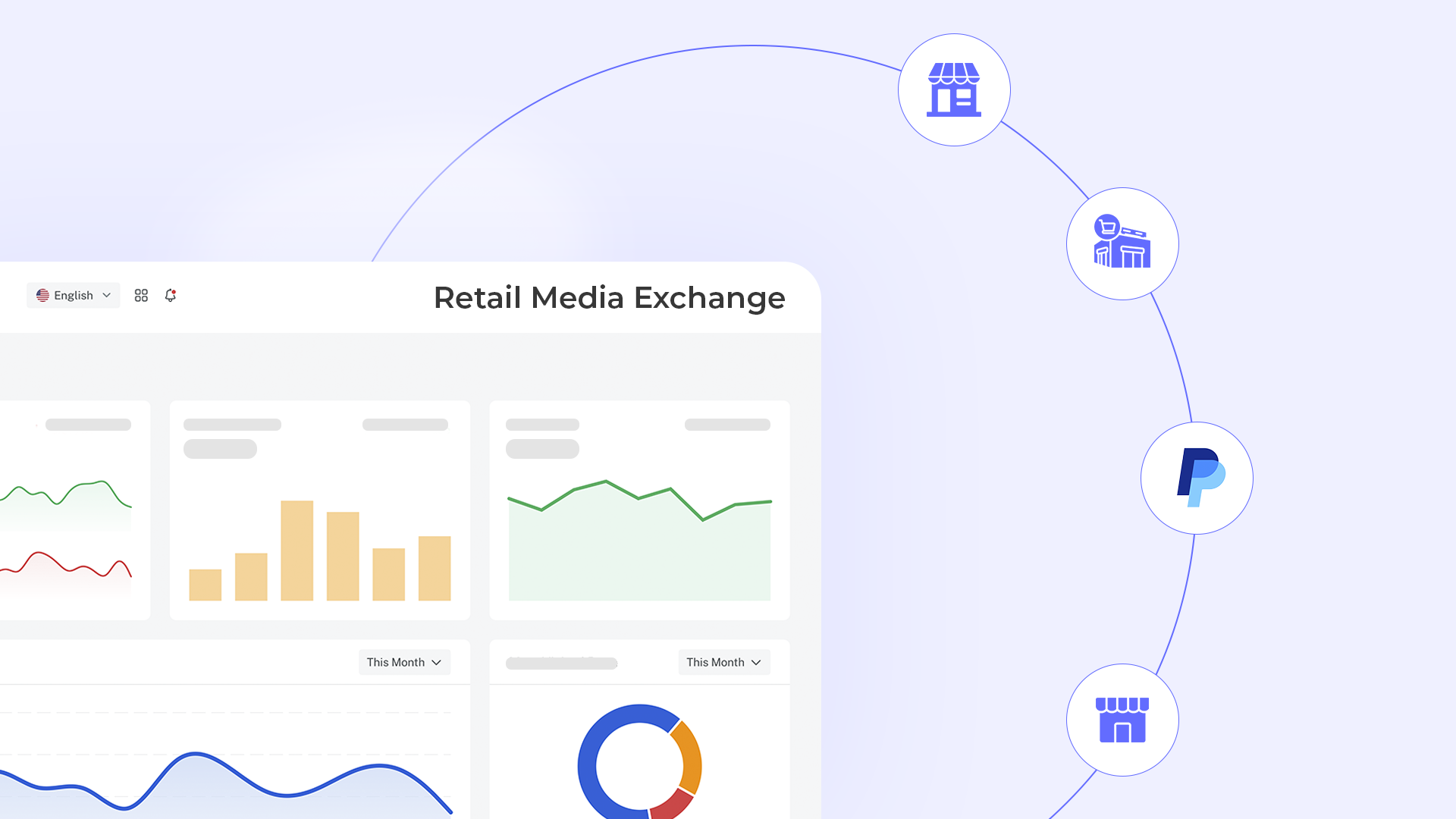
A retail media exchange can be understood as a federated ecosystem where multiple retail media networks interconnect through shared infrastructure. Campaigns can be planned, activated, and measured across networks without forcing advertisers to run everything from scratch for each retailer.
For retailers, this does not mean giving up data ownership. It means opening controlled access through standardized APIs, shared attribution logic, and aligned auction mechanics. Those who enable interoperability without sacrificing control will be the ones who attract larger, longer-term advertiser commitments.
Financial Media Networks Enter the Retail Media Conversation
One of the most important shifts in 2025 did not come from retailers at all. It came from the financial ecosystem. Payment providers and fintech platforms have started stepping into the media space, bringing with them something uniquely powerful: verified transaction data at scale. The launch of products like PayPal Ads Manager signaled the rise of financial media networks, or FMNs.
Why Financial Media Changes the Equation
Retail media shows what people buy in a specific retail environment. Financial media networks reveal something broader: where, when, and how people spend across categories, merchants, and channels.
When combined responsibly, these datasets unlock a level of insight that neither retailers nor brands can achieve alone. For retailers, this opens the door to richer audience validation and for advertisers, it enables campaigns that extend beyond onsite placements without losing accountability.
What Retailers Stand to Gain
Retailers who partner strategically with financial media platforms can enhance their retail media offerings without compromising trust. Transaction-level signals can be anonymized, aggregated, and used to strengthen targeting precision.
These collaborations also create new monetization paths. Retailers are no longer limited to selling inventory on owned surfaces. They become part of a broader media ecosystem where commerce data drives performance across channels. By 2026, we should very well expect deeper partnerships between retail media networks and financial media networks, built on shared governance, clean-room environments, and mutual incentives.
Measurement Is Being Rewritten From the Ground Up
If retail media has a credibility problem, it is not demand. It is measurement. Despite years of growth, only 1 in 4 advertisers say they are confident in how incrementality is measured in retail media today. That gap matters, especially as budgets tighten and scrutiny increases. The days of reporting clicks and impressions as success metrics are ending. Retail media is entering a new era where incremental sales lift becomes the primary currency.
Incrementality Becomes Non-Negotiable
Retailers are being asked tougher questions. Would this sale have happened anyway? Did the ad drive new demand or just shift attribution? Which placements actually create lift?
In 2026, incrementality will no longer be optional. It will be built directly into retailer–brand agreements, with clear expectations around methodology and transparency.
Clean Rooms and Unified Attribution
To make this possible, the industry is investing heavily in data collaboration infrastructure. Clean rooms allow retailers, brands, and media partners to analyze performance together without exposing raw data. At the same time, attribution models are evolving to unify onsite, offsite, and in-store performance. The goal is simple: one coherent view of impact across the full commerce journey. Retailers that invest early in robust measurement frameworks will earn not just trust, but also larger, stickier budgets.
From Omnichannel to Omni-Managed Retail Media
Retail media did not stay onsite for long. What began as sponsored search results has expanded into social platforms, connected TV, and physical retail environments. So, the next challenge isn’t reach. It is coordination.
One Platform-Many Surfaces
Leading retailers are moving toward centralized retail media platforms that manage all inventory types through a single system. Onsite product ads, offsite audience extensions, in-store screens, and shoppable video are no longer treated as separate initiatives. They are orchestrated together, optimized together, and measured together.
This shift turns retail media into a true operating layer rather than a collection of placements. It also makes life easier for advertisers, who can activate full-funnel strategies without juggling multiple tools. Retailers that unify these surfaces under one ad technology stack will be better positioned to scale revenue while maintaining consistency and control.
AI Moves From Feature to Foundation
Artificial intelligence has quietly become the backbone of modern retail media. What once required manual tuning is now handled by algorithms operating in real time. In 2025, AI already plays a role in auction management, search optimization, pacing, and inventory forecasting. By 2026, its influence will be far deeper.
How AI Is Reshaping Retail Media Operations
Campaign setup is becoming conversational. Instead of configuring dozens of parameters, marketers define goals and constraints, and the system builds the campaign.
Creative is becoming adaptive. Creative optimization ensures ads reflect context, availability, and shopper behavior automatically.
Budgets are becoming fluid. AI reallocates spend in real time toward placements and audiences that deliver incremental value.
For retailers, this intelligence is not about replacing teams. It is about scaling decision-making without scaling complexity. Those who embed AI deeply into their ad technology stack will operate more efficiently while delivering better outcomes for advertisers.
Learn how retailers across categories are building modern retail media platforms with Osmos:
Data Collaboration Becomes the New Monetization Frontier
The most powerful retail media strategies of the future will not be built in isolation. They will be built through structured data collaboration. Imagine a scenario where retailers contribute behavioral context, brands contribute campaign intent, and financial networks contribute anonymized transaction validation. Together, they create a targeting and measurement layer that is precise, privacy-safe, and outcome-driven.
The Three-Way Value Exchange
Retailers gain sharper audience intelligence and stronger monetization potential. Brands reduce waste and improve return on investment. Financial platforms unlock new revenue streams from existing data assets. This future depends on trust. Clean rooms, identity standards, and governance frameworks are not optional. Without them, collaboration collapses into risk and fragmentation. Retailers that invest now in data infrastructure and governance will be the ones positioned to lead when inter-network monetization becomes mainstream.
Retail Media in 2026 and Beyond
Retail media is following a familiar trajectory. Much like programmatic transformed display advertising, retail media is evolving into infrastructure. Retail media networks will consolidate and interoperate. Retail media exchanges will emerge as connective tissue. Financial media networks will plug in as complementary demand and data sources. AI will manage optimization end to end. Incrementality will define success!
This future is not about selling more ads. It is about connecting commerce, data, and ad technology into a unified monetization engine. Retailers that recognize this shift will stop treating retail media as a side initiative. They will treat it as core infrastructure.
If you want to see how this evolution is already playing out in practice, explore how Osmos-powered retail media networks are helping retailers build scalable businesses through our real-world success stories.
Conclusion: The Retailers Who Build Now Will Lead Later
Retail media has outgrown experimentation. The question is no longer whether to invest, but how intentionally.
Retailers that double down on interoperability, measurement, AI-driven ad technology, and data collaboration will unlock more than short-term revenue. They will build durable, defensible media businesses that scale alongside commerce.
Whether you operate in grocery, fashion and beauty, or food delivery marketplaces, the opportunity is the same. The tools exist. The demand is proven. The only thing that remains now is… execution. Explore how Osmos is powering retail media networks built for monetization, measurement, and growth!
SEE IT IN ACTION
See what's above your ceiling.
Your score, your peer benchmark, and the levers that close the gap.
Commitment-free consultation on your top needs and challenges. Discover product capabilities and how Osmos may help.