Retail Media Concepts
Why Owning the Ad Stack Matters: A Deeper Look into Retail Media Control
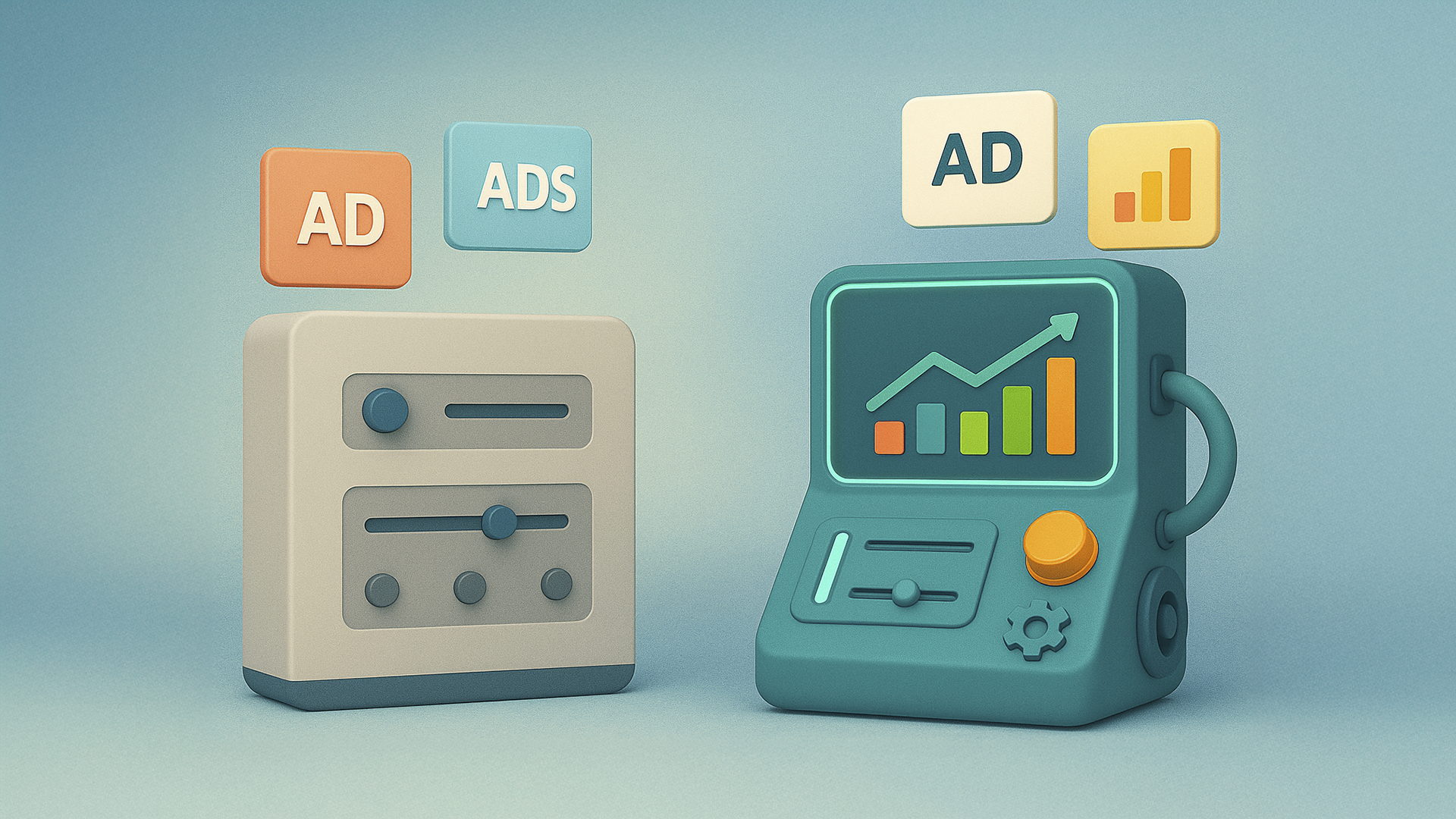
Retail media is exploding, but before you sprint headfirst into building or renting a program, there are two things you absolutely need to know. Neither is every retail media program built the same, nor is it built for everyone.
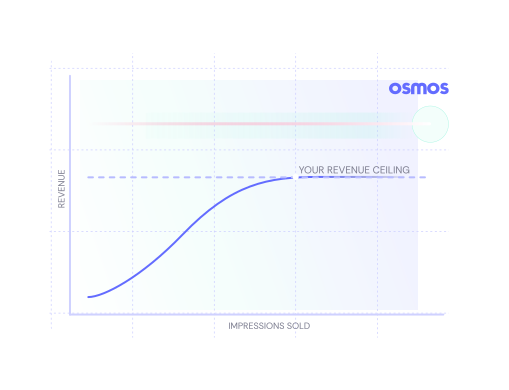
Unfortunately, most retailers only realize that after they’ve launched one, and as they scale, this becomes painfully obvious. Today, many start their retail media journey through plug-and-play networks because they’re fast, familiar and don't break anything. But here’s the thing: quick wins often create long-term ceilings…
In this guide, we’ll break down why owning your retail media platform matters, why your ad technology decisions shape your revenue potential, and how the smartest retailers are building massive, margin-rich media businesses without becoming ad tech engineers. Owning the right ad platform is the difference between a side project and a strategic growth engine.
Not Every Retail Media Is The Same, And That’s the Problem
Retailers enter retail media with one goal: build a new, defensible revenue stream. But the path you choose decides whether your program becomes:
- A side hustle
- A core profit engine powering your marketplace, sellers, and long-term growth
Many retailers begin their journey through third-party networks like Criteo or Epsilon Retail Media because it’s easy: instant advertiser demand, minimal engineering, and a pre-built system. These retail media networks give you a running start. There’s nothing wrong with that if your ambition is modest. But if the goal is to build a powerful, future-proof retail media business, this model hits its limits quickly.
The Plug-and-Play Path: Quick Wins, Limited Control
The Easy Start Retailers Love Until They Don’t
Third-party retail media networks make launching your program feel like kids play. You plug in your catalog, approve placements, and advertisers appear instantly, especially big FMCG brands. It works because they give you:
- ready-made demand
- a functioning ad server
- standard placements
- someone else handling the technical chaos
But here’s the quiet truth every serious retailer eventually discovers. You don’t actually own anything that matters. Let’s break down the real trade-offs, the ones no vendor puts in their brochure:
- Limited customization: Your ad formats, placements, and pricing structures are pre-decided
- Shared demand: Advertisers bid inside their network, not on your retail media platform
- Partial data access: Reporting granularity, and targeting logic stay behind their walls
- Capped margins: Revenue share eats into profits, and your ability to scale is constrained
It’s like renting a stall in a busy mall. Yes, traffic comes easily, but the building, the customers, and the long-term equity? Not yours. For retailers experimenting with media monetization, this setup works fine. But for retailers trying to turn retail media into a strategic growth engine, it becomes a bottleneck.
The Build-It-Yourself Dream: Total Control, Minimum Speed
Owning Everything Sounds Good Until You Try It
On the other end of the spectrum are retailers who think: Let’s build our own retail media platform. How hard can it be? The answer: very.
To build a full retail media stack internally, a retailer would need:
- an ad server
- a real-time auction engine
- a classifier for ad relevance
- dynamic bidding algorithms
- attribution models
- fraud protection
- a self-serve UI brands actually enjoy using
That’s before adding features like budget pacing, creative optimization, A/B testing, AI-driven targeting, and cross-device measurement. So here is the thing: retailers are excellent at commerce. Retailers are not built to be ad tech companies. Building this stack requires specialized engineering teams who usually work at companies like Meta, Google, or Trade Desk; not inside the tech team managing your checkout uptime.
And even if you somehow build it…
- It might be slow. Years of R&D before you generate meaningful revenue
- It might be expensive. High burn rate, continuous maintenance, constant upgrades
- It might be risky. You could spend millions only to fall short of what advertisers expect
While internal builds give perfect control, the cost of time to revenue, competitive speed, and long-term innovation capacity is the roadblock you need to consider. Having the right ad platform internally or through a trusted partner ensures you can scale faster without compromising control.
The Sweet Spot: Build Smart, Not From Scratch
The Modern Retail Media Strategy That Actually Works
Today’s most successful retail media networks aren’t choosing between a restrictive plug-and-play model or a multi-year internal engineering marathon. They’re choosing a hybrid path, co-building a retail media platform alongside dedicated ad tech specialists.
This approach gives retailers:
- Speed of proven ad technology. Launch in days, not years
- Flexibility to own your roadmap. Custom ad formats, pricing rules, workflows, and measurement models
- Scalability without starting from zero. Add new surfaces, new inventory, new algorithms as your network matures
- Real data ownership. Your shopper data stays with you, strengthening your competitive moat
This hybrid path gives you the control of building, but the velocity of partnering; the ideal route for retailers who want a serious media business without becoming an engineering organization. If you want to see how this approach has worked for various retailers, explore our real world success stories!
Owning the Ad Stack: What It Actually Means
Owning your retail media stack doesn’t mean building every line of ad tech. It means controlling the layers that define how ads render, how advertisers buy, how data flows, and how revenue grows. Let’s break down the layers that actually matter here.
- Ad Serving. You decide where and how ads appear. This protects your UX, brand integrity, and shopper trust
- Auction Engine. You control bidding, budgets, and yield logic. This determines whether your margins grow or shrink
- Data Layer. Your shopper data, your segmentation, your audiences. This is your competitive advantage, don’t dilute it
- Attribution & Measurement. You define how success is proven. Advertisers trust what they can verify
- Advertiser Experience. Your UI, your workflows, your rules. This is how you build long-term direct relationships with brands and sellers
With even partial ownership of these layers, gained by white-labeling or co-building with the right ad technology, your retail media platform aligns to your business instead of forcing you into generic templates. Retailers win when they set the rules, not the network.
Why the Hybrid Model Wins And Will Keep Winning
The hybrid model, co-building with a specialized retail media platform provider, gives retailers the best of both worlds:
- Fast Time to Revenue. Because the foundational ad technology already works
- Customization That Actually Matters. You can adapt it to your data systems, your marketplace structure, your onsite and offsite inventory
- Infinite Scalability. Add AI bidding, video ads, sponsored listings, offsite placements, or CTV, without rewriting the engine
- Complete Ownership. Your brand, your margins, your advertiser relationships, and your data
This is exactly why enterprise retailers and marketplaces are now choosing hybrid builds over networks. They don’t want to rent retail media. They want to own it. And platforms like Osmos make that possible!
Retail Media Is a Real Revenue Engine, Not a Side Hustle
When You Own the Stack, Everything Starts Compounding
Here’s the bottom-line power of owning your retail media stack:
- Higher margins. You retain more advertiser spend and stop sharing revenue with networks
- Stronger brand partnerships. Brands invest more when they get transparency, control, and a clean measurement story
- Better data intelligence. The insights from retail media feed back into commerce, helping merchants, sellers, and your entire marketplace
- Faster innovation cycles. No waiting for a third-party’s roadmap as you set the priorities
Retail media is no longer an add-on. It’s becoming core infrastructure, the way retailers diversify revenue, deepen loyalty, and compete in an AI-powered retail world. If you operate in a vertical like grocery, fashion, beauty, or restaurant aggregation, the growth potential is even bigger. See how you can do it below:
Want The True Power of Retail Media? Own the Stack
Retail media grows fastest when retailers own the technology, the data, and the advertiser relationships, not when they rent them. Starting with networks like Criteo or Epsilon makes sense. But serious retailers don’t stop there.
They evolve toward owning their retail media platform, defining their ad technology rules, and shaping a roadmap that fits their marketplace, not someone else’s playbook. If your goal is to turn retail media into a long-term profit engine, control is everything. Control over the stack. Control over the data. Control over the outcomes. And if you want a partner that helps you build all that without starting from zero, we’re right here…
SEE IT IN ACTION
See what's above your ceiling.
Your score, your peer benchmark, and the levers that close the gap.
Commitment-free consultation on your top needs and challenges. Discover product capabilities and how Osmos may help.