Ad Revenue Growth
Monetizing Attention: How Retailers Unlock Ad Revenue with Retail Media
Last updated: September 2026. Reviewed by Kunal Damgude, Growth and Product Marketing Manager.
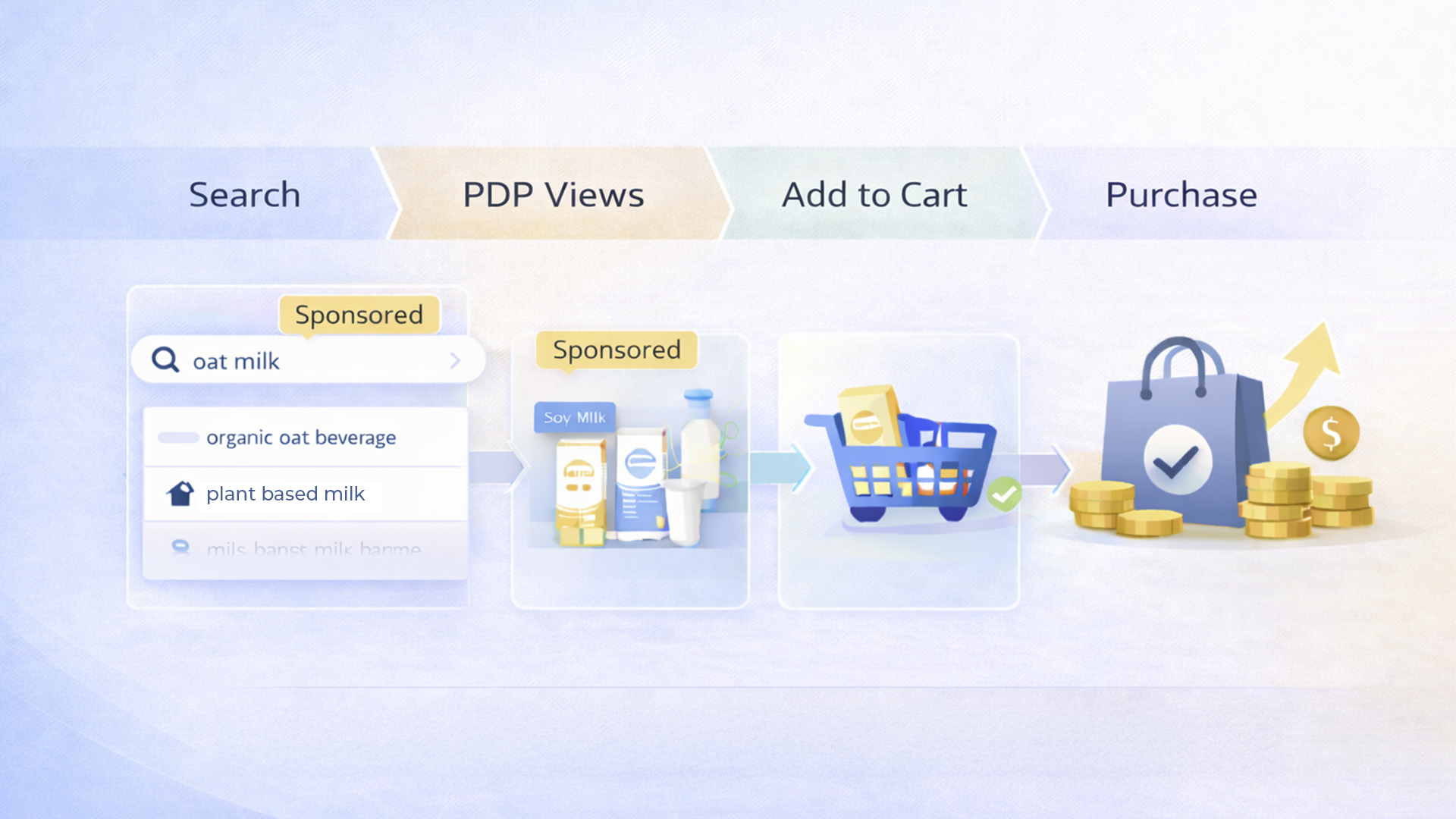
Retailers monetize shopper attention by turning the searches, product views, and store visits that already happen into ad inventory that brands pay for. The asset is first-party data: a retailer knows what a shopper looked at and bought, so it can sell brands precise targeting and proof of sales that search and social cannot match. That makes retail media high-margin, because it sells attention the retailer already has rather than buying more traffic. The catch is restraint. Push too many ads onto a page or a screen and you lift ad revenue while suppressing the conversions that revenue depends on. This guide covers how retailers monetize shopper data, the best formats to start with, and how to do it without breaking the shopping experience.
Part of Osmos's retail media hub: Retail Media Evolution: The Complete Guide — with companion guides on where retail media is heading and retail media ROI for marketplaces.
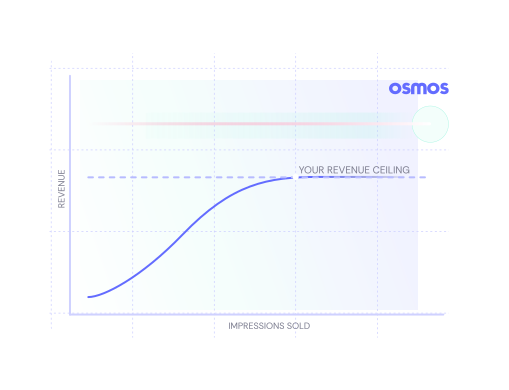
Osmos is a white-label retail media operating system for retailers and marketplaces. Its modular apps for onsite, offsite and in-store ads sit over your existing stack, so you can break your monetisation ceiling faster without rebuilding it.
How do retailers use retail media to monetize shopper data?
They turn first-party purchase data into two things brands will pay for: targeting and proof. A retailer sees what a shopper searched, viewed, and bought, so it can put a brand's product in front of the right audience and then show, through closed-loop attribution, that the ad led to a sale. For how that measurement works, see the guide to closed-loop attribution.
The important distinction is that the data stays first-party. Brands are not buying raw customer records; they are buying access to audiences and evidence of results. That is why retailers keep investing in their own data: 71% of brands are expanding their first-party datasets as third-party cookies fade (Rockbot, 2026), and the retailer that owns the purchase signal is the one they pay to reach those shoppers.
The best ways to monetize retail media
Start where intent is highest and cost is lowest, then expand outward. The order matters more than the format list.
| Format | Margin and intent | When to add it |
|---|---|---|
| Onsite sponsored product ads | Highest margin, highest intent | First — monetizes search intent that is already there |
| Onsite display and video | Adds brand budgets on the same first-party data | Once sponsored search is working |
| Offsite audience extension | Higher cost, reaches shoppers off-property | After onsite, using your data on social, web, and CTV |
| In-store media (screens, QR) | The largest surface — 76% of purchases happen in-store | Where you have physical footprint |
For the full format spectrum and the platform that runs it, see Osmos onsite retail media. The principle holds across all of them: monetize existing intent first, then spend to create or extend it.
How do retailers monetize in-store traffic with retail media?
In-store is the biggest and least-monetized surface in retail. About 76% of purchases still happen in physical stores (Rockbot, 2026), yet most retail media revenue still comes from onsite digital. The gap is the opportunity.
Retailers monetize that traffic with digital screens at the shelf and checkout, audio, and QR codes that tie a physical visit to a measurable action. The measurement is the hard part: connecting an in-store impression to a sale needs point-of-sale data and QR or app signals. It works when it is built in, and the demand is real, with 37% of shoppers saying they bought something after seeing in-store media (Rockbot, 2026). The operational trap is scale: running screens store by store breaks down around 30 to 50 locations without a unified system to schedule campaigns and attribute results across them.
How marketplaces monetize traffic with commerce media
A marketplace has a lever a single retailer does not: thousands of third-party sellers who are all potential advertisers. Monetizing marketplace traffic means giving those sellers self-serve tools to promote their own listings, so ad demand scales with the seller base instead of with the marketplace's own marketing.
The same restraint applies, more sharply. Sellers will fund sponsored placements as long as they can see the return and the results stay relevant to shoppers. Bury organic results under paid ones and conversion drops, which hurts sellers and shoppers at once. For the revenue math behind this, see retail media ROI for marketplaces.
Can you monetize attention without hurting the shopping experience?
Yes, if ads stay relevant and capped. Retail media monetizes intent that already exists, so the risk is never the ads themselves; it is volume. Too many placements, or irrelevant ones, push shoppers away and suppress the conversions that make the revenue worth anything.
Two controls keep monetization and experience aligned. Relevance, so every ad matches what the shopper is actually looking for, which first-party data makes possible. And frequency caps, so no shopper is shown the same ad until it becomes noise. Treat ad load as a budget, not a maximum, and monetization compounds instead of eroding the traffic it depends on.
Frequently asked questions
How do retailers use retail media to monetize shopper data?
They turn first-party purchase data into ad targeting and closed-loop measurement, then sell that to brands as sponsored placements. The data stays first-party; brands buy access to audiences and proof of sales, not the raw data itself.
What are the best ways to monetize retail media?
Start with onsite sponsored product ads, which carry the highest margin and intent, then add display, offsite audience extension, and in-store screens. The order matters: onsite search monetizes existing intent before you spend to reach shoppers elsewhere.
How do retailers monetize in-store traffic with retail media?
With digital screens, shelf-edge displays, and QR codes that tie a physical visit back to a measurable action. Around three-quarters of purchases still happen in stores, so in-store is the largest and least-monetized surface for most retailers.
Can retailers monetize attention without hurting the shopping experience?
Yes, if ads stay relevant and capped. Retail media monetizes intent that is already there; the risk is overloading pages or screens until ads suppress conversion. Relevance and frequency limits keep monetization and experience aligned.
Monetizing attention is not about adding more ads; it is about turning data a retailer already owns into relevant, measurable inventory, and knowing when to stop. The retailers that treat it as infrastructure rather than a bolt-on capture the most revenue per visit. Osmos runs the formats, operations, and measurement behind that with the Osmos platform. For the full picture, start with the retail media hub.
SEE IT IN ACTION
See what's above your ceiling.
Your score, your peer benchmark, and the levers that close the gap.
Commitment-free consultation on your top needs and challenges. Discover product capabilities and how Osmos may help.