Retail Media Concepts
Targeting in Retail Media: The Power of First-Party Data
For years, digital advertising ran on borrowed signals. Cookies followed users around the internet, pixels stitched together half-stories, and interests were guessed from clicks, likes, and scrolls. It worked, until it didn’t.
Privacy regulations tightened, signal loss crept in. Costs went up, performance slipped, and targeting started to feel noisier than precise. Most importantly, the platforms that dominated this era never had the one signal that actually matters in commerce: what people buy.
That’s where retail media quietly rewrote the rules. Built on first-party data that’s directly observed and transaction-backed, retail media enables targeting that’s grounded in real behavior, not inference. And it’s why contextual targeting and behavioral targeting now work better inside retail environments than anywhere else.
Osmos is a white-label retail media operating system for retailers and marketplaces. Its modular apps for onsite, offsite and in-store ads sit over your existing stack, so you can break your monetisation ceiling faster without rebuilding it.
Why Third-Party Targeting Is Starting to Crack
Meta and Google built powerful advertising machines, but they were powered by signals that were always one step removed from purchase. They rely on:
- Page visits
- Content engagement
- Browsing patterns
- Inferred interests
- Cross-site tracking
That foundation creates three structural limits.
1. Probabilities And Not Proof
Liking dessert content doesn’t mean someone buys dessert. Engaging with fitness posts doesn’t mean they purchase supplements. Third-party targeting predicts intent, it doesn’t confirm it.
2. No Visibility Into Actual Buying
These platforms know what users click. Retailers know what shoppers buy. That difference matters more than ever when budgets are tight and efficiency is scrutinized.
3. Zero Context to the Shopping Moment
Someone casually scrolling social media is not in the same mindset as someone searching for pasta sauce inside a grocery app. One is discovery. The other is a decision. This is the gap retail media fills, and why retailers now hold some of the most valuable targeting data in advertising.
What Makes First-Party Retail Data Different
Retailers don’t guess behavior. They observe it. They know:
- How often a shopper buys a category
- Which brands they consistently choose
- How price-sensitive they are
- Whether they trade up or down during promotions
- How their basket changes over time
This data is deterministic. It’s tied to real transactions. And it refreshes with every purchase.
A Simple Example
A shopper buys acne-care skincare every five to six weeks.
- Meta may know they engage with beauty content
- Google may know they searched “best skincare routine”
But only the retailer knows:
- The exact product purchased
- The replenishment cycle
- The preferred brand
- The price band
- Whether they respond to premium or discount offers
That’s not inferred interest. That’s verified behavior, and it’s the backbone of high-performance behavioral targeting in retail media.
How Behavior Becomes True Contextual Targeting
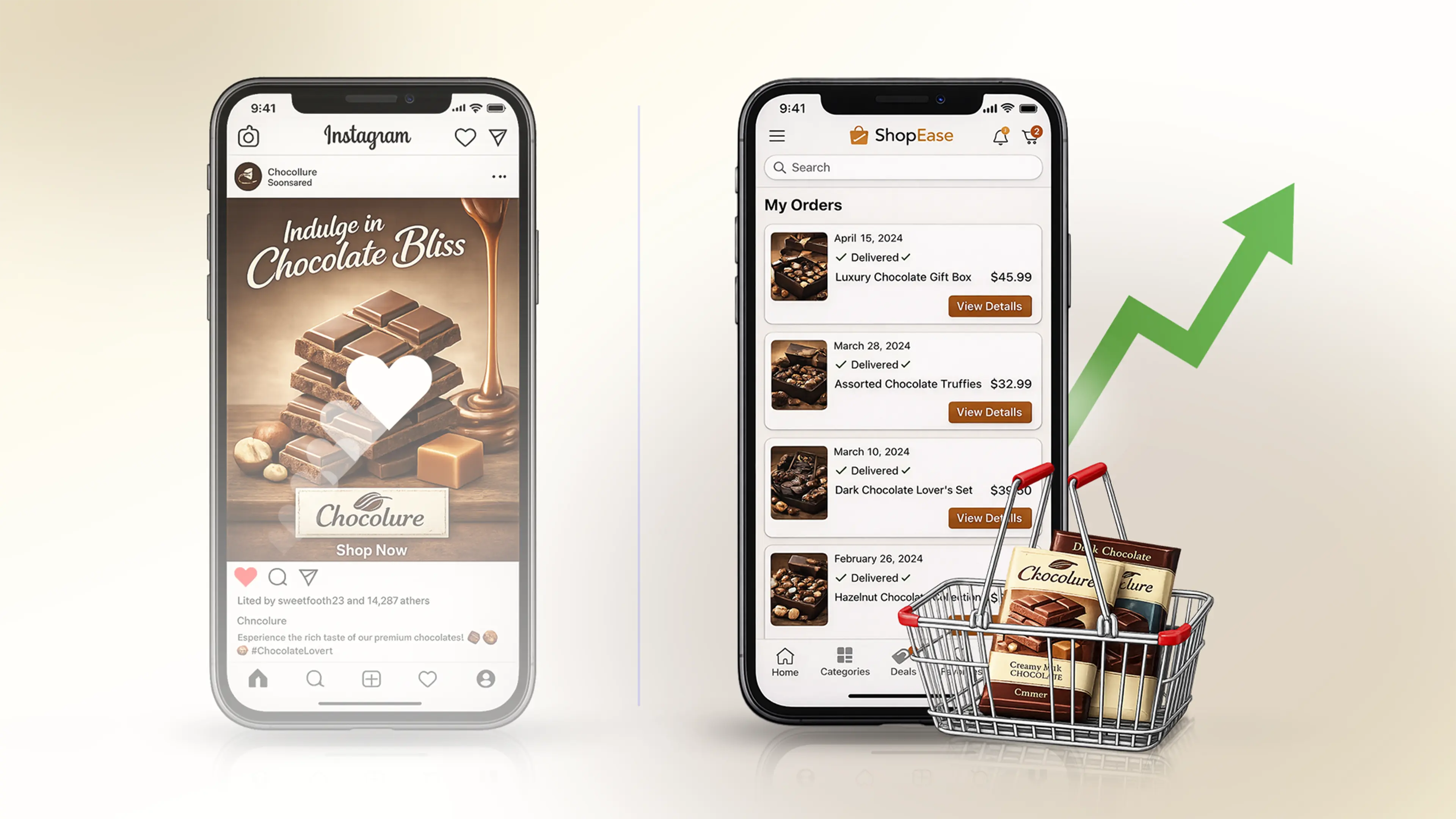
Outside retail, contextual targeting usually means matching ads to keywords or content themes. Inside retail media, context is behavioral. Let’s say a premium chocolate brand is running a campaign.
Two shoppers might both qualify as “chocolate lovers” on a third-party platform. But inside a retailer’s ecosystem, the difference is obvious:
- One shopper frequently buys premium dark chocolate
- The other consistently chooses budget milk chocolate
Retail media sees purchasing power and preference; that’s contextual targeting informed by behavior. This is why ads in retail environments feel more relevant. They’re aligned with how shoppers actually buy, not how platforms assume they might.
Behavioral Targeting Gets Predictive With RFM
Retail media platforms unlock a powerful layer of behavioral targeting through RFM analysis:
- Recency: How recently did the shopper purchase?
- Frequency: How often do they buy the category?
- Monetary: What’s their typical spend?
A shopper who:
- Buys dog food every 30 days
- Chooses premium brands most of the time
- Maintaining a high average order value
isn’t just a good target, but a far more predictable one. Retail media allows retailers to surface ads precisely when shoppers are most likely to restock, upgrade, or switch brands. That’s something no third-party platform can replicate at scale.
Why Retail Media Targeting Consistently Outperforms
When retail media combines:
- First-party purchase data
- Real-time shopping context
- Behavioral patterns
- Predictive timing
The results follow. Retailers see:
- Higher conversion rates
- Stronger ROAS
- Lower wasted spend
- More incremental sales
Advertisers don’t come to retail media for reach alone. They come for certainty, the confidence that their ads are shown to shoppers who are actually in a buying mindset.
Retailers Hold the Advantage; If They Activate It Properly
First-party data alone isn’t enough. To unlock its full value, retailers need systems that can operationalize it in real time. That means:
- Dynamic contextual targeting, not static keyword lists
- Behavioral signals that continuously learn and adapt
- Ad serving that prioritizes relevance, not just bid value
Modern retail media platforms are built for this. They turn raw data into live decisioning, so ads feel native, helpful, and timely rather than disruptive. Retailers using advanced platforms like Osmos are already doing this across categories and formats, turning targeting precision into a stunning revenue advantage.
Why This Matters Across Retail Verticals
The value of first-party targeting compounds across different retail models:
- Grocery retailers leverage replenishment cycles and basket behavior
- Fashion and beauty retailers activate preference, price sensitivity, and brand loyalty
- Restaurant aggregators use order frequency, cuisine affinity, and time-of-day patterns
In each case, retail media monetizes intent. Real-world examples from success stories of Osmos powered retail networks show how this approach drives both GMV lift and sustainable media revenue.
Conclusion: First-Party Data Is the New Advertising Moat
Advertising power is shifting. Platforms built on third-party data are losing signal. Retailers, by contrast, sit on data that is:
- Voluntarily shared
- Purchase-verified
- Continuously refreshed
- Contextual to real buying moments
This makes retail media the most accurate form of digital targeting available today. Retailers that invest in strong contextual targeting and behavioral targeting capabilities will become indispensable growth partners for brands. And in a world where precision matters more than reach, that’s a defensible advantage!
If you want to see how this looks in practice, you can get a demo with Osmos and explore how first-party data turns targeting into a scalable revenue engine.
SEE IT IN ACTION
See what's above your ceiling.
Your score, your peer benchmark, and the levers that close the gap.
Commitment-free consultation on your top needs and challenges. Discover product capabilities and how Osmos may help.